
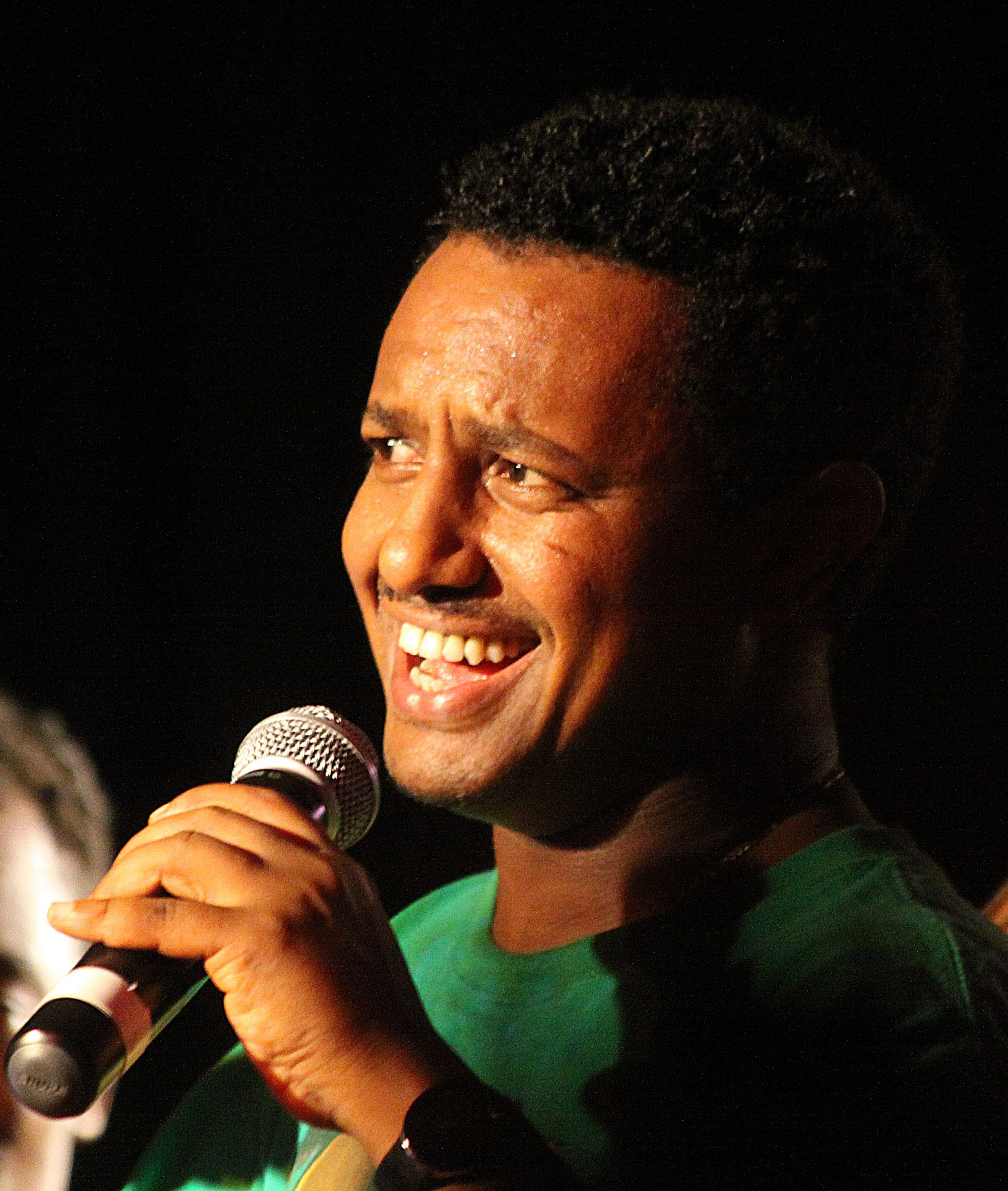
Teddy Afro returned 33 million birr to Sewasew Multimedia in April 2026 to get out of a four-year contract. Of that sum, 25 million birr was the advance he had taken from the company roughly four years earlier; the balance was accumulated bank interest. The original partnership was valued at 50 million birr, so he exited having drawn half of it and paid back more than he drew. Sewasew’s own position on the record is that “the contract was terminated by mutual agreement due to disagreements during the work process.”
What did not change hands is the more interesting half. No master right and no publishing right moved in either direction, because on the documentary record none was ever with Sewasew to begin with. Across 32 Teddy Afro albums and singles indexed in Apple’s catalogue, spanning 2001 to 2026, 31 phonogram credits read some version of “℗ [year] Teddy Afro” and the 32nd names a distributor’s placeholder. Sewasew Multimedia appears on none of them: not before the contract, not during it, not after.
What actually changed hands#
Notice the direction of travel. In almost every deal this desk covers, money flows from a company to an artist. Here the artist paid the company. That tells you the shape of the instrument: a recoupable advance, exited by repaying principal plus interest, rather than a settlement, a buy-back of rights or a catalogue transaction.

The 25 million birr figure and the four-year term come from the artist’s management and were confirmed by Sewasew. One Ethiopian news site broke the 33 million down as 25 million in principal and exactly 8 million in interest, but attributed that to unnamed sources close to the negotiations, so the 8 million is not relied on here. What both named parties agree on is the total returned, the original advance, and that the difference is bank interest.
Two disagreements are on the record, both structural rather than personal. Sewasew proposed hosting Teddy Afro’s existing catalogue exclusively in exchange for annual prepayments; the artist rejected it. The artist asked to revise how caller ring back tone revenue was shared; Sewasew did not accept. Those are the two highest-value assets an established African artist has to trade, the back catalogue and the ringtone line, and both requests failed.
Ring back tones are no footnote. In Kenya the split is written into statute, and a High Court ruling in March 2026 still left intermediaries collecting it. Ethiopia has no statutory rate, so a revision there must be negotiated contract by contract and can simply be refused.
The credit line that never named Sewasew#
The phonogram symbol, ℗, identifies the owner of the sound recording. It is the closest thing streaming has to a title deed, and the field this desk checks first. Across Teddy Afro’s indexed catalogue the result is unusually clean for an artist at this level: 31 of 32 releases credit him by name, one rendered as “Teddyafro.” Etorika, the ninth album, carries “℗ 2026 Teddy Afro.” So does a 2026 re-delivery of Abugida, a record first released in 2001, now sitting in Apple’s catalogue under a fresh collection identifier with a 2026 credit in the artist’s own name.
The exception is a 2022 single, “Na’et,” credited “℗ 2022 4054233 Records DK.” That seven-digit pattern is not a label. It is the placeholder imprint DistroKid assigns when an artist uploads without supplying a label name, and DistroKid’s own documentation states it takes no ownership in music it distributes. The one release not in the artist’s name carries a distributor’s auto-generated string instead, which is evidence of self-release, not of a label.
Be precise about what this proves. A ℗ line is a claim recorded by whoever delivered the file, not an adjudicated finding of title, and it says nothing about publishing. What it establishes is that whatever Sewasew paid 25 million birr for never appeared as a recorded phonogram interest on a single Teddy Afro release. Sewasew’s head of music told an Ethiopian newspaper in May 2023 that the company is “not only a media streaming application but also a recording label,” that the label “acquires and develops content by purchasing albums,” and that over a hundred artists had signed, naming Teddy Afro among those with music on the service. Having music on a service is a distribution fact, not ownership.
Who owns Sewasew#
Sewasew Multimedia is not a standalone company. It is a registered brand of 2F Capital, which states on its own site that “TWOF Capital PLC was legally established on June 2020” and that its engineers have been “bundling technologies to reinvent the entertainment industry through our registered brand ‘Sewasew Multimedia’ streaming platform.” The same page calls 2F Capital a subsidiary of The 2F Group and lists a sibling brand, CRG, described as a record label platform.
Apple’s records agree. The Sewasew Music iOS app names 2F Capital . LLC as seller and carries the line “© 2022 2F Capital.” Google Play names 2F Capital LLC as developer. The legal form is inconsistent, PLC on the company’s own site and LLC on both stores, and with no public Ethiopian company registry to query it cannot be resolved against a filing.
One date is worth holding onto. The Sewasew iOS app was released on 21 July 2022, and the advance was paid roughly four years before April 2026, at or just before that debut. Whatever Teddy Afro signed, he signed it into a service that was not yet shipping.
Sewasew’s other significant relationship is a licence, not a sale. On 16 November 2023 Universal Music Group announced an agreement under which Sewasew would license and market UMG’s catalogue in Ethiopia, covering Def Jam, Interscope, Island, Motown, Republic and Virgin alongside UMG’s African divisions, described as UMG’s first agreement in the Ethiopian market. UMG licensed in. It did not invest, and no consideration was disclosed.
One developer account, two sides of the same market#
2F Capital’s Apple developer account, identifier 1623030943, publishes four apps. Two are unrelated to music, the third is Sewasew Music, and the fourth is “CMO Ethiopia,” bundle identifier com.cncmethiopia.app, released 24 August 2023, carrying the line “© 2023 2F Capital” and listing cncmethiopia.com as its seller URL. That is the app of the Copyright and Neighboring Rights Collective Management Society of Ethiopia, which its website says was registered with the Ethiopian Intellectual Property Authority on 18 June 2017 and which licenses users in categories including streaming platforms.
So one company is the seller of record and copyright holder for both Ethiopia’s leading licensed music streaming service and the app of the body that licenses streaming services. The society’s own website names no technology partner, its Partners page lists none, and 2F Capital is not mentioned anywhere on it.
This is not an allegation. No document shows 2F Capital holding equity in the society, sitting on its board or sharing its revenue, and the society’s published board is thirteen rights holders and cultural figures with no corporate seat among them. What the App Store record establishes is narrower and still worth stating: one company is publisher of record on both sides of a licensing relationship, and neither side has disclosed the arrangement that put it there.
What this means for artists#
An advance is a loan against income you have not earned yet, and the price of leaving early is the principal plus the cost of money. Teddy Afro paid roughly 32 per cent on top of what he drew. Very few artists on the continent have the cash flow to write that cheque, which is what makes an advance the most effective lock in the business, far more binding in practice than any rights clause.
Three lessons sit in this paperwork. Keep your name in the ℗ line: Teddy Afro did, for 25 years and straight through a four-year contract, and it is why a platform dispute was settled with money rather than litigated over title. Treat an exclusive catalogue-hosting offer dressed as an annual prepayment for what it is, an advance secured on your back catalogue. And get the ring back tone split in writing at the outset, because with no statutory rate there is nothing to appeal to later.
Owning your masters does not exempt you from the rest of the chain. The bodies meant to collect on an artist’s behalf are often the least transparent actors in it, as South Africa’s two largest collectors showed in their own audited accounts.
What we could not establish#
Whether Sewasew ever held any right at all in a Teddy Afro recording, as against a services, hosting or prepayment arrangement, could not be established, and neither party has published the contract. The report of the termination calls Sewasew “the publisher,” which does not match the company’s own description of itself as a streaming platform and a record label; who actually publishes or administers the underlying compositions was not established. The Wikipedia entry for Etorika names a label, Addis Zema, in its infobox; that name appears on no phonogram credit found and what it is could not be established. The release date is 16 April 2026 on the artist’s side and 17 April in Apple’s store metadata. Whether UMG’s catalogue is currently live on Sewasew could not be checked without a paying subscription. And the relationship between 2F Capital and the collective management society is not established by anything either has published.
The full sourcing, every credit string, app store field and registry entry behind the above, sits in our deal record for this transaction. On African streaming ownership more broadly, see our record on the investment that did not change who owns Boomplay.