One Nigerian Artist’s Spotify Chart Day Priced at $24,629.35. Everything African Music Earned on Spotify’s 71 Non-African Charts That Day Came to $1,082.16
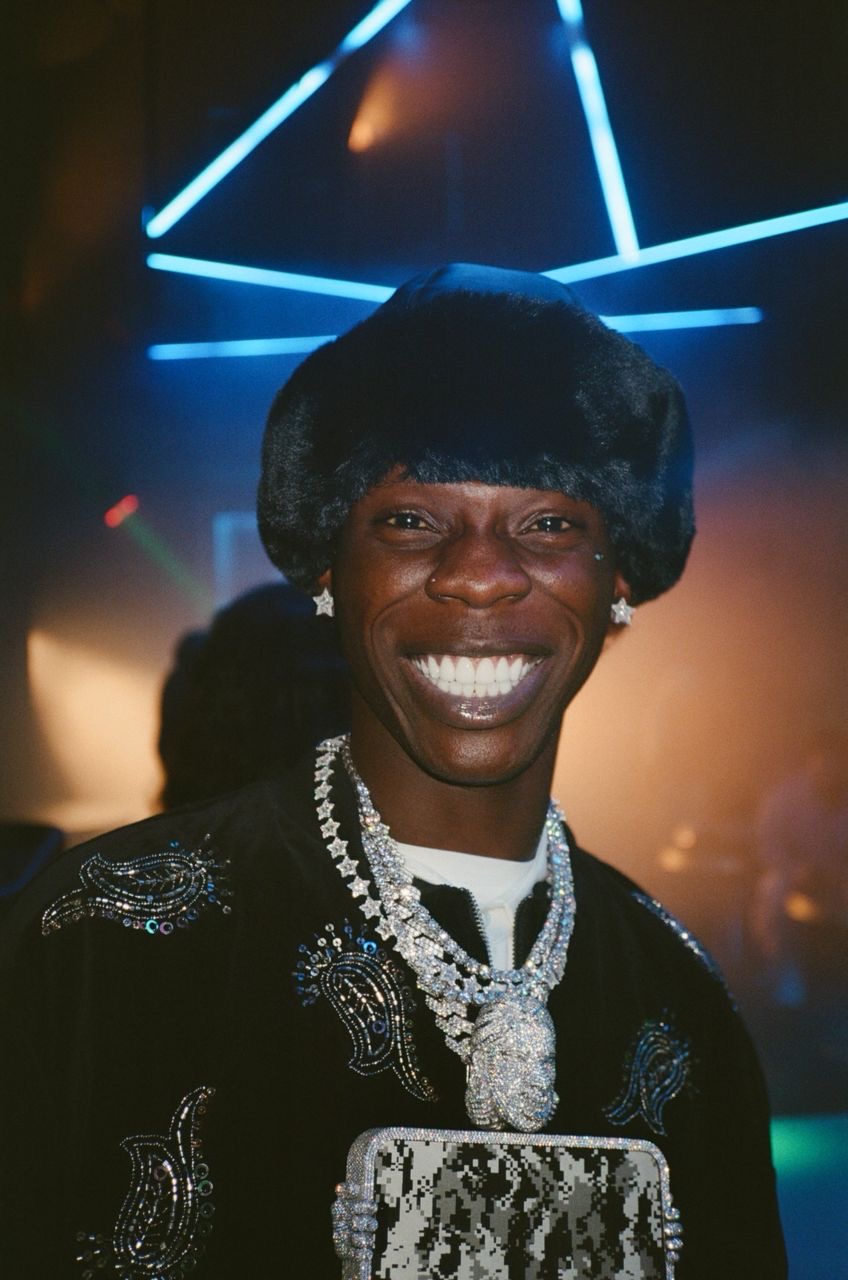
Photo: Seyi vibez / CC BY-SA 4.0 via Wikimedia Commons
On 20 September 2026 one artist’s tracks on Spotify’s published daily Top 200 for Nigeria drew 8,209,783 chart streams, worth $24,629.35 gross at Spotify’s most widely published payout rate. Every African-origin artist on the 71 charts Spotify publishes outside Africa drew 360,719 chart streams between them the same day, worth $1,082.16. One artist, on one chart, priced at 22.76 times African music’s entire measured export column.
The artist is Seyi Vibez. The rate is $3.00 per 1,000 streams, Duetti’s reported global Spotify blend for calendar 2024, the same rate this desk has used to price every chart day it has published. The measurement is a single day of Spotify’s own published charts, collected by this desk on 20 September.
One artist's chart day against African music's whole chart day, 20 September 2026
#
Scope
Chart streams, 20 Sep 2026
Chart day gross, USD
Share of African chart-day gross, %
Multiple of the export column
1
All African-origin artists, all 75 Spotify daily charts
$23.78m
$71,329
$100
$65.91
2
All African-origin artists, Nigeria's own chart
$16.96m
$50,870
$71.32
$47.01
3
Seyi Vibez, Nigeria's own chart
$8.21m
$24,629
$34.53
$22.76
4
All African-origin artists, the 71 charts outside Africa
Spotify chart-day gross by scope, 20 September 2026
Gross at $3.00 per 1,000 streams. The four scopes overlap by construction: Seyi Vibez sits inside Nigeria's chart, which sits inside the 75-market total.
Show the numbers
Scope
Chart day gross, USD
All African-origin artists, all 75 Spotify daily charts
$71,329
All African-origin artists, Nigeria's own chart
$50,870
Seyi Vibez, Nigeria's own chart
$24,629
All African-origin artists, the 71 charts outside Africa
African-origin artists took 23,776,186 chart streams across all 75 markets Spotify publishes a daily Top 200 for on 20 September, a gross of $71,328.56 at the same rate. Seyi Vibez alone held $24,629.35 of it, or 34.53 per cent. Nigeria’s own chart held $50,870.48, or 71.32 per cent. The 71 charts outside Africa held $1,082.16, or 1.52 per cent.
That last figure is the one worth sitting with. African music’s entire presence on every Spotify chart outside the continent, on the single biggest African chart day this desk has measured in 25 collections, priced out at less than the cost of a mid-range laptop. It is not a new pattern. This desk priced the same column at $996.67 on 4 September and the range since has been narrow. What is new is the size of the thing now sitting next to it.
Nigeria’s chart carried 12,527,452 streams on 17 September and 20,078,382 on 20 September, a change of 7,550,930. Seyi Vibez accounts for 99.17 per cent of it. Not the African-origin portion of it: the whole chart’s volume, non-African artists included.
What moved Nigeria's chart volume, 17 to 20 September 2026
#
Component
Change in chart streams
Share of chart change, %
1
Seyi Vibez, 12 first-time-charting tracks
6.51m
86.28
2
Seyi Vibez, 8 tracks charting on both dates
997,434
13.21
3
Seyi Vibez, 2 catalogue tracks re-entering
75,797
1
4
Seyi Vibez, 3 tracks that left the chart
-100,131
-1.33
5
Every other artist on Nigeria's chart, net
62,838
0.83
6
Nigeria's whole chart, net change 17 to 20 September
The decomposition splits cleanly. Twelve tracks that were not on Nigeria’s chart on 17 September carried 6,514,992 streams on 20 September, 86.28 per cent of the whole chart’s change. Each of the twelve recorded between 88.5 and 92.0 per cent of its entire all-time Spotify play count in that single day, which is what a first-time release looks like in chart data and nothing else looks like. Eight tracks already charting on 17 September added a further 997,434 streams, 13.21 per cent, the catalogue lift that a release pulls behind it. Two older tracks re-entered for 75,797. Three fell off, for minus 100,131. Every other artist on Nigeria’s chart, all 78 of them, netted 62,838 streams between them, 0.83 per cent of the move.
Every track new to Nigeria's Spotify Top 200 for this artist, 20 September 2026
Each track's chart streams on its first measured day. The twelve at the top are first-time-charting material; the two at the bottom are catalogue returning to the chart.
The split between the two groups is not a close call. The twelve run from 88.5 to 92.0 per cent of all-time plays in a single day; the two catalogue re-entries sit at 1.2 and 0.1 per cent. Nothing in the set lands near the threshold, so the classification does not turn on where the threshold was put.
This desk does not know the project title, the label, the distributor or the release date, and has not measured any of them. What it has measured is twelve tracks appearing at once, taking twelve of Nigeria’s top fourteen chart positions, each with almost no recorded play history before that day.
$24,629.35 is a gross number at the top of a chain, and the chain is long. This desk holds one published worked example of a Nigerian label cascade, in which an artist’s share of gross runs from 5.1 per cent on a telco-bundled stream routed through a label and a manager to 25 per cent on an app-based stream where the artist bypasses the label. Applied to a chart day of this size, the range is $1,256.10 to $6,157.34.
One Nigerian chart day at four per-stream rates and four documented cascade splits
#
Scenario
Basis
USD
1
Gross at Spotify's 2024 global rate, 3.00 dollars per 1,000 streams
published rate
$24,629
2
Gross at Spotify's 2021 global rate, 3.20 dollars per 1,000 streams
published rate
$26,271
3
Gross at a rate 20 per cent below the global blend, 2.40 dollars per 1,000 streams
assumed rate
$19,703
4
Gross at a rate 40 per cent below the global blend, 1.80 dollars per 1,000 streams
assumed rate
$14,778
5
Reaching the artist: telco-bundled, through a label and a manager, 5.1 per cent of gross
documented cascade
$1,256
6
Reaching the artist: app-based, through a label and a manager, 7.5 per cent of gross
documented cascade
$1,847
7
Reaching the artist: telco-bundled, bypassing the label, 20 per cent of gross
documented cascade
$4,926
8
Reaching the artist: app-based, bypassing the label, 25 per cent of gross
Rows one and two are published rates. Rows three and four are this desk's own what-if scenarios, not measurements. Rows five to eight apply one documented Nigerian label cascade to the $3.00 gross.
Show the numbers
Scenario
USD
Gross at Spotify's 2021 global rate, 3.20 dollars per 1,000 streams
$26,271
Gross at Spotify's 2024 global rate, 3.00 dollars per 1,000 streams
$24,629
Gross at a rate 20 per cent below the global blend, 2.40 dollars per 1,000 streams
$19,703
Gross at a rate 40 per cent below the global blend, 1.80 dollars per 1,000 streams
$14,778
Reaching the artist: app-based, bypassing the label, 25 per cent of gross
$6,157
Reaching the artist: telco-bundled, bypassing the label, 20 per cent of gross
$4,926
Reaching the artist: app-based, through a label and a manager, 7.5 per cent of gross
$1,847
Reaching the artist: telco-bundled, through a label and a manager, 5.1 per cent of gross
Those percentages are not Seyi Vibez’s terms. This desk does not know his contract, has never seen a statement of his, and is not claiming otherwise. They come from one published worked example of one Nigerian deal and they are in this piece to show the width of the funnel, not the contents of anyone’s account. The rate rows do the same job from the other end: at Spotify’s 2021 global blend the same day grosses $26,271.31, and at rates 20 and 40 per cent below the 2024 blend, which is where a low-ARPU market like Nigeria plausibly sits, it grosses $19,703.48 and $14,777.61. This desk’s earlier work on the same cascade found the deal structure, not the choice of platform, doing most of the work.
The headline rests on one row of one table, which is exactly the condition this desk treats as a finding rather than a caveat. Two tests.
Leave-one-out test on Nigeria's chart-day gross, 20 September 2026
#
Scenario
Rows
Total
Largest row share, %
Change in total, %
1
All rows
79
60,235
40.89
0
2
Excluding the top 1 (Seyi Vibez)
78
35,606
14.39
-40.89
3
Excluding the top 3 (Seyi Vibez, Asake, BNXN)
76
27,689
8.30
-54.03
4
Excluding the top 5 (Seyi Vibez, Asake, BNXN, FOLA, Mavo)
74
23,569
7.33
-60.87
Source: Recomputed from nigeria-spotify-chart-day-by-artist-priced-17-to-21-september-2026, retrieved 21 Sep 2026 · download the data
Nigeria’s whole chart day grossed $60,235.18 across 79 artists. Remove Seyi Vibez and it falls 40.89 per cent, to $35,605.83. Remove the top three, adding Asake and BNXN, and it falls 54.03 per cent. Remove the top five and it falls 60.87 per cent. The single largest artist is worth more than the next four combined.
African share of Spotify's 75-market chart total, with one artist removed
#
Scenario
African-origin chart streams
All chart streams, 75 markets
African share, %
1
20 September 2026, as measured
23.78m
805.73m
2.95
2
20 September 2026, excluding Seyi Vibez
15.57m
805.73m
1.93
3
21 September 2026, as measured
21.35m
787.39m
2.71
4
21 September 2026, excluding Seyi Vibez
15.94m
787.39m
2.03
5
20 September 2026, excluding Seyi Vibez from both numerator and denominator
15.57m
797.52m
1.95
6
21 September 2026, excluding Seyi Vibez from both numerator and denominator
15.94m
781.98m
2.04
7
Lowest of the 25 dates measured since 13 August 2026
The second test is sharper. African artists’ share of Spotify’s whole 75-market chart total hit 2.951 per cent on 20 September, the highest reading in the 25 dates this desk has measured since 13 August, and this desk reported that series high at market level without being able to say then which artist sat behind it. Subtract this one artist from the numerator and it reads 1.932 per cent, which is below the lowest of those 25 dates, 2.109 per cent. The record-high African chart day, minus one Nigerian release, is a series low. The same holds a day later: 2.712 per cent as measured on 21 September, 2.025 per cent without him.
Removing an artist from the numerator alone is the harder version of that test, because it leaves his streams in the denominator. Taking them out of both instead gives 1.952 per cent on 20 September and 2.039 per cent on 21 September, still below the 2.109 per cent series low on both dates, so the result does not depend on which denominator is chosen.
So the counter-reading is not that the finding is fragile. It is that the finding is the fragility. Anyone reading a continent-level share number as evidence that African music is compounding should know that on this particular date the number was one release in Lagos.
Every figure here is a chart stream, a play inside a market’s published daily Top 200 on the collection date, not total consumption. An artist with real audience in a market whose chart they never reach records zero, identically to an artist with no audience there, so the export column is a measure of charted presence outside Africa and not of listening outside Africa. Spotify publishes a daily chart for four African countries, so the home side of this comparison is Nigeria, Egypt, Morocco and South Africa and nowhere else.
The $3.00 rate is not Spotify’s. Spotify does not publish a per-stream rate and disputes that one exists, on the grounds that it pools revenue and pays out pro rata to a rightsholder’s share of total streams. Duetti, a catalogue-investment firm, derives the figure from statements it reviews and does not publish those statements. It is a global blend weighted toward high-ARPU markets, which means every Nigerian figure in this piece is a ceiling. The 22.76 multiple itself is not exposed to that, because both sides of it are priced at the same rate: it is exactly the ratio of 8,209,783 chart streams to 360,719, and it holds at any rate applied to both. What the rate decides is the dollar gap. If Nigeria’s true per-stream rate is below the blend that applies to the mix of destinations in the export column, and it very likely is, then the true multiple in dollars is smaller than 22.76 while the multiple in streams stays exactly where it is.
18 September was not a collection date, so the three-day change spans a gap this desk did not see. One post-peak reading is a level, not a trend. And a single day is a single day: by 21 September the same artist’s Nigerian chart streams had fallen to 5,409,316.
Three things a label can act on, all of them arithmetic rather than advice.
First, the export column is not a revenue line. At the rate above, every African artist charting on every Spotify chart outside Africa, on the strongest African chart day in five weeks of measurement, shared $1,082.16. If an artist’s business case rests on charted export presence, the case is not about money yet. It is about the option value of being visible in a market later.
Second, a release event is the single largest lever on chart revenue there is, and its half-life is short. Twelve tracks moved 86.28 per cent of an entire national chart’s volume in three days, and the same artist’s chart streams fell from 8,209,783 to 5,409,316 by the next measurement a day later. A label planning around chart-day gross should model the decay, not the peak, and should assume the peak is one or two days wide.
Third, the cascade decides the outcome more than the chart does. The same 8,209,783 streams are worth $1,256.10 or $6,157.34 depending entirely on the contract, and that gap is wider than the gap between the highest and the lowest per-stream rate scenario in the same table. An artist negotiating a deal is negotiating a larger number than an artist negotiating a chart position.
We use essential cookies to run the site. With your permission we would also use analytics cookies to understand which stories are read, so we can commission more of what works. You can change your mind at any time. Cookie Policy · Privacy Policy