Spotify publishes a daily chart for four African countries, and those four hold 272,030,275 of the 522,822,710 internet users in the twenty-five African markets this desk maintains World Bank context data for. That is 52.03 per cent. The same four countries hold 459,071,866 of the panel’s 1,149,470,418 people, which is 39.94 per cent. Nothing has changed since August except the denominator. Asked of the same markets on the same day, the share of the panel Spotify charts is 12.09 percentage points higher when the unit is a person who is online than when the unit is a person, and the uncovered side falls from 690,398,552 people to 250,792,435 internet users.
The measurement is a merge, not a model. Population comes from World Bank indicator SP.POP.TOTL, internet penetration from IT.NET.USER.ZS, gross national income per head from NY.GNP.PCAP.CD, joined on country code across the same twenty-five markets this desk has tracked since August. Internet users are population multiplied by penetration. Nothing is estimated and nothing is projected.
Share of the 25-market tracked panel held by Nigeria, Egypt, South Africa and Morocco, the four African countries Spotify publishes a daily chart for.

Show the numbers
| Denominator | Charted share, % |
|---|---|
| Internet users (population x penetration, 2024/2025) | 52.03 |
| Total GNI, US$ (population x GNI per capita, 2025) | 48.30 |
| People (population, 2025) | 39.94 |
Source: Computed from this desk african-chart-coverage-connected-2026 dataset, itself built on World Bank open data, retrieved 25 Oct 2026 · download the data
Which denominator you pick decides how big the gap is#
Counted in people, the four charted markets are a minority of the panel: 39.94 per cent, and 60.06 per cent of the tracked population lives somewhere Spotify publishes no chart. Counted in internet users they are a majority: 52.03 per cent against 47.97 per cent. Counted in money, measured as population multiplied by GNI per head, they sit almost exactly on the line, holding $1,282,434,774,550 of the panel’s $2,654,994,596,990, or 48.30 per cent against 51.70 per cent.
Three of the four charted markets are among the most connected in the panel. Morocco is the smallest of them by population at 38,430,770 and the most connected country in the whole twenty-five, with 91.2 per cent of its people online. South Africa runs at 78.36 per cent and Egypt at 74.65 per cent. Nigeria is the exception, and it is the reason the two numbers do not diverge further: it is the largest charted market by internet users at 97,885,199, but its penetration is 41.21 per cent, the lowest of the four, so more than half of the single biggest market Spotify charts in Africa does not appear in the internet-user denominator at all.
| # | Country | Spotify daily chart | Population, 2025 | Individuals using the internet, % | Internet users | GNI per capita, US$ | Share of 25-market internet users, % |
|---|---|---|---|---|---|---|---|
| 1 | Nigeria | charted | 237.53m | 41.21 | 97.89m | 1,360 | 18.72 |
| 2 | Egypt | charted | 118.37m | 74.65 | 88.36m | 3,260 | 16.90 |
| 3 | South Africa | charted | 64.75m | 78.36 | 50.74m | 6,270 | 9.70 |
| 4 | Algeria | no_chart | 47.44m | 77.42 | 36.72m | 5,850 | 7.02 |
| 5 | Morocco | charted | 38.43m | 91.20 | 35.05m | 4,360 | 6.70 |
| 6 | Ethiopia | no_chart | 135.47m | 21.94 | 29.72m | 1,110 | 5.69 |
| 7 | Ghana | no_chart | 35.06m | 72.18 | 25.31m | 2,630 | 4.84 |
| 8 | Tanzania | no_chart | 70.55m | 31.16 | 21.98m | 1,270 | 4.20 |
| 9 | Kenya | no_chart | 57.53m | 34.98 | 20.12m | 2,200 | 3.85 |
| 10 | Angola | no_chart | 39.04m | 40.70 | 15.89m | 2,860 | 3.04 |
| 11 | Cameroon | no_chart | 29.88m | 46.26 | 13.82m | 1,860 | 2.64 |
| 12 | Cote d'Ivoire | no_chart | 32.71m | 41.43 | 13.55m | 2,780 | 2.59 |
| 13 | Senegal | no_chart | 18.93m | 60.12 | 11.38m | 1,780 | 2.18 |
| 14 | Tunisia | no_chart | 12.35m | 76.50 | 9.45m | 4,300 | 1.81 |
| 15 | Mali | no_chart | 25.2m | 36.80 | 9.27m | 1,120 | 1.77 |
| 16 | Mozambique | no_chart | 35.63m | 20.53 | 7.32m | 570 | 1.40 |
| 17 | Zimbabwe | no_chart | 16.95m | 41.64 | 7.06m | 2,660 | 1.35 |
| 18 | Burkina Faso | no_chart | 24.07m | 28.25 | 6.8m | 980 | 1.30 |
| 19 | Benin | no_chart | 14.81m | 33.98 | 5.03m | 1,600 | 0.96 |
| 20 | Rwanda | no_chart | 14.57m | 31.70 | 4.62m | 1,150 | 0.88 |
| 21 | Uganda | no_chart | 51.38m | 8.95 | 4.6m | 1,120 | 0.88 |
| 22 | Zambia | no_chart | 21.91m | 17.10 | 3.75m | 1,200 | 0.72 |
| 23 | Namibia | no_chart | 3.09m | 64.87 | 2.01m | 4,340 | 0.38 |
| 24 | Botswana | no_chart | 2.56m | 57.46 | 1.47m | 7,390 | 0.28 |
| 25 | Mauritius | no_chart | 1.24m | 73.31 | 911,787 | 14,040 | 0.17 |
Source: Computed from this desk africa-population, africa-internet-penetration, africa-gni-per-capita and no-chart-wealth-connectivity datasets, all sourced from World Bank open data, retrieved 25 Oct 2026 · download the data
Algeria is the largest market in the panel with no chart, and it is more online than Morocco#
Rank the twenty-five markets by internet users and the first market with no published Spotify chart appears fourth, above a market that has one. Algeria has 36,724,419 internet users, 77.42 per cent of a population of 47,435,312, and holds 7.02 per cent of the panel’s online population. Morocco, which Spotify charts, has 35,048,862. Algeria is also the richer of the two per head, at $5,850 of GNI per capita against Morocco’s $4,360. On every measure this desk holds, Algeria is a larger and wealthier online market than one of the four Spotify publishes a chart for.
The reverse case is Ethiopia. It is the second largest country in the panel by population at 135,472,051, which in August made it the single biggest name on the uncovered list. At 21.94 per cent penetration it has 29,722,568 internet users and falls to sixth, holding 5.69 per cent of the panel’s online population. Uganda falls further: 51,384,894 people, 8.95 per cent penetration, 4,598,948 internet users, 0.88 per cent of the panel, the same share as Rwanda, which has 14,569,341 people. Ghana moves the other way, with 25,309,392 users on a population of 35,064,272, and so do Tunisia, with 9,446,658 at 76.5 per cent, and Senegal, with 11,381,898 at 60.12 per cent. None of those four is charted.
Twenty of the twenty-five markets put nobody on the panel#
Putting the coverage table next to the latest panel reading gives the gap a size in artists. On 25 October 2026, twenty of the twenty-five tracked markets, holding 214,068,016 internet users between them, or 40.94 per cent of the panel’s online population, had no artist at all on this desk’s fifty-artist African chart panel. The five markets that did hold seats account for 308,754,694 internet users, 59.06 per cent, and all 50 artists and all 16,051,481 of their daily chart streams.
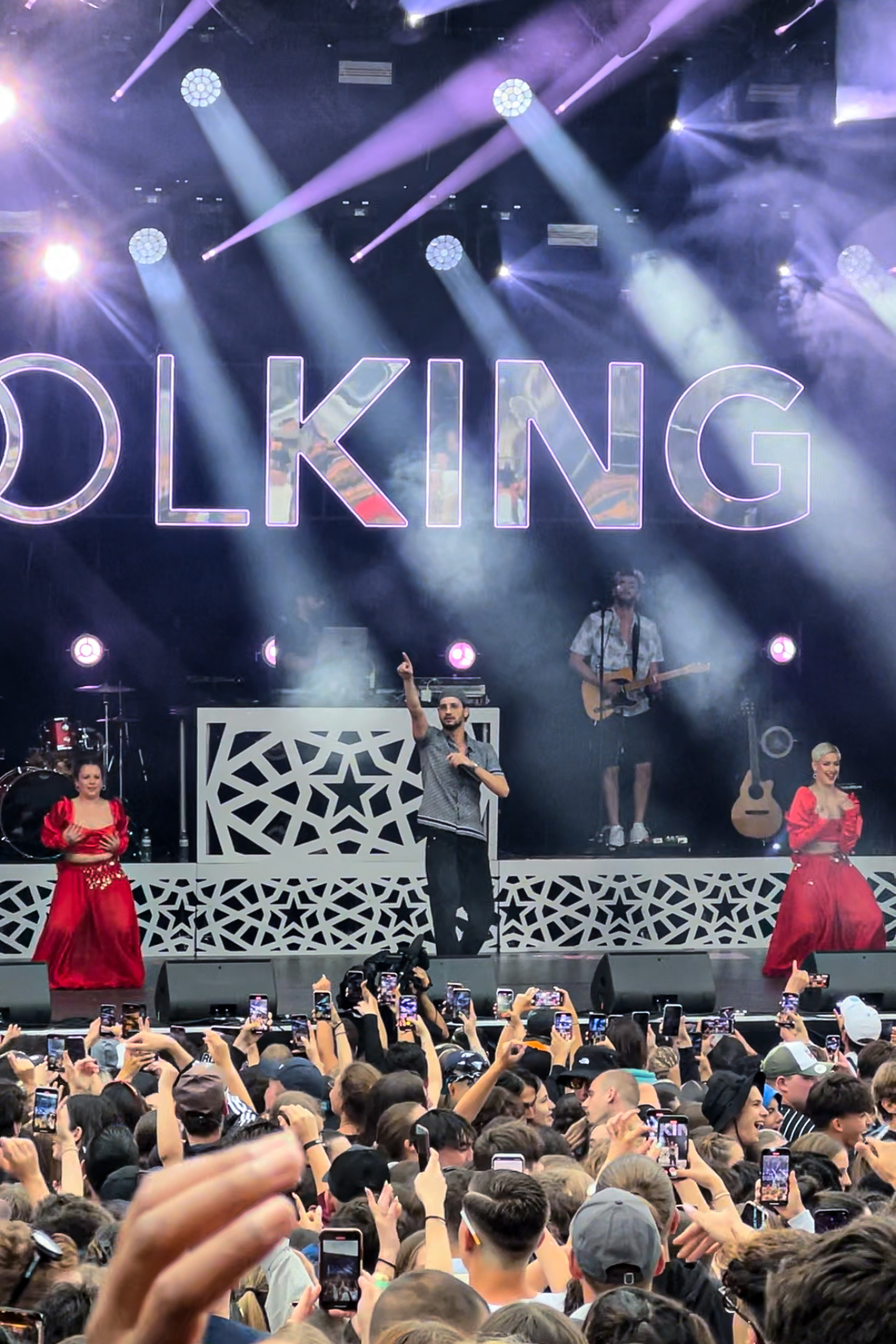
Algeria sits on both sides of that line. It is the largest uncharted market by internet users and it holds exactly 1 seat on the panel. That seat belongs to Soolking, the Algerian-born rapper resident in France, and his 72,815 daily chart streams were earned entirely outside Africa, on France’s chart, because Algeria has no chart of its own for him to appear on. This desk’s anomaly check flags him on every run for having no African chart presence, and on every run the flag is confirmed correct rather than corrected. That is what a measurement gap looks like from the inside: the demand is not invisible because it is absent, it is invisible until it surfaces somewhere that publishes.
| # | Country | Spotify daily chart | Internet users | Artists on the 50-artist panel | Daily chart streams, 25 Oct 2026 |
|---|---|---|---|---|---|
| 1 | Nigeria | charted | 97.89m | 22 | 9.89m |
| 2 | Egypt | charted | 88.36m | 16 | 4.7m |
| 3 | South Africa | charted | 50.74m | 7 | 907,564 |
| 4 | Algeria | no_chart | 36.72m | 1 | 72,815 |
| 5 | Morocco | charted | 35.05m | 4 | 486,557 |
| 6 | Ethiopia | no_chart | 29.72m | 0 | 0 |
| 7 | Ghana | no_chart | 25.31m | 0 | 0 |
| 8 | Tanzania | no_chart | 21.98m | 0 | 0 |
| 9 | Kenya | no_chart | 20.12m | 0 | 0 |
| 10 | Angola | no_chart | 15.89m | 0 | 0 |
| 11 | Cameroon | no_chart | 13.82m | 0 | 0 |
| 12 | Cote d'Ivoire | no_chart | 13.55m | 0 | 0 |
| 13 | Senegal | no_chart | 11.38m | 0 | 0 |
| 14 | Tunisia | no_chart | 9.45m | 0 | 0 |
| 15 | Mali | no_chart | 9.27m | 0 | 0 |
| 16 | Mozambique | no_chart | 7.32m | 0 | 0 |
| 17 | Zimbabwe | no_chart | 7.06m | 0 | 0 |
| 18 | Burkina Faso | no_chart | 6.8m | 0 | 0 |
| 19 | Benin | no_chart | 5.03m | 0 | 0 |
| 20 | Rwanda | no_chart | 4.62m | 0 | 0 |
| 21 | Uganda | no_chart | 4.6m | 0 | 0 |
| 22 | Zambia | no_chart | 3.75m | 0 | 0 |
| 23 | Namibia | no_chart | 2.01m | 0 | 0 |
| 24 | Botswana | no_chart | 1.47m | 0 | 0 |
| 25 | Mauritius | no_chart | 911,787 | 0 | 0 |
Source: Computed from this desk african-chart-coverage-connected-2026 and spotify-african-artists-global datasets, retrieved 25 Oct 2026 · download the data
The counter-reading#
The first objection is the one that matters most: an internet user is not a subscriber. World Bank indicator IT.NET.USER.ZS counts individuals who used the internet in the reference period by any means, including on a feature phone. It is not a count of paid music subscribers, it is not a count of monthly active users on any service, and nothing in this piece claims it is. What it does is replace a denominator that is plainly wrong for a question about streaming, total population, with one that is closer, not with one that is right.
The second is vintage. Internet penetration is the 2024 reference year, population and GNI per head are 2025, and the panel reading is a single day in October 2026. The merged base table this piece extends was assembled in August, so every figure named above was re-queried from the World Bank API before publication to confirm no newer reference year had appeared: it had not, and Algeria still returns 77.42 per cent, Morocco 91.2 and Nigeria 41.21. Penetration in these markets is rising, so a charted share measured on 2024 connectivity will understate the position of the fast-improving markets, and most of those sit on the uncharted side.
The third is the population itself. Twenty-five markets is not Africa, which has fifty-four countries. The panel was assembled for population size and market relevance, which means the countries most likely to be left out are small and poorly connected and would sit on the uncharted side. Every no-chart figure here is therefore a floor, and the true uncovered share is at least as large as reported.
The finding rests on the internet-users column, so it was recomputed eight ways, dropping markets from numerator and denominator alike. The test is whether the charted share still looks wider in internet users than in people. It does in all eight, by between 6.99 and 16.69 percentage points. The scenario that hurts the level most is dropping Nigeria, which takes the charted share of internet users down to 40.98 per cent, but it takes the charted share of population down to 24.29 per cent at the same time, so the gap widens to 16.69 rather than closing. The scenario that hurts the direction most is dropping the three largest charted markets, leaving Morocco as the only charted market, which cuts the gap to 6.99 percentage points. It does not reverse it.
| # | Scenario | Markets in the panel | Charted share of internet users, % | Charted share of population, % | Gap, percentage points |
|---|---|---|---|---|---|
| 1 | All 25 tracked markets, as published | 25 | 52.03 | 39.94 | 12.09 |
| 2 | Drop Nigeria, the largest charted market by internet users | 24 | 40.98 | 24.29 | 16.69 |
| 3 | Drop Egypt | 24 | 42.28 | 33.04 | 9.23 |
| 4 | Drop South Africa | 24 | 46.88 | 36.35 | 10.52 |
| 5 | Drop Morocco | 24 | 48.58 | 37.86 | 10.72 |
| 6 | Drop Algeria, the largest uncharted market by internet users | 24 | 55.96 | 41.66 | 14.31 |
| 7 | Drop the three largest uncharted markets by internet users | 22 | 63.11 | 49.28 | 13.82 |
| 8 | Drop the three largest charted markets, leaving Morocco alone charted | 22 | 12.26 | 5.27 | 6.99 |
Source: Computed from this desk african-chart-coverage-connected-2026 dataset, retrieved 25 Oct 2026 · download the data
The column is concentrated, and that is worth stating plainly rather than burying. Nigeria alone is 18.72 per cent of the panel’s internet users. Drop it and the total falls 18.72 per cent to 424,937,511. Drop the three largest and it falls 45.33 per cent to 285,841,297. Drop the five largest and it falls 59.06 per cent to 214,068,016, which is the same figure as the twenty markets with no panel seat, because the five largest markets by internet users are exactly the five with seats. The level of this column is five countries. The direction of the finding is not.
| # | Scenario | Rows | Total | Largest row share, % | Change in total, % |
|---|---|---|---|---|---|
| 1 | All rows | 25 | 522.82m | 18.72 | 0 |
| 2 | Excluding the top 1 (Nigeria) | 24 | 424.94m | 20.79 | -18.72 |
| 3 | Excluding the top 3 (Nigeria, Egypt, South Africa) | 22 | 285.84m | 12.85 | -45.33 |
| 4 | Excluding the top 5 (Nigeria, Egypt, South Africa, Algeria, Morocco) | 20 | 214.07m | 13.88 | -59.06 |
Source: Recomputed from african-chart-coverage-connected-2026, retrieved 25 Oct 2026 · download the data
What an artist or a label can do with this#
The practical use is in release planning, and it cuts against treating a published chart as a proxy for a market worth servicing. Ten of the twenty-one uncharted markets in this panel have higher internet penetration than Nigeria’s 41.21 per cent: Algeria at 77.42, Tunisia at 76.5, Mauritius at 73.31, Ghana at 72.18, Namibia at 64.87, Senegal at 60.12, Botswana at 57.46, Cameroon at 46.26, Zimbabwe at 41.64 and Cote d’Ivoire at 41.43. Mauritius has the highest GNI per capita in the panel at $14,040 and Botswana the second at $7,390, and neither has a chart. A plan that allocates marketing by where the charts are will systematically underweight the connected, higher-income end of the continent.
The second use is in how a campaign is evidenced. If a market publishes no chart, the only route by which a release from it becomes legible to a distributor, a promoter or a data desk is a market that does publish, which in practice means the diaspora charts of France, Portugal, Belgium and the Gulf. Soolking’s 72,815 streams on France’s chart is the whole template: that number exists because France publishes, not because France is where the audience is. An artist from an uncharted market who wants a number to put in front of a label should assume it will have to be earned somewhere else, and plan the release accordingly, because the alternative is being a real audience that no public dataset can see.
The third is a correction to this desk’s own framing. In August this desk reported that 60.06 per cent of the tracked African population lives in a country Spotify publishes no chart for. That figure is right and it is still in the table above. It is also the widest available version of the gap, and the narrower, more useful version, 47.97 per cent of internet users, was sitting in datasets this desk had already collected and had not yet put together. Both numbers are now on the record.