244 of 246 artist-origin flags this desk’s Spotify panel has raised since 12 September have confirmed the classifier right, 99.2 per cent, up from the 161 of 163 (98.8 per cent) this desk reported through 8 October. In the 19 readings since the last correction, 29 September to 27 October, every one of 127 flags raised has confirmed the registered country. The method is unchanged: every date the afw-data anomalies command flags at least one artist, the flagged row is checked against a biography or registry source actually read, not against the classifier’s own confidence score.
Per-date share of flagged rows confirmed correct. The two dips are the series' only two corrections, 21 and 28 September.
Show the numbers
| Collection date | Confirmed correct, % |
|---|---|
| 2026-09-12 | 100 |
| 2026-09-13 | 100 |
| 2026-09-17 | 100 |
| 2026-09-19 | 100 |
| 2026-09-20 | 100 |
| 2026-09-22 | 100 |
| 2026-09-24 | 100 |
| 2026-09-25 | 100 |
| 2026-09-26 | 100 |
| 2026-09-27 | 100 |
| 2026-09-29 | 100 |
| 2026-10-02 | 100 |
| 2026-10-03 | 100 |
| 2026-10-04 | 100 |
| 2026-10-05 | 100 |
| 2026-10-06 | 100 |
| 2026-10-08 | 100 |
| 2026-10-10 | 100 |
| 2026-10-11 | 100 |
| 2026-10-12 | 100 |
Source: This desk's own panel-classification-decisions datasets, one per collection date on which the afw-data anomalies command flagged at least one artist, retrieved 28 Oct 2026 · download the data

Afrobeats Wire’s panel is built by matching Spotify’s daily Top 200 for 75 published country charts to artist origin, first through MusicBrainz, then by hand wherever the automated match is a name search, a conflicting registry entry, or an artist charting with no presence on any of Spotify’s four African home charts. That last category is not evidence of an error. It is this desk’s own documented pattern: an Angolan R&B singer or an Algerian rapper charting only on a lusophone or francophone chart abroad is still correctly classified, because Spotify does not publish a daily chart for Angola or Algeria at all. The flag exists so a human reads the artist’s actual record before the row ships, not so the row gets rejected on sight.
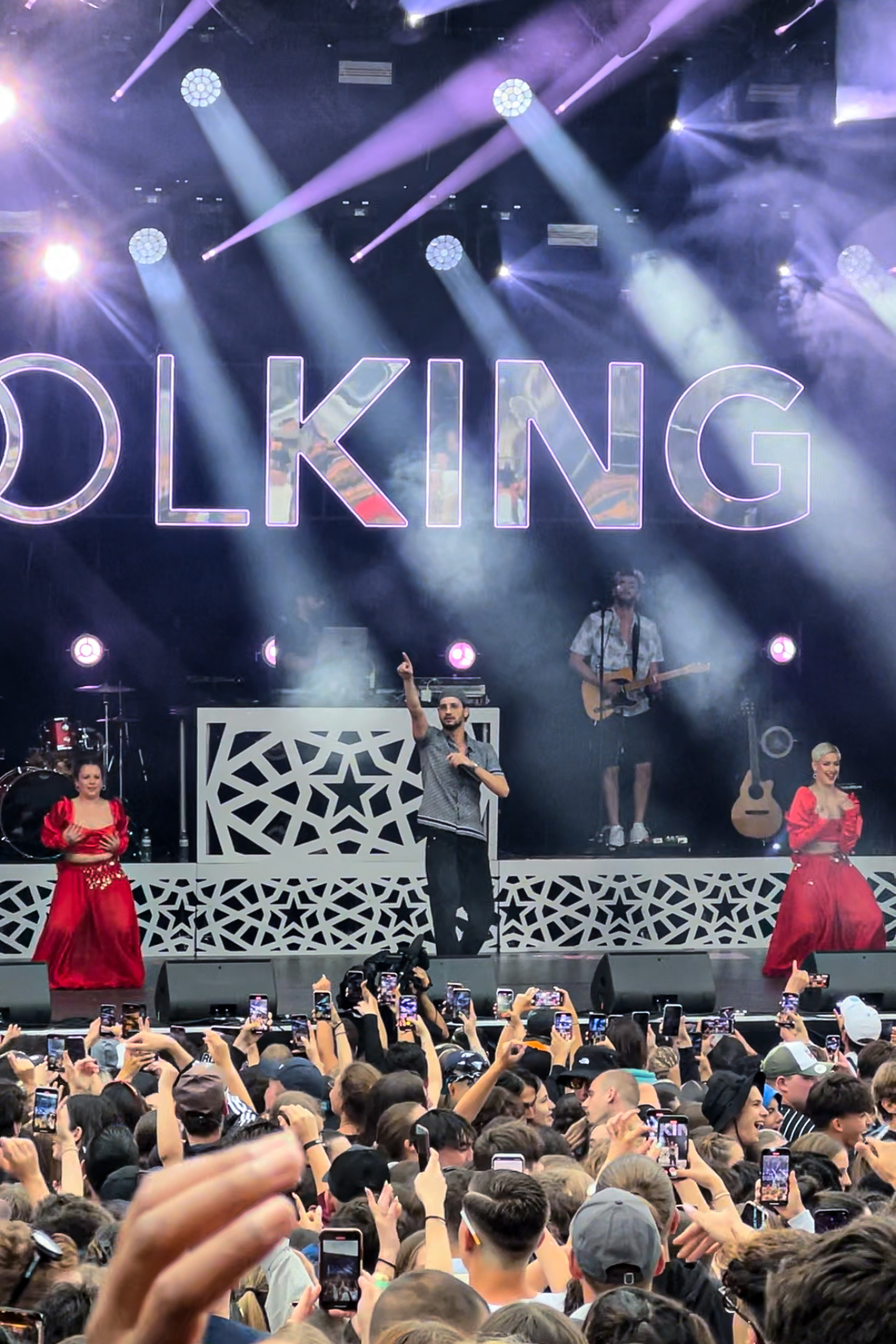
Two artists out of 246 flagged rows required an actual change to the roster rather than a repeat confirmation of the existing entry, and both fell in the same eight-day span. On 21 September, Seyi Vibez, a Nigerian street-pop artist from Lagos’s Ketu and Ikorodu neighbourhoods, was flagged on an origin conflict between Ghana and Nigeria; the correct country was already documented, but no manual override had been written into the roster, so the flag was cleared by writing one. On 28 September, Nabi, who had charted as a Guinean artist on nine prior collection dates (17 to 27 September) purely on Italy’s chart, was reclassified Italian; he was born in Conakry but raised in Paris and based in Milan, and this desk’s own prior classification had read the birthplace and missed the working base. Every one of the other 244 confirmed rows is a repeat name, mostly the same eight to ten artists: Lege-Cy (Egypt), Soolking and Houari Dauphin and Cheb Houssem (Algeria, all charting only in France or Morocco), Tchubi and MA3IZ (Morocco), Anselmo Ralph and Master Jake (Angola, both charting only in Portugal), and a handful of South African name-search cases including Dj NTK, Thokozani Langa and Udumakahle.
The 12 readings this desk has resolved since its last published audit, 10 to 27 October, repeat this pattern: every row across those 12 dates confirms a previously checked decision, carried forward because the artist’s charting market and documented biography had not changed. This desk re-ran the check again on 27 October as part of this piece and reached the identical decisions a fourth or fifth time for several of the names, with no new information to add. That repetition is itself data: a classifier whose only two corrections sit inside a single eight-day window 29 days ago, and that has produced zero further corrections across every flag raised since, is not a classifier that is quietly drifting.
| # | Collection date | Flags raised | Confirmed correct | Changed | Confirmed correct, % |
|---|---|---|---|---|---|
| 1 | 2026-09-12 | 12 | 12 | 0 | 100 |
| 2 | 2026-09-13 | 13 | 13 | 0 | 100 |
| 3 | 2026-09-17 | 14 | 14 | 0 | 100 |
| 4 | 2026-09-19 | 14 | 14 | 0 | 100 |
| 5 | 2026-09-20 | 14 | 14 | 0 | 100 |
| 6 | 2026-09-21 | 9 | 8 | 1 | 88.89 |
| 7 | 2026-09-22 | 7 | 7 | 0 | 100 |
| 8 | 2026-09-24 | 7 | 7 | 0 | 100 |
| 9 | 2026-09-25 | 7 | 7 | 0 | 100 |
| 10 | 2026-09-26 | 6 | 6 | 0 | 100 |
| 11 | 2026-09-27 | 7 | 7 | 0 | 100 |
| 12 | 2026-09-28 | 9 | 8 | 1 | 88.89 |
| 13 | 2026-09-29 | 3 | 3 | 0 | 100 |
| 14 | 2026-10-02 | 4 | 4 | 0 | 100 |
| 15 | 2026-10-03 | 5 | 5 | 0 | 100 |
| 16 | 2026-10-04 | 6 | 6 | 0 | 100 |
| 17 | 2026-10-05 | 10 | 10 | 0 | 100 |
| 18 | 2026-10-06 | 8 | 8 | 0 | 100 |
| 19 | 2026-10-08 | 8 | 8 | 0 | 100 |
| 20 | 2026-10-10 | 1 | 1 | 0 | 100 |
| 21 | 2026-10-11 | 4 | 4 | 0 | 100 |
| 22 | 2026-10-12 | 10 | 10 | 0 | 100 |
| 23 | 2026-10-16 | 7 | 7 | 0 | 100 |
| 24 | 2026-10-17 | 6 | 6 | 0 | 100 |
| 25 | 2026-10-18 | 8 | 8 | 0 | 100 |
| 26 | 2026-10-22 | 9 | 9 | 0 | 100 |
| 27 | 2026-10-23 | 8 | 8 | 0 | 100 |
| 28 | 2026-10-24 | 6 | 6 | 0 | 100 |
| 29 | 2026-10-25 | 7 | 7 | 0 | 100 |
| 30 | 2026-10-26 | 9 | 9 | 0 | 100 |
| 31 | 2026-10-27 | 8 | 8 | 0 | 100 |
Source: This desk's own panel-classification-decisions datasets, one per collection date on which the afw-data anomalies command flagged at least one artist, retrieved 28 Oct 2026 · download the data
The counter-reading, and the test this desk ran against its own headline: recomputing the confirmed-correct total with the busiest readings dropped one at a time, to check whether a handful of large, uneventful dates are propping the rate up.
| # | Scenario | Rows | Total | Largest row share, % | Change in total, % |
|---|---|---|---|---|---|
| 1 | All rows | 31 | 244 | 5.74 | 0 |
| 2 | Excluding the top 1 (2026-09-17) | 30 | 230 | 6.09 | -5.74 |
| 3 | Excluding the top 3 (2026-09-17, 2026-09-19, 2026-09-20) | 28 | 202 | 6.44 | -17.21 |
| 4 | Excluding the top 5 (2026-09-17, 2026-09-19, 2026-09-20, 2026-09-13, 2026-09-12) | 26 | 177 | 5.65 | -27.46 |
Source: Recomputed from anomaly-flag-track-record-extended, retrieved 28 Oct 2026 · download the data
The single busiest reading accounts for less than six per cent of the total confirmed count, and dropping the five busiest readings this desk has logged still leaves the total within the same range: the finding does not rest on one clean week. But the underlying measurement is still this desk auditing its own classifier against sources this desk itself chose to read, which is not an independent audit, and the sample is small and lopsided. The same eight to ten artists generate most of the volume, because they chart on every published cycle, so 246 flags is closer to 246 repeated checks on roughly a dozen names than 246 independent tests. A genuinely new misclassification, in an artist this desk has not yet checked, would not be caught by this table at all until it is flagged once and read. One more limit: “31 readings” means 31 collection dates on which the anomalies check flagged at least one artist, not every collection date since 12 September. Dates the panel refreshed with nothing flagged are omitted from the table rather than counted as zero, so this is a record of every check this desk’s own classifier failed to clear on its own, not a record of every time the panel ran.
For a desk running its own origin panel, or any label checking where its catalogue’s cross-border streams are actually landing, the practical read is this: a “no African chart presence” or “classified by name search” flag is not itself a red flag. It is a prompt to read the artist’s own biography and charting footprint once, and on this record, doing that work has caught two corrections in 246 tries, both inside a single week in late September, and none since. The cost of skipping that read is exactly the kind of error this desk corrected on 21 and 28 September: a documented Nigerian act counted as Ghanaian, a Milan-based artist counted as Guinean.