
Afrobeats Wire’s 50-artist panel of the African acts with the most combined Spotify chart streams drew from 7 origin countries on 28 August 2026. On both of the two most recent snapshots, 30 September and 1 October, it drew from 4. Nigeria, Egypt, Morocco and South Africa are the only countries that have supplied an artist on every one of the 6 dates this desk has run the breakdown; every other country that has appeared, Sao Tome, Ghana, Algeria and Guinea, did so on exactly one of those dates and is absent from the panel now.
7 countries on 28 August falls to 4 by 26 September, briefly recovers to 6 on 27 September as two single-artist countries re-enter, then settles back to 4.
Show the numbers
| Collection date | Countries represented |
|---|---|
| 2026-08-28 | 7 |
| 2026-09-04 | 6 |
| 2026-09-26 | 4 |
| 2026-09-27 | 6 |
| 2026-09-30 | 4 |
| 2026-10-01 | 4 |
Source: Computed from this desk's panel-country-concentration-28-august-2026, panel-country-concentration-04-september-2026, panel-country-shares-26-to-27-september-2026, panel-country-concentration-27-september-2026, panel-change-by-country-01oct2026 and spotify-african-artists-global, retrieved 1 Oct 2026 · download the data

The four that never left#
Nigeria and Egypt have anchored the panel’s stream total throughout: together with Morocco and South Africa, these four countries have never held less than 97.9 per cent of the panel’s combined daily chart streams on any of the 6 dates measured, and on the 3 most recent dates they have held all of it, 100 per cent. Measured by artist count rather than streams, the same four countries supplied 94.0 per cent of the 50-artist panel on 28 August and have supplied 100 per cent of it on 3 of the 6 dates since.
| # | Collection date | Countries represented | Core-four stream share, % | Share of 50 artists in core four, % | Periphery countries |
|---|---|---|---|---|---|
| 1 | 2026-08-28 | 7 | 97.96 | 94 | Sao Tome, Algeria, Ghana |
| 2 | 2026-09-04 | 6 | 98.77 | 96 | Ghana, Algeria |
| 3 | 2026-09-26 | 4 | 100 | 100 | |
| 4 | 2026-09-27 | 6 | 99.21 | 96 | Guinea, Algeria |
| 5 | 2026-09-30 | 4 | 100 | 100 | |
| 6 | 2026-10-01 | 4 | 100 | 100 |
Source: Computed from this desk's panel-country-concentration-28-august-2026, panel-country-concentration-04-september-2026, panel-country-shares-26-to-27-september-2026, panel-country-concentration-27-september-2026, panel-change-by-country-01oct2026 and spotify-african-artists-global, retrieved 1 Oct 2026 · download the data
What showed up, and what left#
No country outside Nigeria, Egypt, Morocco and South Africa has held more than a single artist’s worth of streams in this run of dates, and none has lasted more than one snapshot. Sao Tome, Ghana and Algeria shared 2.0 per cent of the panel’s streams across 3 artists on 28 August; by 4 September, Sao Tome’s artist was gone and the remaining 2, Ghana and Algeria, held 1.2 per cent. By 26 September, both were gone too, leaving the panel at 4 countries and 0 per cent periphery share for the first time in this series. Algeria then reappeared on 27 September alongside a first appearance from Guinea, the 2 holding 0.8 per cent of that day’s streams between them, before both dropped out again by 30 September.
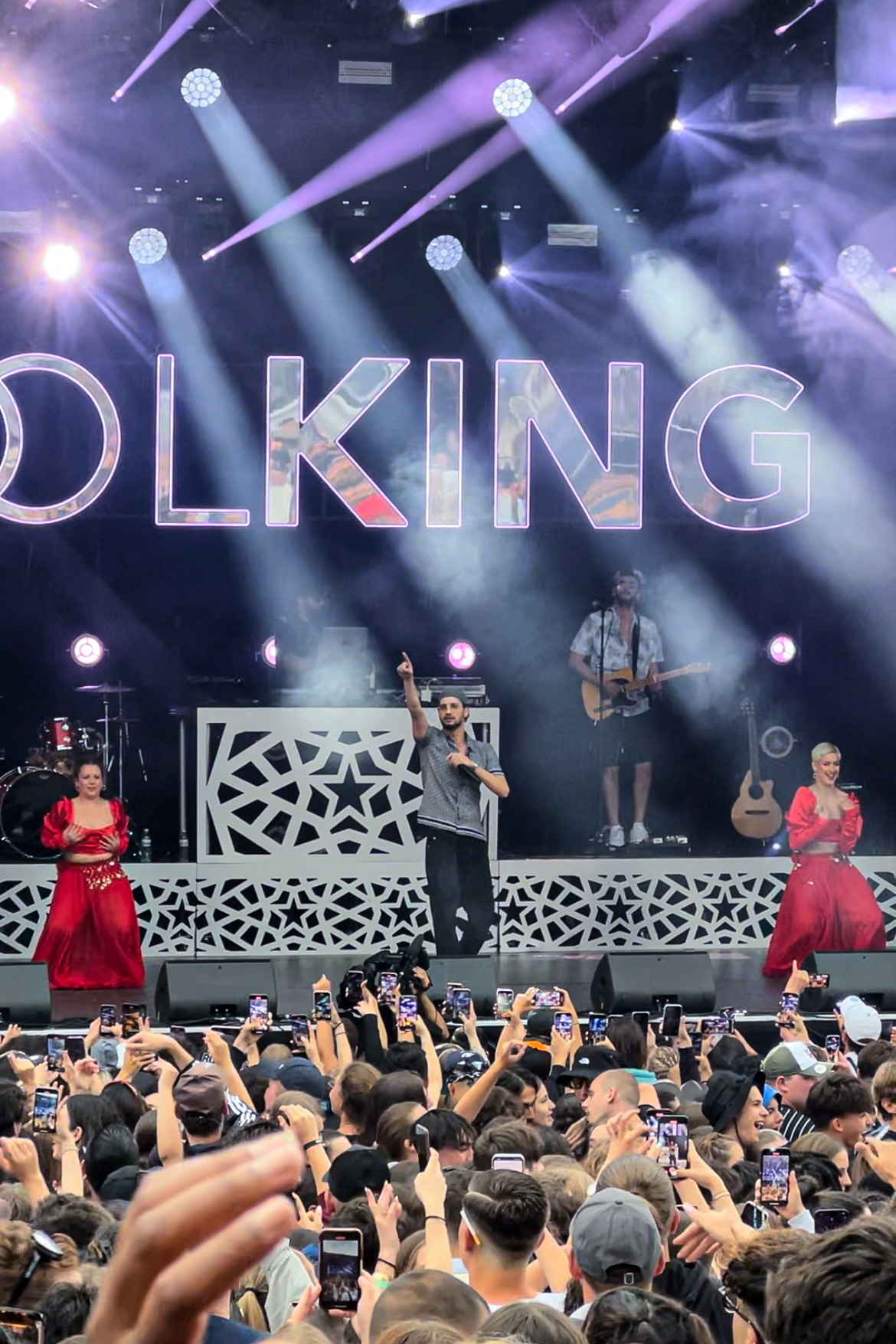
Algeria’s artist on the panel throughout this period is Soolking, and his exit from the 26 September panel was a narrow one rather than a reclassification: his 59,518 chart streams that day fell 7,171 short of the 66,689 needed to hold the panel’s 50th and final place.
| # | Metric | Streams, 26 Sep |
|---|---|---|
| 1 | Top-50 cutoff (Mahmoud El Esseily, 50th place) | 66,689 |
| 2 | Soolking's actual chart streams | 59,518 |
| 3 | Shortfall below cutoff | 7,171 |
Source: Computed from this desk's spotify-african-artists-global panel and panel-classification-decisions-26-september-2026, retrieved 26 Sep 2026 · download the data
What would have to be true for this to be wrong#
The finding does not rest on the 2 most diverse dates in the series. Across all 6 dates, the panel has averaged 5.17 origin countries. Drop 28 August, the single most diverse date, and the remaining 5 average 4.8. Drop both 28 August and 4 September, the 2 most diverse dates, and the remaining 4 average 4.5. The mean keeps falling as the highest-diversity dates are removed rather than rising back toward the full-series figure, which is what this measure would do if a single unusually diverse date were carrying the average on its own.
| # | Scenario | Rows | Mean | Change in mean, % |
|---|---|---|---|---|
| 1 | All rows | 6 | 5.17 | 0 |
| 2 | Excluding the top 1 (2026-08-28) | 5 | 4.80 | -7.10 |
| 3 | Excluding the top 2 (2026-08-28, 2026-09-04) | 4 | 4.50 | -12.90 |
Source: Recomputed from panel-country-diversity-series-2026, retrieved 1 Oct 2026 · download the data
What this counts, and what it does not#
Three limits apply. First, this is 6 dated snapshots rather than a continuous daily series: the gap between 4 September and 26 September alone spans more than three weeks, so no trend is claimed for the days in between, only for the dates actually measured. Second, the 30 September row is derived rather than directly snapshotted: no standalone country breakdown was built that day, so its split is reconstructed by adding the panel’s 2 dropped artists, Fireboy DML and Zee Nxumalo, back onto the following day’s 48 matched-artist country counts. Third, a fixed 50-artist cutoff means a single-artist country is always one chart position from entering or leaving; Soolking’s 7,171-stream shortfall on 26 September shows how thin that margin is, and the same mechanism, not any change in how artists are classified by origin, accounts for every periphery country’s appearance and disappearance in this series. This counts where the panel’s artists are from. It does not measure where the streams that put them there are being played, and it says nothing about whether any single artist’s catalogue is rising or falling.