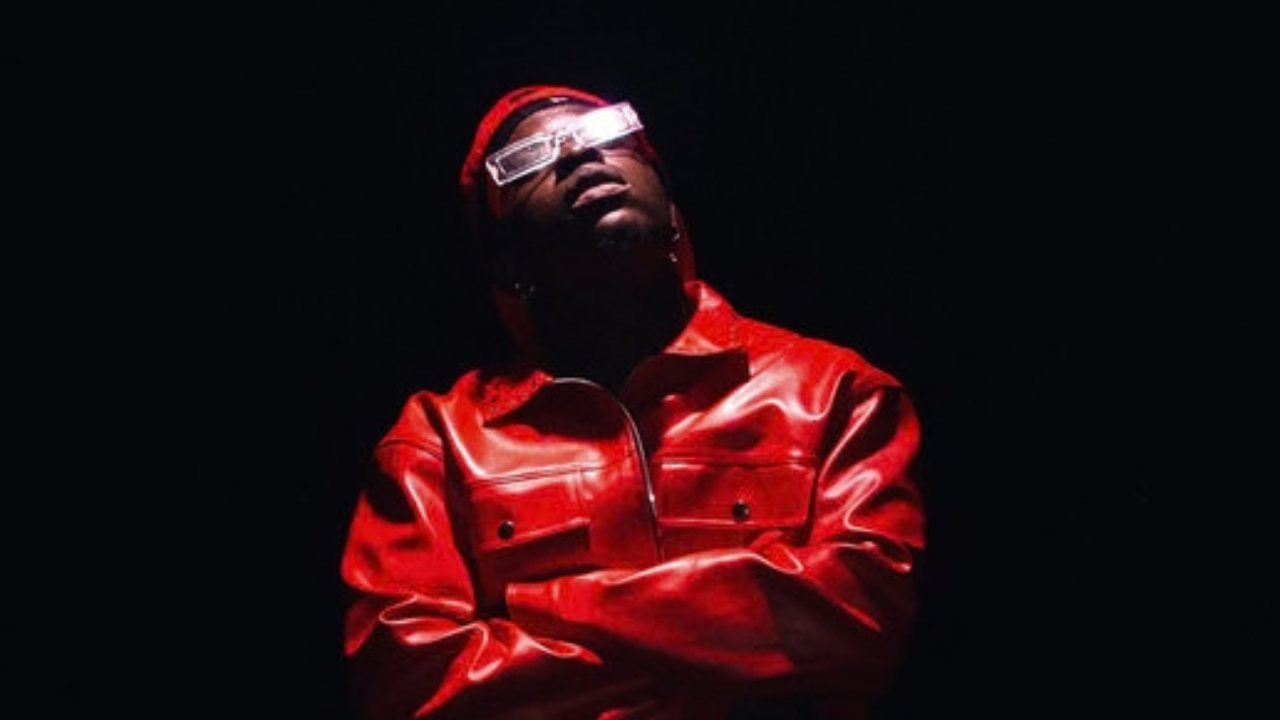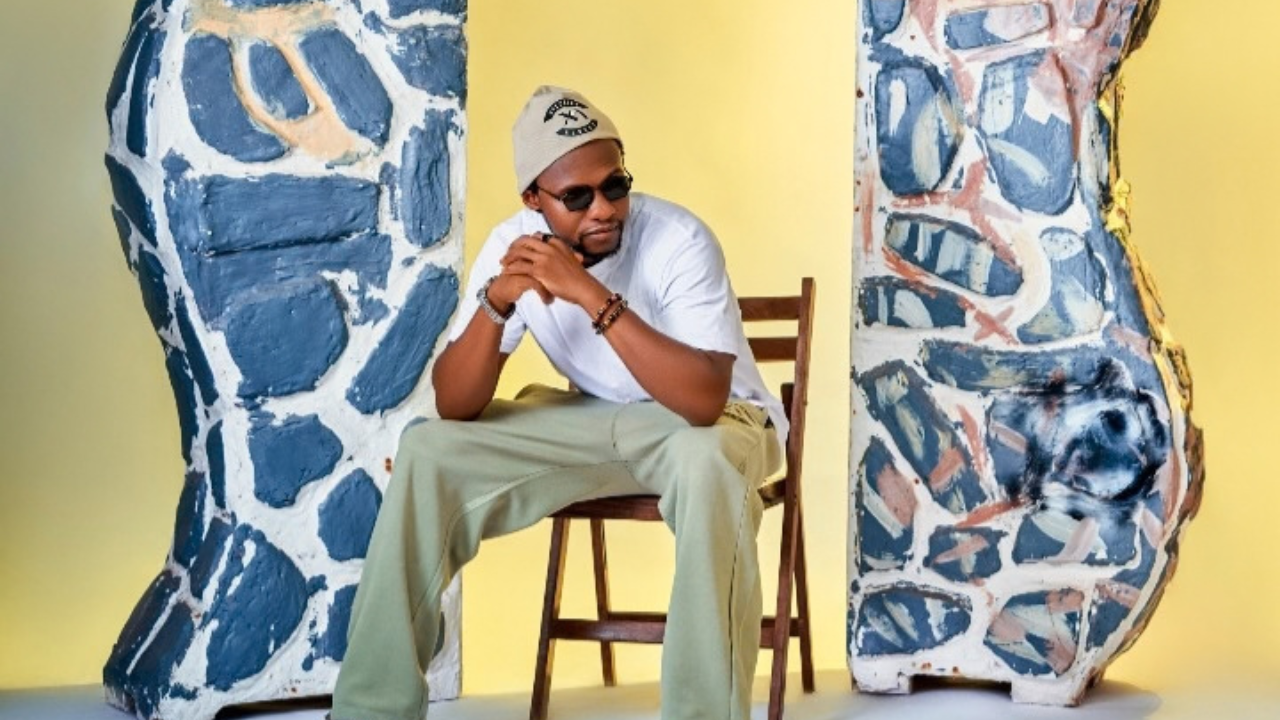

On 22 March 2021, Iyanya signed an agreement giving Sheer Music Publishing the right to represent him and to administer the collection of his royalties. Sheer was already a wholly owned subsidiary of Downtown Music Holdings when it signed him. On 20 February 2026, Virgin Music Group completed its purchase of Downtown, so the chain above that agreement now ends at Universal Music Group. Nothing about Iyanya’s recordings entered that chain. Across 128 of his releases on Apple, not one phonogram credit names any company in it. The recurring names are Made Men Music Group and Ziiki Media.
This is the ordinary shape of an African artist’s rights. The signing was announced in 2021 as a career moment for the Nigerian singer behind Le Kwa Ukwu. What was not covered is that the counterparty was already American-owned, that its owner would itself be sold, and that the only part of Iyanya’s business travelling upward was the part attached to his songs rather than his records.
What the agreement actually says, and what it does not#
The announcement issued on Sheer’s behalf says the company “signed an agreement to represent popular Nigerian artist Iyanya”. Iyanya, quoted in the same document, said he expected the publisher to help him “harness my creativity and administer the collection of my royalties effectively”.

Both phrases describe representation and administration. Neither describes a sale. No sentence in the document says Sheer acquired, bought or took ownership of any copyright in any Iyanya composition. There is no royalty split, no advance, no minimum, no list of works, no term and no territory.
That matters because different legal relationships get collapsed into the word “signed”. A publisher that owns a copyright share has bought part of the song. A publisher that administers does registration and collection for a commission and hands the money on. Co-publishing sits between the two. Only one of those is a transfer of property, and the document does not tell us which was signed. We report that as unknown, because it is.
Sheer was already Downtown’s when it signed him#
The release is unusually clear about this, in its boilerplate rather than its body: “Sheer is a wholly owned subsidiary of Downtown Music Holdings.” The body adds that Sheer Publishing Africa “was acquired by Downtown Music Holdings in May”, in a sentence about the company’s 2020. The publisher’s own site now carries a short timeline that matches: founded as Sheer Publishing in 1996, joined Downtown in 2020, rebranded as Downtown Music Publishing Africa in 2025.
So when an African songwriter signed with what the release called “the largest independent music publisher in Africa”, the parent was American and had been for ten months. The word independent was doing a lot of work.
The African arm sold Curve to creators seven months before Brussels ordered it sold#
On 7 July 2025, the rebrand post on the publisher’s own African site told creators what they were getting out of the name change: “through this rebrand, creators now have access to advanced systems like Curve for real-time royalty transparency, neighbouring-rights administration, and artist-first contracts.”
Curve is Curve Royalty Systems, Ltd, a royalty accounting platform Downtown owned. Real-time royalty transparency is not a small promise to African songwriters, who have spent two decades being told their money is late because the systems are not there.
On 13 February 2026, the European Commission cleared Universal’s acquisition of Downtown under case M.11956, and it cleared it on one condition: the full divestment of Curve. Not a firewall, not an undertaking about access, a sale. The Commission’s reasoning is specific. Curve processes “information regarding the commercial relationship between an artist and its label”, which means it holds the commercial terms of Universal’s competitors. The Commission found Universal would have both the ability and the incentive to look, naming the incentive precisely: to “assess the profitability” of artists signed to rival labels, and to gain regional and demographic market insight.
The remedy is comprehensive: all of Curve’s customers and their data, its supply contracts, its personnel, and the platform including source code, data and algorithms. The merged company gets back only a transitional licence, carrying no customer data, for limited internal use. An independent trustee monitors compliance, and the Commission must approve the buyer separately.
Nothing in that decision mentions Africa. It was decided on European grounds, under jurisdiction that only existed because the Netherlands referred the case upward and Austria joined, the transaction being too small to meet the EU’s own turnover thresholds. Yet the platform African creators were told in July 2025 they now had access to was ordered out of the group seven months later, and no document this desk could find tells them what that means.
One acquirer, two announcements, one list quietly shorter#
Put Virgin Music Group’s own two press releases side by side and the remedy shows up as a deletion.
On 16 December 2024, announcing the deal at 775 million dollars in cash, approximately 737 million euros, Virgin described Downtown’s core divisions as “Artist & Label Services, Distribution, Royalties & Financial Services, and Music Publishing”, and listed the portfolio as “FUGA, Downtown Artist & Label Services, Curve Royalties, CD Baby, Downtown Music Publishing and Songtrust”.
On 20 February 2026, announcing completion, the divisions are “Artist & Label Services, Distribution, and Music Publishing” and the portfolio is “FUGA, Downtown Artist & Label Services, CD Baby, Downtown Music Publishing and Songtrust”. Curve Royalties is gone. So is the whole Royalties & Financial Services division. Neither release says why, and the second one does not repeat the price.
This is not one party lying. It is a company describing an asset it expected to keep, then describing the same business after a regulator took that asset off the table, without marking the change. The explanation sits in a Commission document published seven days before completion.
The masters never entered the chain#
Set against all of that corporate motion, Iyanya’s recordings stayed outside it.
Apple’s catalogue for him runs to 128 collections, and this desk read every phonogram credit on the Nigerian storefront and then on the American one. The two are identical, so the credit is not a regional artefact. Ziiki Media appears on 35, Made Men Music Group on 25, Mavin on 6 across 2016 to 2018, Temple Music on 6 across 2017 to 2018, and Violet 360 on 7 across 2018 to 2020. Twenty-two collections carry a joint credit, in forms including “Made Men Music Group / Ziiki Media” and “Made Men Music Group, distributed by Ziiki Media”, and those are dated 2021 and later.
Thirteen carry Ziiki alone, and two are instructive: the 2013 album Desire and the 2015 album Applaudise both now read as a 2021 Ziiki Media phonogram. Back catalogue re-credited under a later rights line is a distribution or licensing event on the recordings side, separate from the publishing chain, and it happened in the same year Iyanya signed his publishing to a Downtown subsidiary. Two parts of one artist’s business moved that year, in different directions, to different companies.
What this means for artists#
First, when you sign publishing representation, read the counterparty’s parent, not its name. A company can be the largest independent publisher on the continent and be wholly owned abroad on the day it signs you. Ask who owns it, ask what happens to your agreement if that owner is sold, and ask whether you have a consent or termination right when it is. The ultimate parent above Iyanya’s agreement changed in February 2026, and no public document shows he was consulted.
Second, technology you were promised is not a contractual term unless it is in the contract. A rebrand post is marketing. If real-time royalty reporting is why you signed, the obligation to provide it, and a remedy if it stops, belongs in your agreement. Curve was presented to African creators as a benefit of a rebrand, then ordered divested by a regulator who was not thinking about Africa at all.
Third, keep your masters and your publishing on separate maps and know both. Iyanya’s recordings have stayed with Nigerian companies throughout, which is why the corporate upheaval above his publishing did not touch them. That separation is an asset. Artists who assign both to the same group lose it.
What could not be established#
Whether the 2021 agreement is still in force. A search of the publisher’s own current website for Iyanya returns exactly one result, an industry news item from 6 July 2015 about a Zimbabwean producer. There is no signing announcement and no roster entry naming him on the site of the company that signed him. That is an absence, not a denial, and it is reported as an absence.
Whether the agreement is administration, co-publishing or an assignment, and its territory and term. None of it is in the document.
The publisher of record for Iyanya’s compositions in any society or registry. Every route was attempted and every one failed: the ASCAP works endpoint refused the request, the Mechanical Licensing Collective’s interfaces returned nothing, BMI returned a bot-defence page, the United States Copyright Office records application returned an empty shell, CISAC’s international works database returned a server error, and Downtown’s own site refused the request. Without a registry read, no publisher-of-record claim is made.
The songwriters behind the works, because the composer field is empty on every track sampled. Whether any Iyanya work was caught by any Downtown copyright disposal: reports of such a disposal exist but could not be opened and read, so no figure and no transaction is asserted. And whether any African client of Downtown Music Publishing Africa was ever onboarded to Curve, which is the question the divestment makes urgent and which no document answers.