
Nothing changed hands. That is the finding, and it is the point.
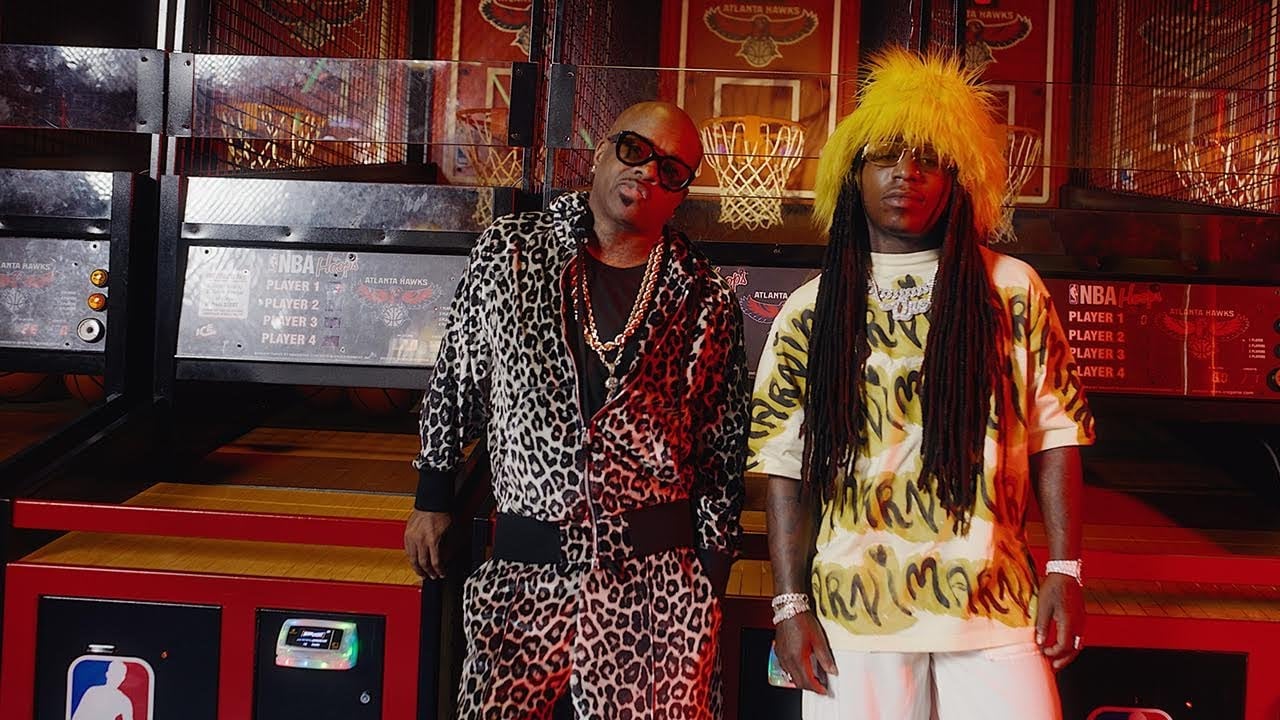
Eddy Kenzo, born Edrisah Musuuza in Masaka and the first Ugandan artist nominated for a Grammy, has a recorded catalogue no major record company touches. Across the 150 releases returned by Apple Music’s catalogue lookup for him on 28 September 2026, not one carries a phonogram credit naming Sony, Universal, Warner or any imprint of theirs. Eighty-nine name Big Talent Entertainment, the Kampala label he runs, the earliest dated 6 March 2015 and the most recent 21 September 2026. Deezer’s label field agrees on every release cross-checked, and MusicBrainz files all ten Kenzo releases it holds under the same name.
Eleven years and six months of an African star’s output, and the ownership question has one answer.

There is one exception, and it is the interesting one. The record that made Kenzo a Grammy nominee is not in the 89. “Gimme Love (feat. Eddy Kenzo)”, released 4 March 2022, reads ℗ 2022 Vitae Records on Apple Music and carries the label “Vitae Records” on Deezer. Vitae is an independent label in Chicago, founded in 2014 by the recording artist Matt B and Angela V. Benson, who is its chief executive. On the record that gave Uganda its first Grammy nomination, Kenzo is a featured artist. His own company does not appear at all. The full deal record, with every source and every caveat, is filed here.
The offers he says he refused#
On 13 November 2025, on the Ugandan television programme NBS After 5, Kenzo said Warner Music had come to him with an offer of USD 1 million, and that Sony Music, Disney and Universal Music Group had each sent him signing agreements by email. He said he turned all of them down and still has the paperwork.
His stated reason was structural rather than sentimental. “When you take a look at artists signed under record labels, some seem like they are prisoners,” he said. “If I signed with them, they would give me their money, and I would sell my catalog to them for 10 years or whatever the contract would say, which would look like a loan. Because they have to milk you until their money and interest returns. Because even when the contract expires for them, it stays valid until they meet their goal.”
That is a description of recoupment. An advance is not a fee: it is money paid up front against royalties not yet earned, and until the label recovers it the artist sees nothing more. Whether an unrecouped balance outlives the term depends on the contract, and no contract here is public.
The caveats matter. The USD 1 million figure comes from Kenzo and nobody else. Warner Music Group has not confirmed, denied or commented on it in anything this desk located, and nor have Sony, Disney or Universal on the agreements he attributes to them. A search of the United States Securities and Exchange Commission archive for “Eddy Kenzo” returned only unrelated matches, as expected: an approach of this size is not a reportable event at Warner. The figures are contested, too. A second regional report of the same interview is understood to carry a wider range, but its publisher returned HTTP 403 to every request from this server, so it could not be read and no figure from it is used here.
Eleven years, one name#
Does the catalogue look like that of an artist who said no? It does.
The credit appears in several spellings, including “Big Talent Entertainment Ltd” and the same in full capitals on the 2016 album Zero to Hero. Those are the same entity. Two releases carry names one letter off: “Mumpowe” (2022) reads “Big Talent Entertainmet”, and “Born in Africa (Remake)” (2023) reads “Big Time Entertainment Ltd”. Both are recorded as found and neither is counted.
Three releases claim the artist personally rather than the company: Sitya Loss, the 2014 album carrying the song that made him a continental name, the 2023 album Blessings, and the single “Omutto”. MusicBrainz disagrees about Sitya Loss and files it under Big Talent Entertainment. On that release the registries are not consistent.
One song carries two different rights claims. “Inabana” exists twice. The delivery dated 28 August 2019 reads ℗ 2021 Ziiki Media, the Johannesburg distributor and aggregator. The delivery dated 30 September 2019 reads ℗ 2019 Big Talent Entertainment. Apple and Deezer agree with each other on both. Which claim is current could not be established.
Sterling Stone Publishing appears jointly with Big Talent on three releases, in 2024, 2025 and 2026. The credit states no structure, and the word “Publishing” inside a phonogram line is not evidence that a publishing right is involved: a phonogram line concerns the sound recording and nothing else. On the most recent, the 2026 single “Motivation”, Deezer files the release under a different label again, “Chase Bell”. It is the only release checked on which the two services disagree.
The Grammy record is not his#
The Recording Academy’s own category page for Best Global Music Performance at the 65th Grammy Awards lists “Gimme Love” by “Matt B, Eddy Kenzo” among the nominees. The award went to “Bayethe”.
The recording copyright in that track is claimed by Vitae Records on both registries checked. The label’s own site describes it as “Founded in 2014 in Chicago by GRAMMY-Award winning husband-and-wife duo Matt B & Angela V. Benson” and lists exactly one artist on its roster: Matt B. MusicBrainz types it as a Chicago imprint with a life span beginning 17 October 2014. Vitae’s site does not mention Eddy Kenzo anywhere. It calls “Gimme Love” the lead single from ALKEBULAN and says it “earned Matt his first GRAMMY nomination”.
This is not an accusation. A featuring credit on somebody else’s master is an ordinary arrangement, and the guest artist normally has no ownership in the recording. But the most valuable asset in Eddy Kenzo’s public story, the recording carrying his country’s first Grammy nomination, is one he does not own and probably never did.
A licence appeared, then vanished#
The 2022 single reads Vitae Records alone. The reimagined album version, track six of Matt B’s ALKEBULAN, released 18 August 2023, reads “℗ 2023 Vitae Records, under exclusive license to Hitskope”. The same wording carries onto ALKEBULAN II, released 23 August 2024, which won Best Global Music Album at the 67th Grammy Awards. On ALKEBULAN III: The Water Remembers, released 21 August 2026, the Hitskope wording is gone.
Hitskope Music Group is a Los Angeles distribution and label services company founded by Danny Barros. Neither party announced the arrangement or its end. “Under exclusive license to” is distribution and exploitation wording, not a transfer of copyright, and the claimant on both Grammy-era albums stayed Vitae Records throughout. A licence sat over the catalogue for roughly three years, including a Grammy win, and the only public trace is one clause in a metadata field.
What this means for artists#
Three things follow, and they generalise beyond Kampala.
Refusing a deal is a rights position, and it shows. Kenzo’s claim that he stayed independent is visible in eleven and a half years of credit lines naming one company. If you want to know whether an artist is signed, do not read the announcement. Read the phonogram line on their last six releases. It is free, public, and updates faster than any press office.
A featuring credit is not an ownership stake. Guesting on a record that goes on to be nominated for something enormous does not give you a share of that master. What you have is whatever your feature agreement says: a fee, a royalty point or two, sometimes neither. Ugandan coverage of the 2023 nomination treated it as a national milestone. Commercially, the asset sat in Chicago. Get the split in writing before the session, not after the nomination.
Independence is not the same as being distributed well. No distributor is named on any Big Talent phonogram line checked. That is unusual: Swangz Avenue, the other major Kampala label, names Kelele Digital in its credit lines. Owning your masters while nobody can tell how they reach the services is weaker than it looks, and it is the position from which “Inabana” ended up with two rights claims in five weeks. Ownership answers who gets paid. It does not answer who collects.
What could not be established#
No company registration for Big Talent Entertainment was located, and it does not appear on the United Kingdom register. The one near-name there, BIG TALENT LTD, company number 14376231, has a single British director appointed in September 2022 at a London formation-agent address and was dissolved on 18 March 2025. Nothing connects it to Kenzo, and this desk does not. Uganda’s Registration Services Bureau publishes no open company search, so no Ugandan filing was read.
Publishing is dark. Nothing located identifies who publishes or administers Kenzo’s compositions, including his writer share of “Gimme Love”. The ASCAP repertory interface returned HTTP 403 to this server and the BMI interface redirected to a not-found page. No society reading was obtained, and no publishing claim is made here.
The 89 credits prove less than they appear to. A phonogram line records who claims a recording as delivered to a service. It does not prove Kenzo owns those masters outright, that no licence sits underneath them, or that nobody holds a charge over them. It proves that no major label is claiming them, which is the narrower thing, and on the evidence read here, the true one.