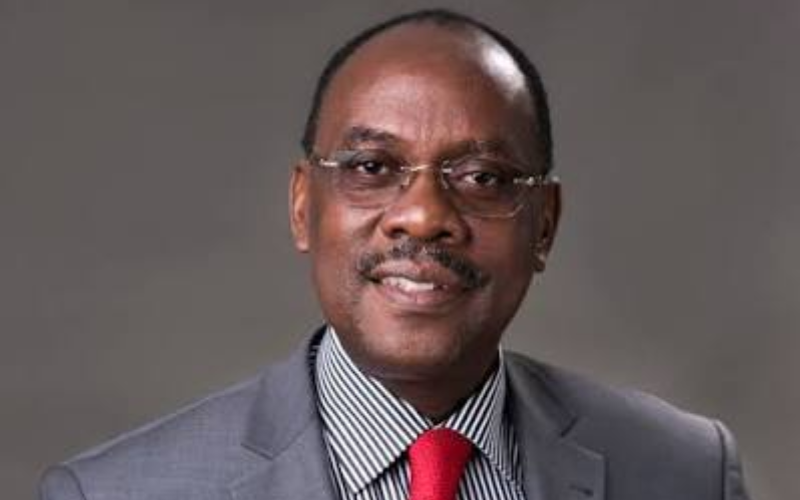
Japheth Kassanga, who performed as part of The Kassangas, recalls how live gospel music shaped Sunday television in Kenya, and says the industry’s royalty systems still need to distinguish between rightsholders.
Before gospel music became an industry in Kenya, Sunday television offered audiences a live experience. Families tuned in to Voice of Kenya (VOK) to watch Joy Bringers and Sing and Shine, where singers performed live.
Live performance on Kenyan television#
Japheth Kassanga and his wife, known as The Kassangas, sang duets and became regular participants on the programmes. They belonged to a pioneering generation that included Agnes Mwafrika, Mary Atieno and the late Isaya Symekha.

“Yes, we were very familiar faces on both shows, among the pioneers alongside Agnes Mwafrika, Mary Atieno, the late Isaya Symekha and other gospel musicians of the time,” Kassanga recalls.
His television work began while he was teaching music at Daystar University. VOK producer Karanja Kimwere invited him to join the programmes as master musician and choir master.
“My work was to assist the TV producers, Mr Karanja Kimwere, with talent scouting for solo artists, conduct music rehearsals together with my VOK band, and then present them for on-air record for Sing and Shine, Joy Bringers, or both,” he says.
Live meant exactly that. No backing tracks were available to cover a weak note or a missed cue, so artists performed with musicians, and each broadcast was a one-time event.
“All performances then were live, no recorded or prerecorded music until much later,” Kassanga says. “There was no pre-recorded or track music, since studios were small and invisible at the time.”
Kassanga says the gospel music circle was small. From the mid-1980s to 1990, formula writers were active and were regularly essential to the shows, and The Kassangas shared the platform with the Youth For Christ Team and other emerging performers.
From performer to mentor#
As young singers sought guidance, Kassanga’s role changed. He recorded an album in 1988 and was among the first solo gospel artists in Kenya to do so, which made him a reference point for musicians hoping to follow the same path.
“Most of them had no money to pay for studios, so I ended up becoming a music producer, sponsor and promoter of the pioneer gospel artists of the 90s for almost 20 years thereafter,” he says.
The shift to mentorship was driven by demand and a wish to help others. Kassanga invested his own money in developing musicians and supporting different genres, working behind the scenes for more than two decades.
Church invitations grew in number, but the ministry was rarely lucrative. Many churches expected free performances, while musicians brought their own instruments and hired transport to move them.
Rights and royalties#
Kassanga says the industry’s unresolved problems have become clearer over his decades in music. One challenge, he says, is the failure to distinguish between the different people whose work and investment make recorded music possible.
“Both our industry stakeholders and those administering creatives and the copyright administrator still suffer from lack of knowledge to differentiate rightsholders, in order to serve them according to their specific needs,” he says.
He argues that the word “artist” is often treated as though it covers everyone. Recordings, however, involve several groups, each with distinct rights:
- Performers
- Composers
- Writers
- Arrangers
- Producers
- Publishers
- Sound recording owners
He also questions how royalty systems will account for international catalogues paid through reciprocal agreements and treaties.
These concerns come from experience. As chairman of the Music Copyright Society of Kenya (MCSK), Kassanga advocated joint royalty collection among the three licensed collective management organisations (CMOs). Negotiations on revenue-sharing mechanisms were difficult, but the organisations reached an agreement.
“It was a big success in my tenure as MCSK Chairman,” he says. He describes joint collection as the most effective way for the organisations to work together on license fees.
Leading the Kenya Association of Music Producers#
Kassanga now heads the Kenya Association of Music Producers (KAMP), a copyright and related rights CMO. He says the role is personal, because he has invested heavily in production and understands the pressure on producers and labels to recover recording costs.
“Well, it feels nice and fulfilling for me to lead an organization tasked with ensuring that producers earn from the commercial use of recorded music, because of the huge investment I have done in the past as a producer,” he says.
KAMP is navigating ongoing challenges and calls for better royalty administration. Kassanga is confident the board can make progress.
To young producers investing in new artists, his advice is to keep going. He believes effective collective management can help them recover their investments, provided organisations work together and engage constructively with government.
“My advice to young music producers who are investing their money in the production of music artists is not to stop doing it, because there is hope in the CMO that advocates for their rights,” he says.