
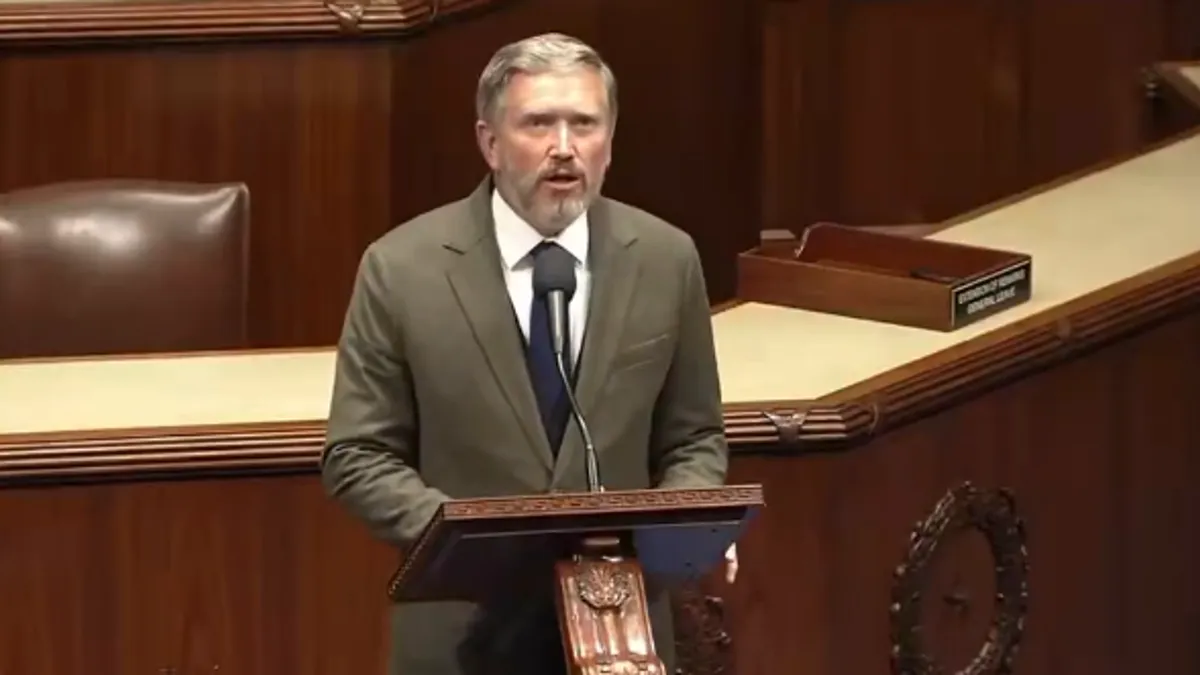
United States Representative Thomas Massie, a Republican from Kentucky, has begun collecting signatures for a discharge petition to force a House vote on the Epstein Files Transparency Act II, after reading on the House floor the names of more than a dozen people he described as “Epstein co-conspirators” linked to convicted sex offender Jeffrey Epstein.
In a social media post on Monday night, Massie wrote:
“On the House floor tonight, I read the names of several Epstein co-conspirators who should be investigated and prosecuted. I also began collecting 218 signatures for the discharge petition to force a vote on Epstein Files Transparency Act II.”
Signature Drive and Floor Remarks#
Massie said the second transparency act would give state attorneys general access to Epstein files required to prosecute perpetrators under state law and make it easier for survivors to sue to get their files.
On the House floor, Massie said:
“It’s been a year since the president signed the Epstein Files Transparency Act, and the government continues to withhold over three million files. That’s why we’ve introduced the Epstein Files Transparency Act II, to bring the fight to the state courts, accountability to the Department of Justice, and closure for survivors. Perhaps hearing these names will shame the Department of Justice into delivering justice.”
Andrew Mountbatten-Windsor, the former Prince Andrew, has been accused by Virginia Giuffre of sexual abuse after Epstein allegedly trafficked her. He has denied ever meeting Giuffre. Billionaire retail executive Les Wexner has denied prior knowledge of Epstein’s criminal activity during a deposition with the House Oversight and Government Reform Committee.
Legislative Enforcement Provisions#
Under the proposed legislation, enforcement provisions would be added to the original Epstein Files Transparency Act, which became law in November 2025.
Epstein victims, state attorneys general, district attorneys, and other authorized state and federal officials could sue the U.S. attorney general over records they argue were unlawfully withheld, delayed, redacted, concealed, or otherwise left unpublished.
Victims could also seek full federal records concerning themselves and the crimes against them, while identifying information about other victims would remain protected. State and local prosecutors could seek unredacted records needed for criminal investigations or court proceedings. Members of Congress could request full, unredacted access to covered records, and lawmakers could challenge the Department of Justice in court if it failed to meet the requirements of the law.
Justice Department Response#
Massie and supporters of the Epstein Files Transparency Act II claim the Department of Justice has withheld millions of Epstein-related records and maintained redactions they say violate the original transparency law.
The Justice Department says it complied with the law by publishing nearly 3.5 million pages, over 2,000 videos, and 180,000 images, and that any material withheld from the public included duplicate records, privileged information, statutory exceptions, and material unrelated to the Jeffrey Epstein and Ghislaine Maxwell cases.