
The South African Music Industry Council calls itself the sole voice of the country’s music industry, and two separate government departments have blacklisted it. The Department of Trade, Industry and Competition (DTIC) blacklisted the body, known as SAMIC, in 2021. The Department of Sport, Arts and Culture (DSAC) named it a defaulter in a letter dated 30 April 2025, after SAMIC failed for years to account for public money it had already received. Neither block has stopped SAMIC from continuing to lobby Parliament on copyright law on behalf of the industry it says it represents.
That gap, between what SAMIC claims to be and what the paper trail in Parliament and the press shows it has done, is the actual story. It is not a scandal that broke last week. It is a mechanism that has been running since at least 2021, largely undisturbed by the fact that it kept failing.
What the South African Music Industry Council actually is#
SAMIC is not a body individual musicians join. It is an umbrella organisation, registered as a non-profit (Reg. No: 150-953 NPO) according to its own parliamentary submission, whose members are other industry bodies: the Recording Industry of South Africa (RiSA), the Music Publishers Association of South Africa (MPASA), the Black Technical Production Association (BTPA), the South African Music Industry Service Providers Association (SAMIPA) and the collecting society the South African Music Rights Organisation (SAMRO).

It was active by mid-2016, when it publicly backed the SABC’s move to 90% local content on its radio stations. Its stated purpose is to unify, formalise and represent the industry as a single voice: a self-regulatory body, a policy lobbyist, and a mediator between its member organisations. Leadership has rotated through several names, among them Eugene Mthethwa as an early president, and Vusi Leeuw, who has more recently held the title.
Its one clear function: fighting South Africa’s copyright bill#
The one place SAMIC’s mandate is unambiguous is copyright policy. It made a formal parliamentary submission on the Copyright Amendment Bill and the Performers’ Protection Amendment Bill, arguing that the bills should not be allowed to weaken the income rights of composers and performers, and warning that broad new exceptions could let large users exploit recordings without paying royalties. That submission sits in the official parliamentary record. It is the clearest evidence that SAMIC does, in fact, function as a lobbying voice for the industry on the single issue, royalty income, that determines whether South African musicians get paid at all.
How an “umbrella voice” ended up blacklisted by two departments#
The blacklisting did not happen once. It happened in layers, and the layers did not talk to each other.
The money came from DSAC, which funded a SAMIC elective conference in 2021, held at the Birchwood Hotel in Boksburg, in two tranches under an agreement worth R541,800 with a further R60,200 due only once SAMIC could prove how the first tranche was spent. SAMIC could not produce that proof. According to reporting on the department’s own letter, SAMIC “failed to submit the required report despite numerous reminders” from DSAC, and by 30 April 2025 it had been formally listed as a defaulter and deregistered from future departmental funding.
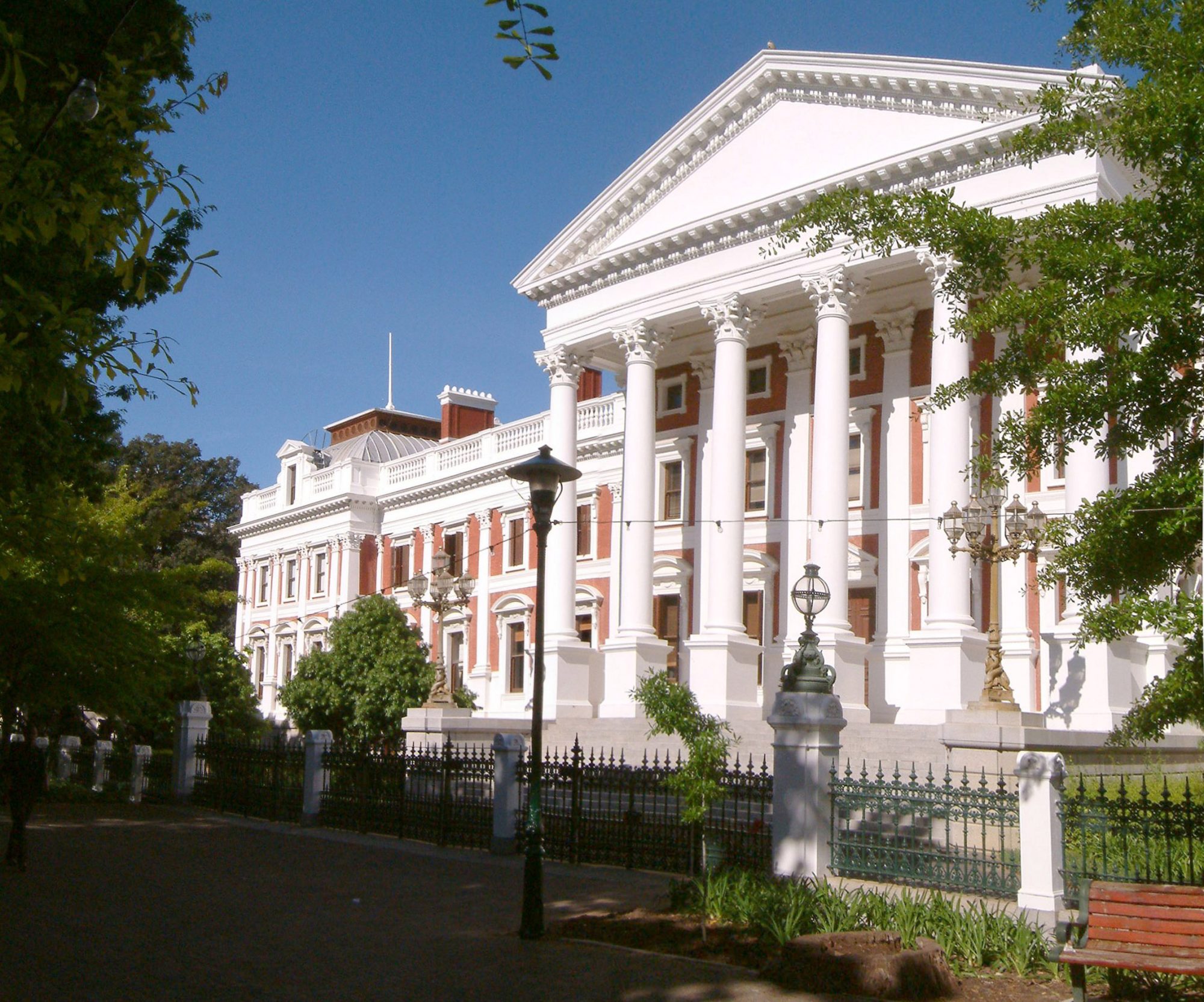
Separately, and earlier, DTIC had already blacklisted SAMIC in 2021 over the same unresolved accounting. That is where the story stops being simple negligence and starts being a governance question. In a 2025 sitting of Parliament’s Portfolio Committee on Sport, Arts and Culture, the same body that sits in the Houses of Parliament in Cape Town and hears the copyright bill submissions described above, then-Acting Deputy Director-General Vusithemba Ndima told the committee he had not approved any funding for SAMIC and denied any awareness that SAMIC had been blacklisted. Committee member Eugene Mthethwa, SAMIC’s own former president, challenged that denial on the record, citing an email dated 31 March 2021 on which Ndima had been copied and which detailed the blacklisting directly, and pointing to a near-identical departmental denial given to a different MP in September that same year.
In an earlier sitting on the same committee, the department’s Dr Khumalo confirmed that SAMIC remained a “going concern” in law, meaning the blacklisting attaches to the organisation itself rather than to whichever individuals currently sit on its board, and that it would have to resolve its outstanding compliance issues before it could receive public money again. Mthethwa, for his part, disputed that he personally carried any liability, saying his signature never appeared on the department’s memorandum of understanding with SAMIC, and separately alleged that a different blacklisted entity had gone on to receive funding under another name.
None of this required an investigation to surface. It sits in the minutes of one committee meeting, the minutes of an earlier one, and the department’s own letter to its portfolio committee chairperson, Joe McGluwa. What kept it from being resolved for four years was not secrecy. It was that no single office in either department had to reconcile what the other one already knew.
What this means if you are an artist in South Africa#
Three things follow from this, and none of them require you to have an opinion on SAMIC’s politics.
“SAMIC represents the industry” is a membership claim, not a claim about you. SAMIC’s members are organisations, not artists. If you are not a member of RiSA, MPASA, SAMRO or one of its other constituent bodies, nobody at SAMIC has a mandate from you specifically, however the council characterises its own reach in a press statement or a parliamentary hand-out.
The bodies that actually move your royalty income are not SAMIC. Your money runs through your collecting society and your publisher, not through the umbrella body. SAMRO’s own numbers show the scale and the leakage in that separate pipeline: in the year to 30 June 2025 it allocated R630.2 million in royalties but paid out R419.7 million in cash. Check your registrations with SAMRO, CAPASSO and SAMPRA directly. A council-level accounting failure four levels up the chain from your bank account does not, on its own, tell you whether your own society is paying you correctly, but it is a reason not to assume the loudest industry voice is also the one handling your money.
A body can be blacklisted by government and still speak for you in Parliament. There is no rule that a compliance default disqualifies an organisation from lobbying on legislation. SAMIC’s copyright advocacy and its funding default are legally unconnected. If the Copyright Amendment Bill or the Performers’ Protection Amendment Bill matters to your income, read what SAMIC actually submitted rather than assuming its governance record tells you anything about the substance of its position.
Quick answers#
What is the South African Music Industry Council?#
SAMIC is a non-profit umbrella body (Reg. No: 150-953 NPO) whose members are South African music industry associations, including RiSA, MPASA, BTPA, SAMIPA and SAMRO, rather than individual artists. It positions itself as a unified voice for the industry on policy, including copyright legislation.
Is SAMIC a government body?#
No. It is an independent non-profit organisation. It has, however, received public funding from the Department of Sport, Arts and Culture, including for a 2021 conference whose expenses it failed to account for.
Has SAMIC been blacklisted?#
Yes, by two separate departments. The Department of Trade, Industry and Competition blacklisted SAMIC in 2021. The Department of Sport, Arts and Culture listed it as a defaulter in a letter dated 30 April 2025 over the same unresolved 2021 conference funding.
Does SAMIC represent individual musicians?#
Not directly. Its membership is made up of industry associations and a collecting society. An artist’s direct relationship for royalty payment runs through bodies like SAMRO, CAPASSO or SAMPRA, not through SAMIC.