

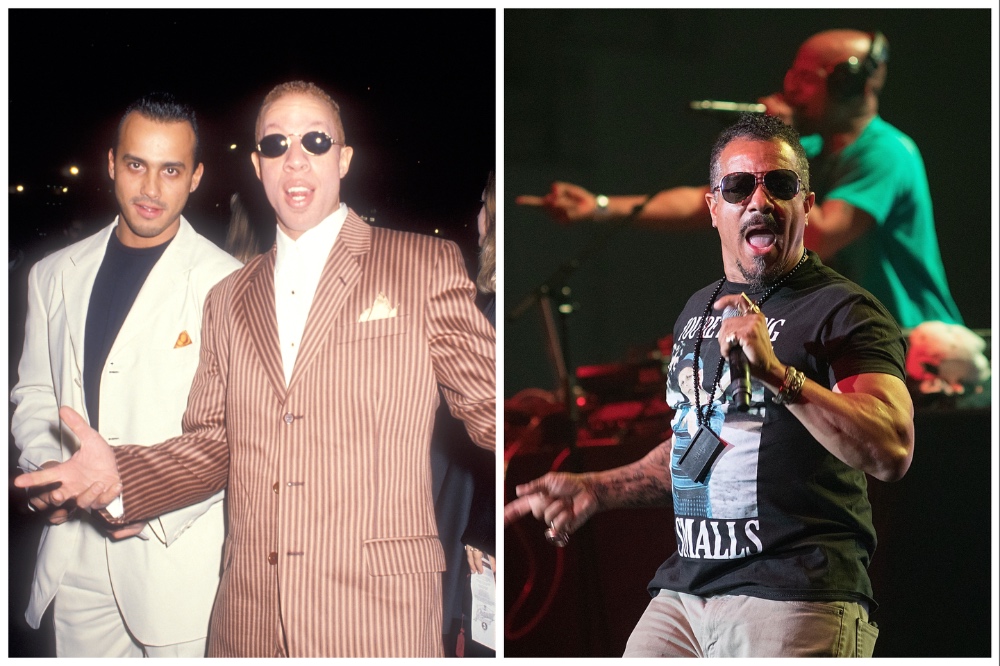
Robert Clivillés, co-founder of C+C Music Factory, has filed a $30 million lawsuit in the United States against Freedom Williams, alleging that the vocalist wrongfully claimed the group’s trademark despite never being a member.
The suit was filed Aug. 14 in the United States District Court for the Eastern District of New York. Clivillés is acting as his own attorney.
The complaint lists claims including:
- defamation
- fraud
- trademark infringement
- unfair competition
- breach of contract
Clivillés asks for cancellation of the trademark Williams now holds, plus compensatory and punitive damages totaling $30 million.
The lawsuit’s core claims are separate from the canceled Freedom 250 concerts on the National Mall in Washington, D.C., which were tied to Trump-related cancellations. Clivillés states that a video Williams posted during that controversy contributed to his decision to file the suit.
Clivillés had been warning of his intention to sue for weeks. On Sunday, he posted a social media video showing a process server delivering papers to a person identified as Williams. The person initially kept walking as the server dropped the paperwork on the ground, then accepted the documents. Williams’ face is not visible in the footage.
Public video and new single#
The lawsuit describes a video Williams posted on May 29, 2026 to the official C+C Music Factory account, which Clivillés says Williams controls through a fraudulent trademark claim. The video was filmed while sitting on a toilet.
“On May 29, 2026, Williams posted a seven-minute video to the official C+C Music Factory account, which he controls through his fraudulent trademark claim, filmed while sitting on a toilet. In this video… Williams made statements invoking Adolf Hitler, used repeated racial slurs, and directed vulgar and sexually degrading language at members of the public. Plaintiff Clivilles had no warning of and no input into these statements and was forced to launch a competing official C+C Music Factory Instagram account to publicly disavow Williams’ conduct.”
Clivillés writes that he issued a public legal warning at that time for Williams to stop representing himself with the group name. Instead, Williams allegedly released a new single, “Into the Future,” under the C+C Music Factory name on June 12.
Group membership and trademark history#
Clivillés reiterates that the letters F and W do not appear in C+C, and that he and the late David Cole, who died in 1995, were the sole members of the group. C+C Music Factory broke through in 1990 with the No. 1 single “Gonna Make You Sweat (Everybody Dance Now),” followed the next year by the top 10 hits “Here We Go (Let’s Rock & Roll)” and “Things That Make You Go Hmmm…”
Williams was listed as a featured artist on all three singles, alongside vocalists Martha Wash and Zelma Davis, who also received featured credit. Clivillés contends that featured billing marked them as guests, not group members, a common practice in pop music.
According to the suit, Williams had a production contract with Clivillés and Cole. In mid-1991, around the time “Things That Make You Go Hmmm…” was released, Williams demanded his release from the 1990 agreement, stating he did not want to be associated with C+C Music Factory or with Clivillés and Cole’s enterprises going forward. He immediately stopped touring with the group. Sony Music negotiated his release and signed him to a full-length multi-album solo deal. Williams’ first and only solo album fared poorly commercially. C+C Music Factory continued without Williams. Clivillés and Cole released two more albums and several singles before Cole died in January 1995.
The suit alleges that beginning in 1996 and continuing to the present, Williams has been performing without authorization under the C+C Music Factory name, obtaining fraudulent trademark registrations in a name that refers to two other people, collecting $5,000 to $10,000 per unauthorized show worldwide, and most recently releasing commercial recordings and expanding the unauthorized use of the brand to entirely new parties through Big Mac Entertainment, LLC.
Clivillés and Cole’s estate made a formal estate settlement agreement that gave Clivillés exclusive use of the C+C Music Factory name. In 2005, Williams registered “C and C Music Factory” as a trademark, which was canceled in 2012. In 2024, he filed a new trademark application for “C&C Music Factory,” and as part of his application, Williams affirmed falsely and knowingly that he was the owner of the mark and that no other persons had the right to use the mark in commerce. Williams was granted the registration in 2015.
Clivillés says he filed a petition to cancel Williams’ registration in 2016. He says the petition failed to proceed because of a legal error made by his former lawyers, and the proceeding was dismissed with prejudice on June 25, 2018.