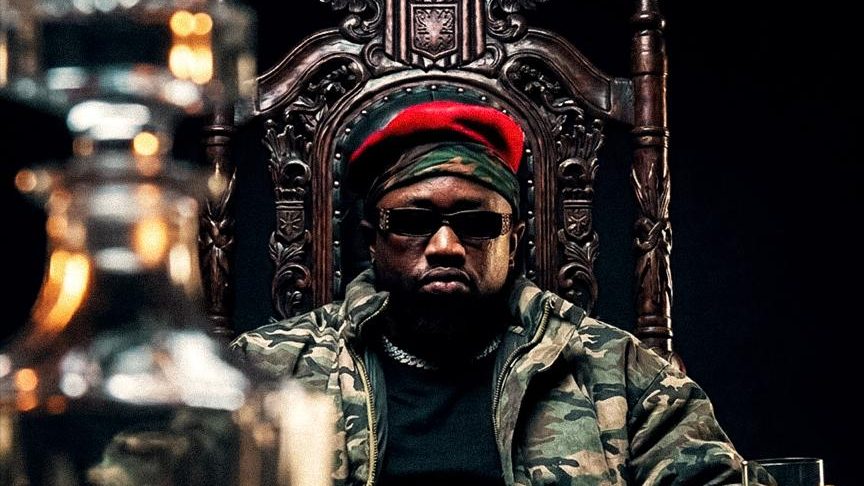

On 3 December 2024, Reservoir Media, Inc. (Nasdaq: RSVR) announced it had acquired “rights to the catalog” of Lebohang Morake, the South African composer, arranger and performer known professionally as Lebo M. The announcement named no price, no publishing entity on Lebo M’s side, and did not say which rights specifically changed hands. Reservoir’s own later description of the deal answers the second question: this is a music publishing transaction, the songwriting and composition side of the business. It is not, and could not be, a sale of the Lion King soundtrack recordings, which the Walt Disney Company owns as the films’ producer and always has.
What actually changed hands#
Reservoir operates two reporting segments, disclosed in its SEC filings as Music Publishing and Recorded Music. The first earns money from the underlying composition, the melody and lyrics as intellectual property, regardless of who performs or records it. The second earns money from a specific sound recording, the actual captured performance. They are different copyrights, often owned by entirely different parties, and conflating them is the single most common error in reporting a catalogue deal.
Reservoir’s own framing of its fiscal 2025 results places the Lebo M deal in the Music Publishing column, alongside separate acquisitions that year of the publishing catalogues of Lastrada Entertainment, Billy Strange and producer Big D Evans. In the same results, Reservoir listed a distinct Recorded Music acquisition, the catalogue of producer and engineer Jack Douglas. That the two are reported in different columns, in the same set of results, is the clearest available evidence that the Lebo M deal covers his songwriting and arranging credits and not master recordings.

This matters specifically because of what Lebo M is known for. His signature credit, the Zulu-language opening of “Circle of Life” on the 1994 Lion King soundtrack, sits inside a song officially composed by Elton John with lyrics by Tim Rice. Reservoir’s own announcement states that the opening “earned Lebo a Grammy Award for Best Instrumental Arrangement with Accompanying Vocals,” an arrangement and performance credit, a different copyright category from co-writing the song outright. For the 2019 Lion King remake, Lebo M received an explicit composer credit on the reworked cue, alongside Elton John and Hans Zimmer. What Reservoir has acquired, on the evidence available, is Lebo M’s own share of compositions and arrangements across the franchise and his other film and ceremony work, not a stake in “Circle of Life” as a whole, and not the recordings of it.
Who actually owns the Lion King masters#
Under standard film-scoring practice, and with nothing in any source checked suggesting an exception here, the master recordings of a Disney film’s soundtrack belong to the studio that financed the film, released through Walt Disney Records. A composer or vocalist hired to score or perform on a studio picture is typically paid a fee or royalty for that work; they do not walk away owning the recording. Lebo M’s catalogue deal with Reservoir, being a publishing transaction, was never in a position to include those masters, because by all available evidence he did not own them to begin with. Readers encountering headlines about Reservoir “acquiring the Lion King catalogue” should read that as his songwriting share, not the film’s soundtrack recordings.
The price nobody named#
No source checked for this piece, Reservoir’s press release, its FY2025 Form 10-K filed with the SEC, or the trade press coverage that followed, discloses a purchase price for the Lebo M deal specifically. The closest figure available is aggregate: Reservoir’s chief executive, Golnar Khosrowshahi, told the company’s FY2025 earnings call that Reservoir deployed more than $115 million toward acquisitions and advances across the full fiscal year, a total covering every catalogue the company bought that year, of which the Lebo M deal was one line among several. Reservoir’s Music Publishing segment alone generated $107.4 million in revenue that year, a 12 percent increase. Individual acquisition prices are, as a matter of routine, not broken out in a public company’s disclosures unless the deal is large enough to be material on its own, and nothing here suggests this one was.
Why a Nasdaq-listed publisher wanted a South African composer’s catalogue#
Reservoir represents more than 150,000 copyrights and describes its strategy as investing in “culturally significant works,” a category that has recently pulled it toward the Miles Davis publishing catalogue, the Spanish label Altafonte and the Brazilian label Som Livre, alongside its established MENA operation, PopArabia. Lebo M fits that pattern for reasons that have nothing to do with African streaming numbers: his income comes overwhelmingly from film and stage synchronisation and performance royalties, The Lion King has run continuously on Broadway since 1997, and those royalty streams are long-dated, predictable and largely untouched by the streaming-price pressure that affects a typical recording artist’s publishing income. For a public company managing acquisitions against Nasdaq-scrutinised guidance, that predictability is the product, independent of the seller’s home country.
The timing sits inside a wider story at Reservoir itself. In 2026, the activist investor Irenic Capital Management, which holds roughly 9 percent of Reservoir’s stock, made an unsolicited bid understood to value the company at $10 to $11 a share, prompting Reservoir’s board to form a Special Committee advised by Morgan Stanley and the law firm Wachtell, Lipton, Rosen & Katz. As of Reservoir’s most recent annual report, no agreement had been reached with Irenic or any other party. The Lebo M deal predates that process by more than a year and has no established connection to it; it is included here only because any assessment of what Reservoir currently owns has to sit inside what Reservoir currently is, a company mid-review of its own ownership.
What this means for artists#
First, “rights to the catalog” is not a rights transfer you can act on without asking a follow-up question. It says nothing about publishing versus masters, nothing about full assignment versus a bounded administration deal, and African songwriters and composers signing similar language should insist on knowing which segment of a buyer’s business the deal sits in before signing, because that single fact determines who controls sync licensing, who collects mechanicals, and for how long.
Second, a composer’s leverage in a studio deal is set at the point of hire, not afterward. Lebo M’s position illustrates this cleanly: what he had to sell in 2024 was his own writer’s and arranger’s share, built up over three decades of Lion King-related work, not a piece of the film’s master recordings, because that ownership question was settled by his original studio contract in the early 1990s, long before Reservoir existed as a public company. Any composer negotiating a first studio credit is negotiating the only moment they will control that particular term.
Third, catalogue value for a publisher is not correlated with an artist’s current chart position. Reservoir bought a songwriting catalogue built on 30-year-old film and ceremony credits precisely because that income is stable, licensed repeatedly across stage, screen and broadcast, and carries none of the volatility of a new single’s streaming performance. For African composers with deep work-for-hire or sync catalogues rather than chart hits, that is the more realistic buyer profile than a streaming-era A&R deal.
What could not be established#
The price. The exact list of compositions and arrangements covered, as against Lebo M’s full body of work. Whether the deal is a full assignment of copyright or a fixed-term administration agreement, since Reservoir’s own language, “acquired rights to the catalog,” is consistent with either and no source checked resolves it further. Any legal entity on Lebo M’s side; no source names a publishing company distinct from Lebo M as an individual songwriter, so the party of record on his side, for the purposes of this piece, is treated as the individual rather than an unverified corporate name. And whether the deal includes his composer credit on the 2019 Lion King remake or is limited to the original 1994 soundtrack and related stage work; Reservoir’s announcement lists his career achievements without drawing that line.