
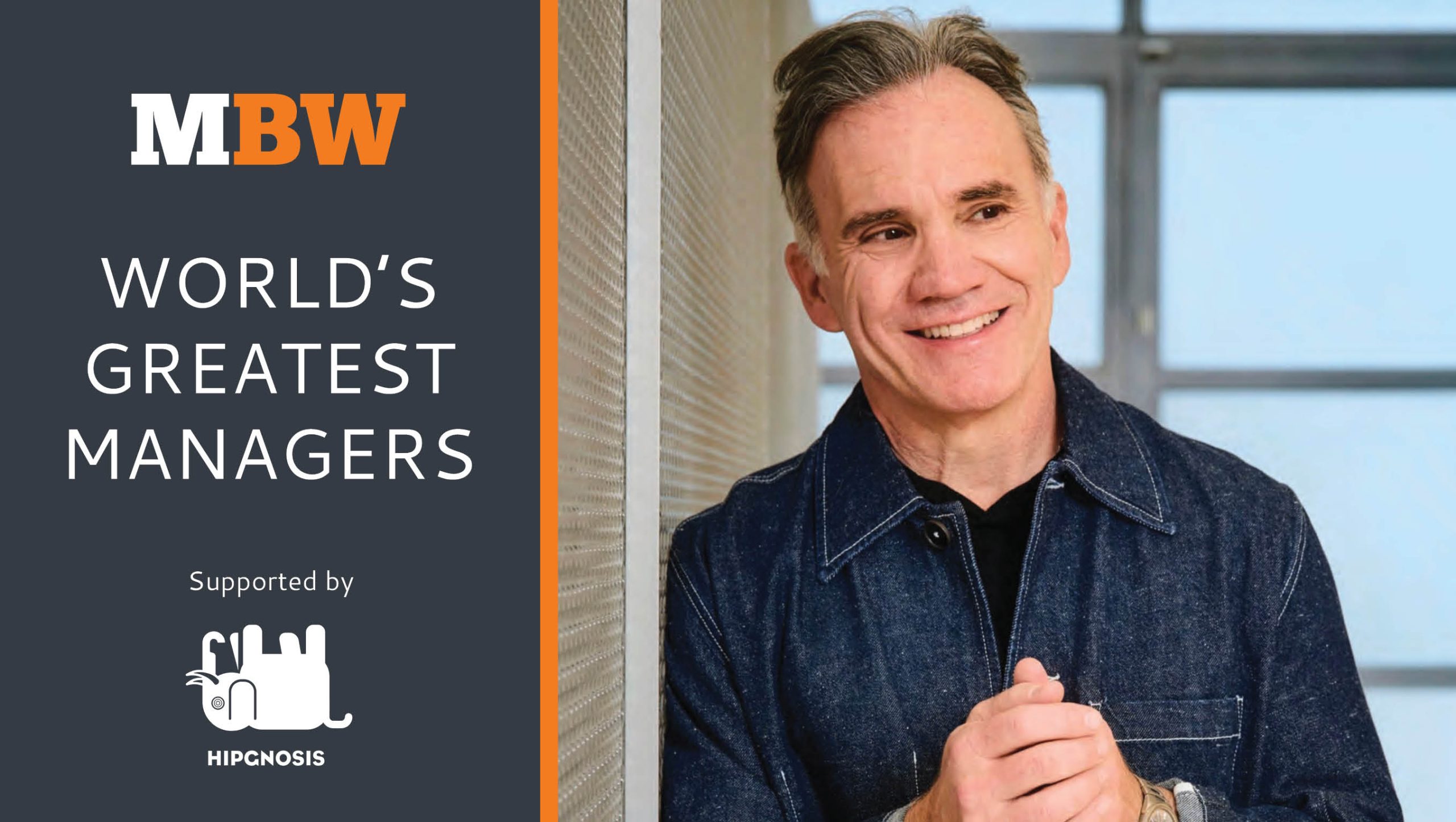
United States-based artist manager Ian Montone, founder of the Los Angeles management company Monotone and a partner in Rick Yorn’s film and television company LBI Entertainment, says the music industry has confused online followers with real community.
Montone has spent a quarter of a century building artists’ careers on his own terms. Monotone has no company website or social media accounts and is answerable only to the artists it represents, according to Montone.
A former music lawyer and Grammy-nominated producer, Montone has advocated for artists owning their rights and helped shift the industry away from traditional label ownership. He began managing a two-piece from Detroit called The White Stripes and was later Jack White’s best man.

Monotone’s roster includes:
- Jack White
- Vampire Weekend
- LCD Soundsystem
- The Shins
- Angie McMahon
- Briston Maroney
- Spacey Jane
- This Is Lorelei
- So!YOON!
- The Kills
- Still Woozy
- Pete Yorn
- Solomonophonic
- Chanel Beads
In 2019, Montone warned that the industry had started chasing “music for algorithms” at the expense of great artists, and said music was “fundamentally important to people… not disposable.” Seven years after that warning, major record companies are publicly listed, catalogs trade like commodities, and artificial intelligence (AI) can spin up a passable sound-alike. The environment around him has changed, but his principles have not.
Algorithm-driven safety and artistic chill#
Montone said the music business is not particularly scary, but that the industry has been in a period where music became too safe and conservative as a byproduct of algorithmic playlists.
“Being honest, there’s nothing particularly scary about the music business. Most of us aren’t operating in war zones; we have what are essentially make-believe jobs. Often stressful, but a privilege. And for the artists we manage, there’s really no choice; this is their calling.”
He said artists, often unconsciously, began making music for algorithms, and now algorithms are making music for algorithms, shaping an entire generation whether they realize it or not. The result, he added, is that everything is too polished and formulaic, and much of it is not lyrically about anything. He called it the commoditization of culture or the industrialization of taste, and said the result is that everything gets safer and less interesting.
“We’ve been in a period where music became too safe, a byproduct of algorithmic playlists.”
Montone described a cycle in music culture: pioneers, then artists who broaden the appeal, then copycats of copycats with one last commercial push, then imitators who kill the genre outright. That is not new, he said; what is different now is the speed at which it happens.
He also said few artists want to take a stand because they fear cancellation, demonetization or alienating fans. Nearly everyone plays it safe, not just in music but in comedy, journalism and news, he said, and that has had a chilling effect on art. He added that not all music should be protest music, but that it is noticeably harder to find.
Artists filling the void#
Montone named several artists who are not making decisions based on streams or algorithms, but are making distinctive work and doing their own thing:
- Cameron Winter
- Dijon
- SAULT
- Caroline Polachek
- YHWH Nailgun
- King Gizzard & the Lizard Wizard
- Saya Gray
He said there are many more, and that this is the space Monotone lives in with its artists. Artists also seem to be re-embracing craft and musicianship and focusing on their live shows, he said. Every city has a real scene of real players, and he suggested it may be part of a broader hunger for what is authentic, or a human need to physically interact with a tangible instrument. Nobody wants to see anyone at a party pick up a computer and “prompt,” he added.
Montone said the younger generation’s rediscovery of music from the past is not simply nostalgia. It is because the music is genuinely good and the artists can play, he said. He sees more new artists moving this way, honing their craft, being great live, and using that to build community.
Streaming, touring and fan relationships#
Streaming matters less for Monotone’s clients’ businesses, but the company does not ignore it, Montone said. It is still a rough gauge of who is listening, and if an artist is in a label deal where the partner only participates in royalties, it cannot be ignored. No one complains when a song takes off, he added, but he does not think of it as streaming versus everything else.
The job, he said, is to build careers that sustain over decades, and the shape of that is different for every artist. Touring is something Monotone’s artists and the company are very good at, and it is often the foundation. But the company is just as deliberate about merch, sync, vinyl and physical products, and finding new ways for an artist to reach the people who actually care.
What runs through all of it, Montone said, is building a meaningful connection with a fanbase. Anyone willing to hire a babysitter, pay for parking, buy a ticket and give an artist a few hours of attention is a real fan. That is a genuine time and financial commitment. Fostering that relationship is hard work, but it is far more important than pre-saves and clicks.
“It’s not ‘labels versus managers’. It’s about building the best team around any artist.”
Followers versus community#
“As an industry, we’ve confused followers with community.”
They are not the same thing, Montone said. Music is supposed to bring people together, and that has gotten harder. He pointed to Virgin Records, which began as a record store where people went to discover music and connect.
Third Man still builds that kind of universe, as do the great independent record stores, he said. Live music can do it too, especially once people put their phones away for a couple of hours.
“We’ve convinced ourselves that real community exists online; I don’t buy it. It’s the difference between texting and talking, between data transfer and communication.”
Online is less about community and more about being a target group, one being sold to, and ultimately having it.