
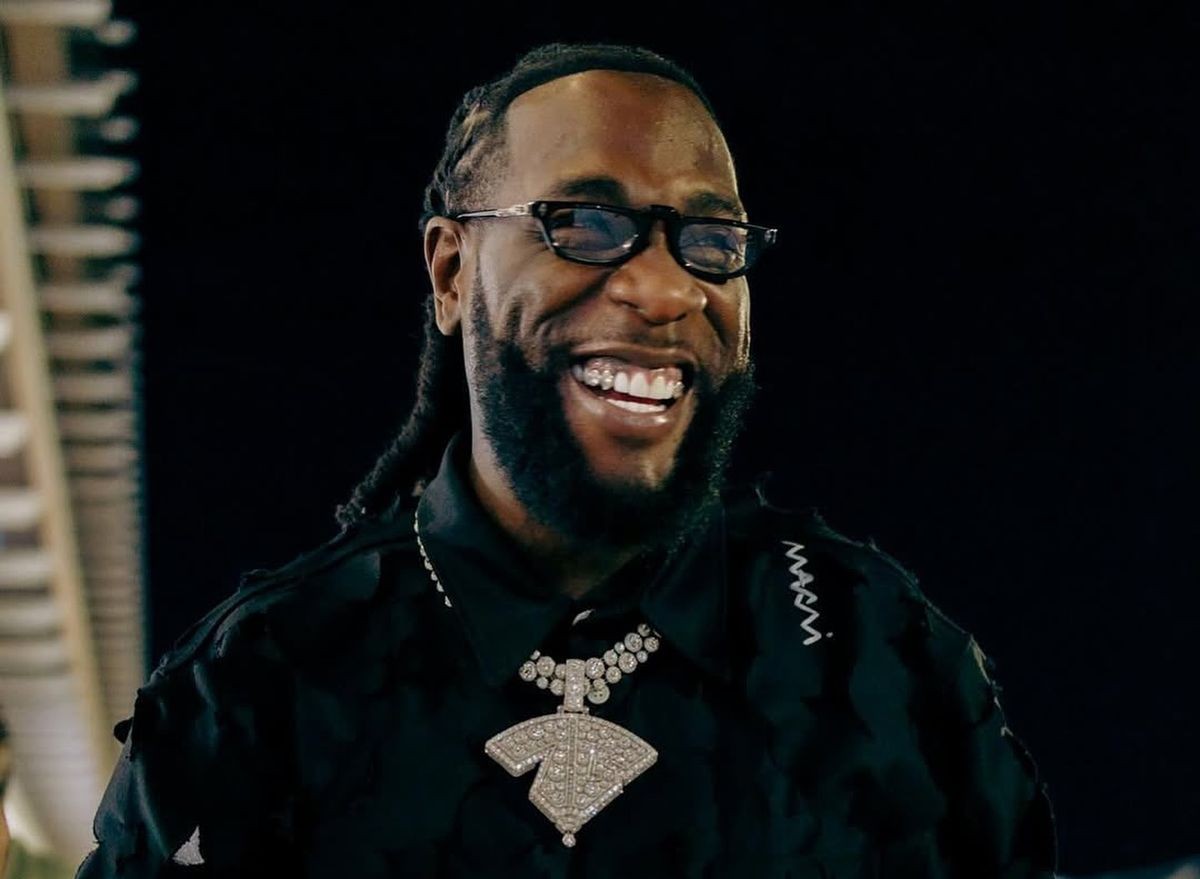
This week, Afrobeats produced two sets of numbers that cannot both be read as a story of market health. Burna Boy became the first African act to reach 50 songs above 50 million Spotify streams each, and Adekunle Gold’s Tequila Ever After passed 200 million Spotify streams, a first for the artist. Yet on 13 September, Spotify’s daily charts carried an African-origin lead artist on just 8 of the 75 country markets this desk tracks, the narrowest footprint in the series.
The milestone mirage#
Burna Boy‘s 50-song threshold is a catalogue achievement, not a fluke. It signals repeat listening across a deep body of work, and it deserves recognition. Adekunle Gold‘s 200 million album streams is similarly a personal first, proof that a fifth studio album can still compound over time.
The danger is treating these personal bests as evidence that Afrobeats is expanding its commercial base. The chart data says the opposite. A handful of superstars can set records while the genre’s daily presence on country charts narrows, because streaming totals concentrate at the top and do not measure how many markets are actually playing African lead artists.

This is not an argument against celebrating Burna Boy or Adekunle Gold. It is an argument against using their totals as a proxy for the genre’s commercial geography. A record can be personal and real while the market around it narrows. The two facts have to be held together, or the industry will keep mistaking star power for structural access.
The regional split is not random#
The divergence inside Africa this week is sharper than the global headline. South Africa’s Spotify chart got more African on every one of three measured Monday-to-Monday steps between 17 August and 7 September 2026, while Nigeria and Egypt got less African on all three. That is not a single bad week; it is a directional split across the continent’s three biggest music markets.
Egypt’s decline is especially concerning because it is not clearly attributable to named artists. Egypt’s Spotify chart looks 12.21 percentage points less African than it did a month ago, and almost the entire fall sits inside artists this desk’s registry cannot place. When the loss is invisible at the metadata level, it becomes impossible to know whether this is a taste shift, a playlist change, or a data failure. That opacity is itself a business problem.
For Nigeria, the continent’s largest streaming market, a less African chart on three consecutive Mondays suggests that local listeners are either moving toward imported sounds or that local releases are not holding playlist positions. South Africa’s opposite movement shows that the problem is not continental destiny; it is market-specific strategy and data infrastructure.
The sound is travelling, the chart power is not#
Afrobeats as a sonic ingredient keeps crossing borders. South Korean R&B and pop artists Jiselle and SUMMER CAKE have released ‘LET THEM,’ a single built on Afrobeats rhythms. Rema’s new single ‘Oh No’ blends kompa, reggaeton, dancehall and Afropop, continuing his run of deliberately hybrid releases.
This is flattering, but it does not automatically convert into African chart access. A Korean act can borrow the rhythm without carrying an African lead artist onto a Korean chart, and a Nigerian star can be global while Nigeria’s own chart gets less African. The genre’s exportability is not the same as its market power for African artists.
The borrowing itself is not the problem. Afrobeats has always been a hybrid form, and Rema’s own fusion is part of that tradition. The problem is the asymmetry: global acts can take the rhythm and chart without African artists, while African artists often cannot chart in those same markets even when they are the source.
The value gap behind the numbers#
Busta Rhymes’ critique this week applies far beyond American hip-hop. Busta Rhymes argues that streaming has not yet solved fair pay for artists and producers, even as Spotify says it paid more than $1 million for his catalogue. If a veteran with deep catalogue value feels underpaid, the economics are harsher for African acts whose chart footprint is shrinking and whose streams are spread across lower-value markets.
Milestones do not pay equally across markets. A stream in a market where African lead artists are absent is not available to African artists at all. The concentration of records at the top and the thinning of the chart base are two sides of the same structural problem: streaming rewards catalogue depth and global playlist reach, but it does not guarantee that African artists are present in the country-level charts that drive discovery and licensing value.
Busta Rhymes’ point is not that streaming pays nothing; it is that the unit economics still undervalue the catalogue. For African artists, the unit economics are compounded by missing chart presence and unplaceable metadata. A stream that cannot be attributed is a stream that cannot be paid.
The fine print underneath the charts#
The chart opacity is not happening in a vacuum. This week also surfaced two ownership discrepancies that affect how African music’s value is tracked. Mercy Chinwo’s masters carry EeZee Conceptz on 19 releases to September 2021, and GNT Nation under exclusive licence to MAD Solutions LLC. Universal announced a majority stake in Mavin, but the filings say it bought 100 per cent.
These are not just legal footnotes. If the public announcement of a deal does not match the filing, artists and producers cannot know who controls their masters or their royalties. The same metadata weakness that makes Egyptian chart share unplaceable also makes ownership claims hard to verify. Both problems reduce the leverage of African artists even as their music travels further.
What this means for artists#
Independent artists and music professionals should treat this week as a warning against milestone myopia. The concrete steps are:
- Track market-level data, not just global totals. A 200 million stream album can coexist with a shrinking African chart footprint. Pull your own country-by-country chart placements and audience data before celebrating a personal best.
- Watch the regional split. South Africa is moving more African, Nigeria and Egypt less. If you are releasing in those markets, adjust your playlist pitching, radio and social strategy accordingly rather than assuming one African market behaves like another.
- Demand metadata transparency. When chart share falls into an unplaceable category, as in Egypt, it means artists are not being identified and therefore cannot be paid or credited. Ask your distributor and collecting society how your releases are registered and whether you appear in chart data.
- Build catalogue depth, but pair it with market access. Burna Boy and Adekunle Gold show that deep catalogues compound, but catalogue depth alone does not open country charts. Treat every release as a chance to enter a new market, not just to add streams to an existing fanbase.
- Do not confuse global genre adoption with your own leverage. When Korean or Latin acts borrow Afrobeats, it is a signal of the genre’s value, but it does not replace your need for direct distribution, clear metadata and chart presence in the markets where you want to earn.