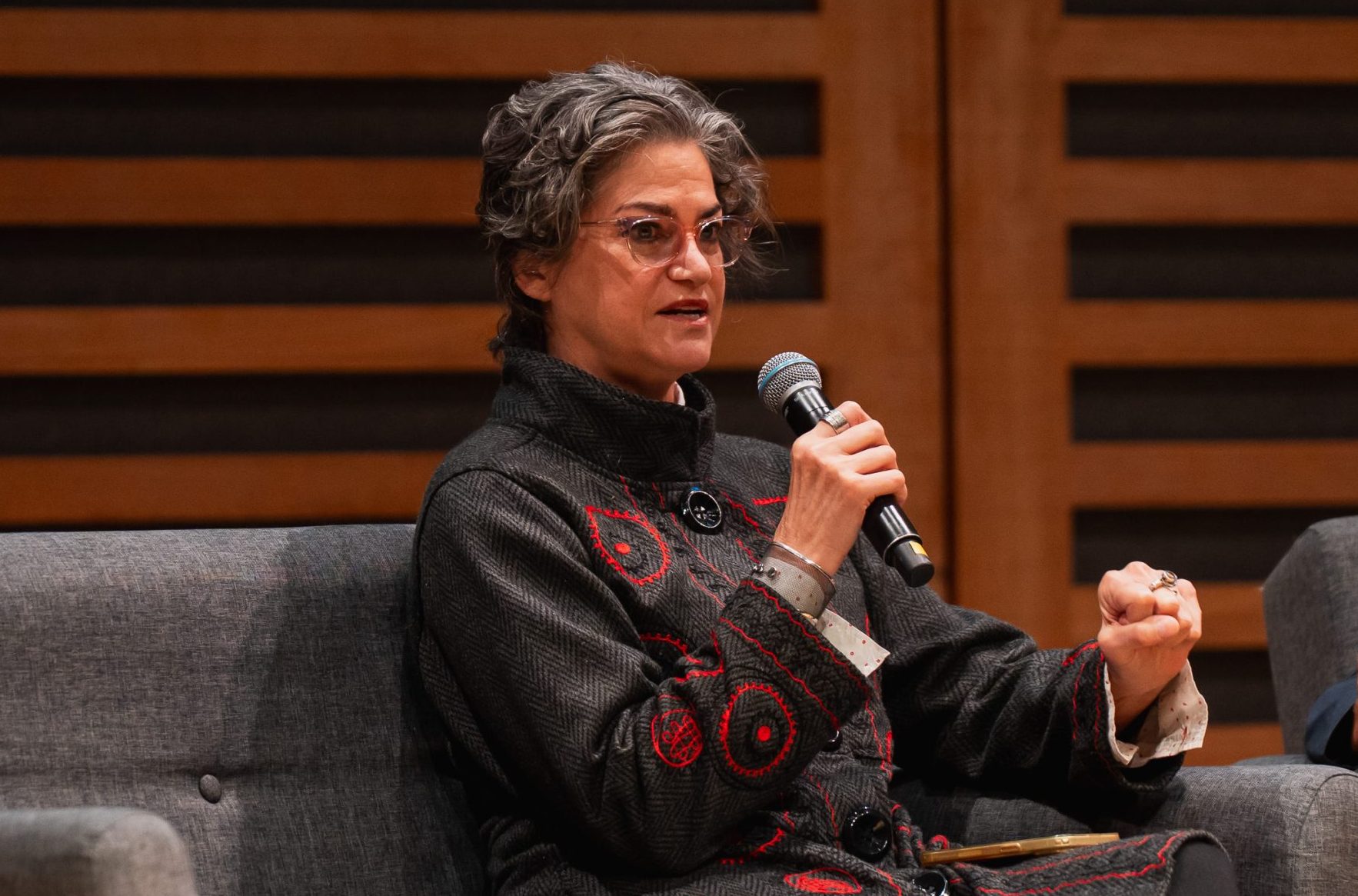
CrossBorderWorks CEO Vickie Nauman says music rightsholders can reach a large audience through video games, and that the more useful question is not how to get games companies to pay more. Nauman has spent her career identifying and advising on new digital opportunities for music, with a focus on gaming, the metaverse and emerging technology.
Speaking at a recent publishing summit, she said rightsholders need to understand how the games industry and gaming culture work before they can take advantage of those opportunities.
A large audience that is looking for music#
Nauman cited a figure of 3.3 billion people who play games worldwide. She also referred to a Deloitte study conducted a couple of years earlier, which found that 49% of players want more music.

“So they’re actively looking for music,” she said. “Where else can the music industry find over 1.5 billion people who are specifically looking for more music? And [in games] music is not in the background. It’s really up front and centre, and people play games over and over and over again, so they really get exposed to music.”
Nauman has worked as a bridge between music rightsholders and games companies for 12 years, since founding CrossBorderWorks. She said that the most common question from music clients has stayed the same throughout that time: how they can get gaming firms to pay them more.
“I think that’s the wrong question,” she said. She described games as “incredibly high-risk, high-cost” products with “an enormous amount of capital investment that goes into them.” She contrasted this with a traditional approach to music in which developers often avoid licensing deals and instead hire composers and buy out the rights to their work.
“There’s nothing on the back-end. They pay for it once, and then they get to use it in the game in perpetuity,” she said. She also welcomed what she described as “an experimental stage that we’re in right now, where gaming companies want to try [working] with artist-driven music, where the artist has a community.”
Licensing deals and the challenge of new models#
Nauman said this experiment offers a chance to show both sides that “artist-driven music performs better than original music” in games. “If it doesn’t, they’re probably going to go back to original music, but I believe that artist music will because it gives them a cultural relevance.”
Securing such deals has been difficult in the past. Nauman described licensing songs by Imagine Dragons for the virtual reality rhythm game Beat Saber, where one major publisher that owned some of the rights was the last to agree a deal.
According to Nauman, the publisher asked: “What is this? What is a VR rhythm game? And why isn’t there more money?” The arrangement was an advance against a revenue share, and the publisher said it did not know what the game was and was uncomfortable with it.
“I really had to put my own reputation on the line and just say: I know this is going to work, and I will promise you, if it does not work and we do not recoup the advance, that I will never come to you again about this game,” Nauman said.
The publisher reluctantly agreed. “And then we recouped the advance within the first quarter, and we started paying royalty checks. And they called me up saying ‘We love this game! This is the best game! How can we get more music in it?’”
Public performance and collecting societies#
Nauman said most games are not comparable to a digital service provider (DSP) such as Spotify or Apple Music. Games typically do not need an entire recorded music catalogue, and most want between 10 and 50 songs.
“Really small collections of music which is relatively easy to do with sync deals, but then it’s public performance that creates an issue,” she said.
Nauman has outlined the problem in more depth in a guest column, including her work over the past four years with collecting societies to address it. “Many people told me not to do this because they said the CMOs (collective management organisations) and the PROs (performing rights organisations) will never be open [to it] but they’ve proven them wrong. I’ve got a lot of support because everyone’s trying to figure out games, and we need a model that doesn’t require the artist or the writer to exit from a PRO,” she said.
Views on generative AI in games#
Asked by Paul Brindley whether AI-generated music threatens human music licensing deals in games, Nauman said there is resistance to AI-generated music and characters. “Both game developers and gamers really love the human aspect,” she said.
“I’m not seeing a lot of interest, and in fact, more resistance against any kind of generative music in games.”
Nauman said she expects artificial intelligence (AI) and generative AI music to develop into a set of tools for artists, songwriters and mixing. “I think if you take streaming fraud out of the equation, right now I don’t know how much of a use-case there is in just truly ‘prompt-to-generative-music’.”
She said she is confident the music industry will hold AI companies accountable, having seen earlier periods of digital disruption. “I’m more worried about AI drones and weaponry and surveillance than this!” Brindley replied: “The killing of all humanity is a slightly bigger concern…”