

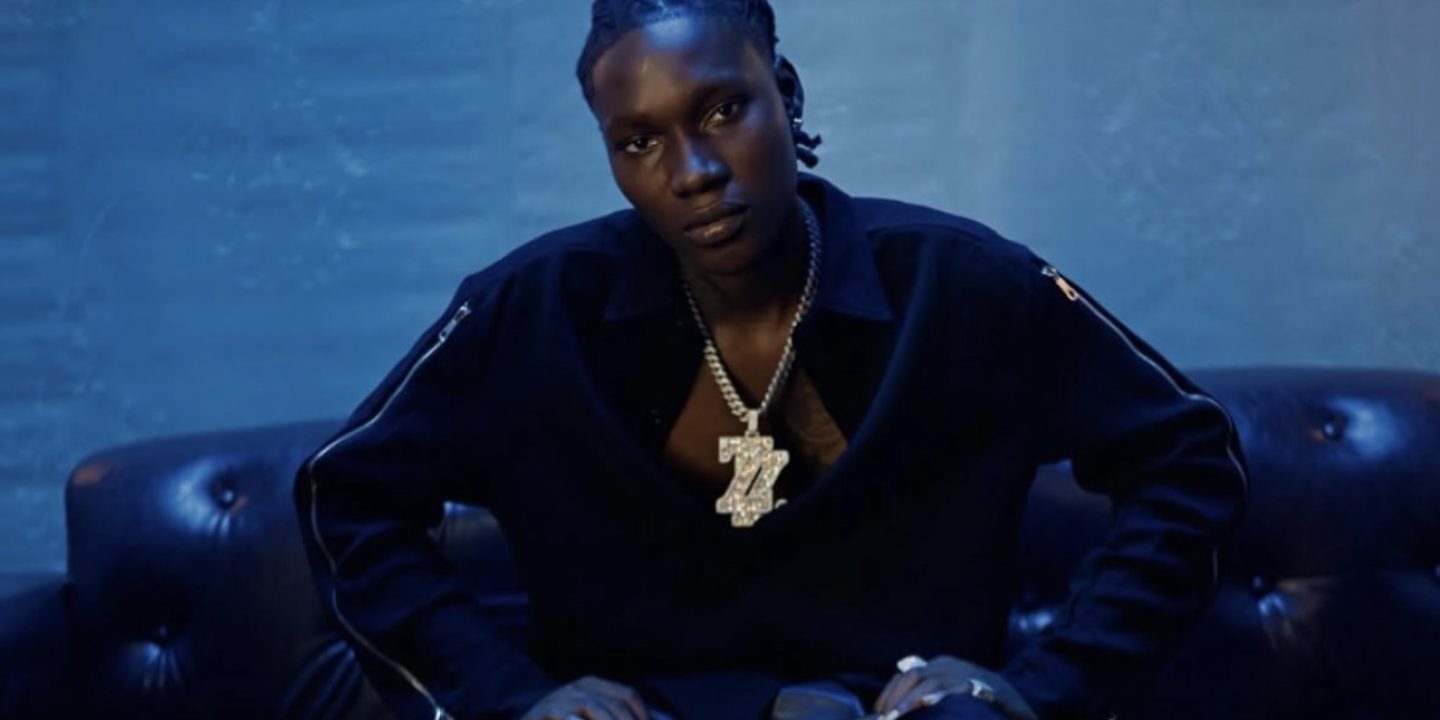
Zinodict Music, the imprint Zinoleesky founded in April 2026 on leaving Marlian Music, is named as the owner of one master recording by its first signed artist. That credit is the whole of what any document establishes about this deal.
On 1 October 2026 Zinoleesky announced Waziyung as the first artist signed to Zinodict Music. The next day the single “Fuji Vibe” arrived carrying the delivered phonogram credit “℗ 2026 Zinodict Music”. No contract, filing, registration or registry entry behind that credit has been obtained, and neither party has disclosed a single term.
That is a narrower story than the announcement, and a firmer one than most signing announcements this desk looks at: usually there is a statement and no release.

What changed hands#
One sound recording copyright, on the evidence available.
Waziyung has seven lead releases in Apple’s catalogue. Five of the six that precede “Fuji Vibe” name him personally as the phonogram owner: “℗ 2023 Waziyung” on Life Pressure, “℗ 2024 Waziyung” on My Life and on If No Be God, “℗ 2025 Waziyung” on FESTIVO, and “℗ 2026 Waziyung” on Olomi, released 19 April 2026. The sixth, Thankful of July 2024, names Tzmediahouse.
Five months and thirteen days after Olomi, the owner position on a Waziyung master is held by a company rather than by Waziyung. That is the transaction. Everything else about it is undisclosed: no advance, no royalty rate, no term, no release commitment, no option, no recoupment provision, no equity. “Not disclosed” is the accurate answer to each.
What a phonogram credit proves, and what it does not#
The ℗ line is the most useful public document in recorded music and the most frequently over-read. It records who the delivering party told the store owns the sound recording. It is an assertion by a rights holder to a retailer, not a court finding and not a contract.
What it establishes here is that Zinodict Music, and not Waziyung, is in the owner position on “Fuji Vibe”. What it cannot do is separate three structures that produce an identical line: an assignment of the master from artist to label, a master the label commissioned and owned from the first session, or an artist-owned master released under a label’s name. No agreement has been obtained, so this desk does not choose between them.
The line does rule out one thing. A licensed master reads differently, and both artists’ own catalogues show how. A 2026 Waziyung feature carries “℗ 2026 Boydicted || Distributed by Greatgbedu Media”. Zinoleesky’s September single “Malaria” with Ayo Maff reads “℗ 2026 OCEANSTREET CREATIVE LTD / EMPIRE”. Those lines name two parties and separate their roles. “℗ 2026 Zinodict Music” names one party and asserts sole ownership. There is no “under exclusive license to”, no licensor and no distributor.
Publishing is a different chain, and nothing in it has been established. No publisher, co-publisher or administrator is named for Waziyung’s compositions anywhere, and three performing-rights repertory searches returned nothing usable. The position is unknown, and a recording signing is not evidence about it either way.
Where the two platforms disagree#
Apple and Deezer hold different information about who stands behind this recording.
Apple’s copyright field for “Fuji Vibe” reads “℗ 2026 Zinodict Music” and is identical on all six storefronts checked: the United States, the United Kingdom, Nigeria, South Africa, France and Germany, with the same duration and the same release timestamp in each. Deezer’s label field for the same recording reads “Independent”.
Those are two different metadata fields, a copyright line and a label name, so it is not a flat contradiction. It matters anyway, in two directions. A Deezer label-field search for “Zinodict Music” returns exactly three albums, and “Fuji Vibe” is not one of them. And Deezer’s label field reads “Waziyung” on three of his earlier singles, so “Independent” is a change rather than a platform default.
The identifiers point the same way. Each of the four releases carrying the Zinodict name, in either field, has an unrelated ISRC registrant code and an unrelated barcode: “Fuji Vibe” is GXLF22637445 with barcode 5064090114059, Zinoleesky’s “Nostalgia” is QT6632652560 with 859736119971, and his “Dantata” is ZA56E2639836 with 766214703952. A registrant code is allocated to a registrant, ordinarily a label or a distributor, so four registrants across four releases is not the pattern a single catalogue-wide distribution agreement produces. On the identifiers, Zinodict Music looks like a credit applied release by release through whatever delivery route is to hand. No distributor is named in any source.
An earlier release complicates the “first signing” claim#
The same Deezer search returns a third name. “Ire (feat. Macodyy)” by Bhadboi Kazkid, released 22 May 2026, carries the label field “Zinodict Music”, four months and ten days before Waziyung was announced as the label’s first signing.
This desk is not asserting that Bhadboi Kazkid was signed to Zinodict Music, not asserting the Deezer field is inaccurate, and not asserting the first-signing claim is wrong. Apple carries no catalogue at all for that artist, so there is no phonogram line to test it against, and no announcement, statement or filing linking the two was located. It is one free-text field on one platform. It is published because it is there, it predates the announcement, and it could be neither corroborated nor ruled out.
Neither company is on a register anyone can read#
Zinodict Music does not resolve to a corporate register. A United Kingdom Companies House company search returns zero results for Zinodict, zero for Zinoleesky and zero for Waziyung. A control query run with the identical method in the same session returned a live company, so the zeros are findings rather than a broken query.
Nigeria is worse than negative, it is unavailable. The Corporate Affairs Commission operates no public search interface and no API, and the commercial Nigerian company aggregator this desk uses elsewhere now answers search requests with a bot-verification page, for a control term as much as for this one. MusicBrainz holds no label entity for Zinodict and no artist entity for Waziyung.
So there is no registration number, incorporation date, registered office, director or shareholder for either side. That is a gap in the public record, not a suggestion that anything is wrong with either party. In documentary terms, the label exists as a name on release metadata.
What this means for artists#
A signing announcement and a rights position are separate events, and you can date both. The announcement was 1 October. The rights position changed on 2 October, visibly, in a field anyone can read for free. Note the date your credit line changes, because that is the date a third party can prove something moved.
Self-credited masters are an asset, and giving up the named position is a decision. Waziyung held the owner credit on five of his own releases. On the sixth he does not. Whether he was paid for that, kept a reversion, or retained a share is not public. Get all three in writing before the credit changes, not after.
Check more than one platform. The same recording presents one rights holder on one service and none on another. If your label’s name is missing from a field on a major service, what your marketing says and what the platform knows have drifted apart.
A new imprint is a name, not an infrastructure. Four ISRC registrants and four barcodes across four releases suggests delivery is being arranged one release at a time. Before signing to a young label, ask who its distributor is, whether that relationship is contracted, who collects the money and who holds the ISRC registrant code.
Signing forward does not reach backward. Every Waziyung release before 2 October still carries its original credit. Nothing obtained shows any of them moving anywhere.
How this was verified#
The primary source is the set of phonogram credits delivered to Apple and returned by its lookup interface for Waziyung’s artist record, fetched 8 October 2026, which carries the new Zinodict credit and the earlier self-credits in one response. Corroboration: the same credit on six storefronts, Deezer’s album, track and label-field records with the barcode and ISRC, the equivalent lookup across Zinoleesky’s 176-row catalogue, and two separately authored trade accounts reproducing his announcement in identical wording. Every negative check is cited on the deal record.
Quick answers#
Who owns the master of Waziyung’s “Fuji Vibe”?#
Zinodict Music is named as the owner. The delivered phonogram credit reads “℗ 2026 Zinodict Music” and is identical on six Apple storefronts checked on 8 October 2026. No agreement behind that credit has been obtained.
Is this a label deal, a distribution deal or a publishing deal?#
It is presented as a recording signing and the credit is consistent with that reading. No licence is evidenced, no distributor is named in any source, and no publishing arrangement is established at all, in either direction.
How much was Waziyung paid?#
Not disclosed. No advance, royalty rate, term, release commitment, option, recoupment provision or equity figure appears in any source obtained, and neither party has published a financial term.
Is Zinodict Music a registered company?#
Not established. It returns zero results on the United Kingdom register, holds no MusicBrainz label entity, and Nigeria’s Corporate Affairs Commission operates no public search interface, so no Nigerian registration could be checked.
Was Waziyung really Zinodict Music’s first signing?#
That is what the announcement says, and it is the only direct claim on the point. One earlier release by a different artist, dated 22 May 2026, carries Zinodict Music in Deezer’s label field and could not be corroborated anywhere else.
What happens to Waziyung’s earlier releases?#
Nothing, on the evidence. Each release before 2 October 2026 still carries the credit it was delivered with, five naming Waziyung himself and one naming Tzmediahouse. No document shows that catalogue moving.