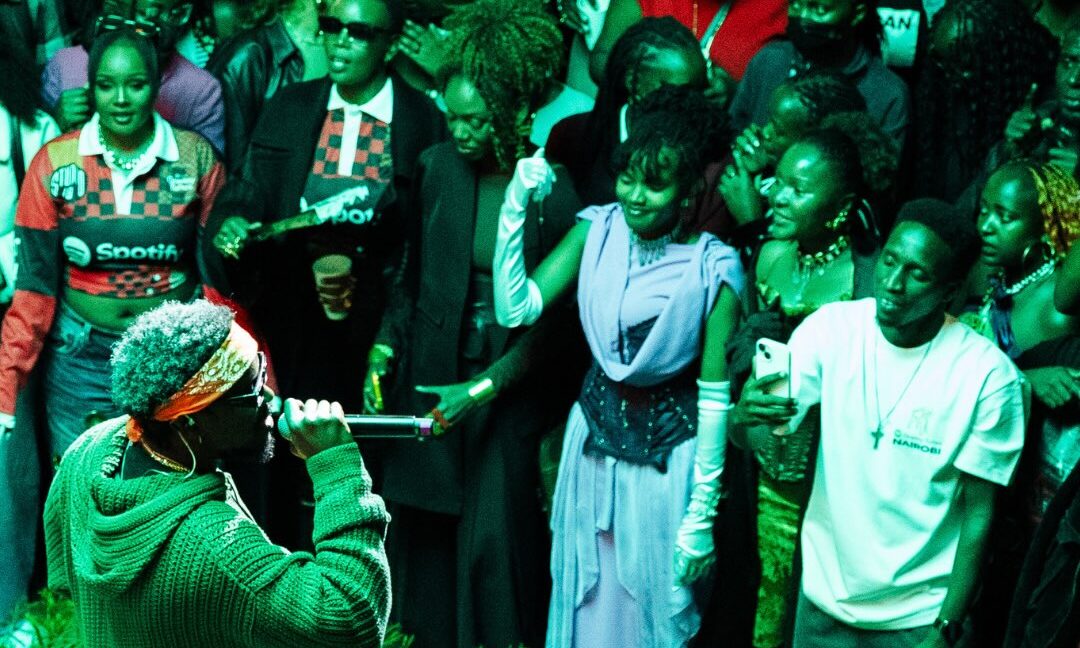

South Sudan has musicians and audiences, but its music market remains small, and only a limited number of listeners can regularly pay for recordings or live shows. Most activity is built around live performance, with weddings, concerts, hospitality venues, community gatherings and cultural events serving as key spaces for music to circulate and earn income.
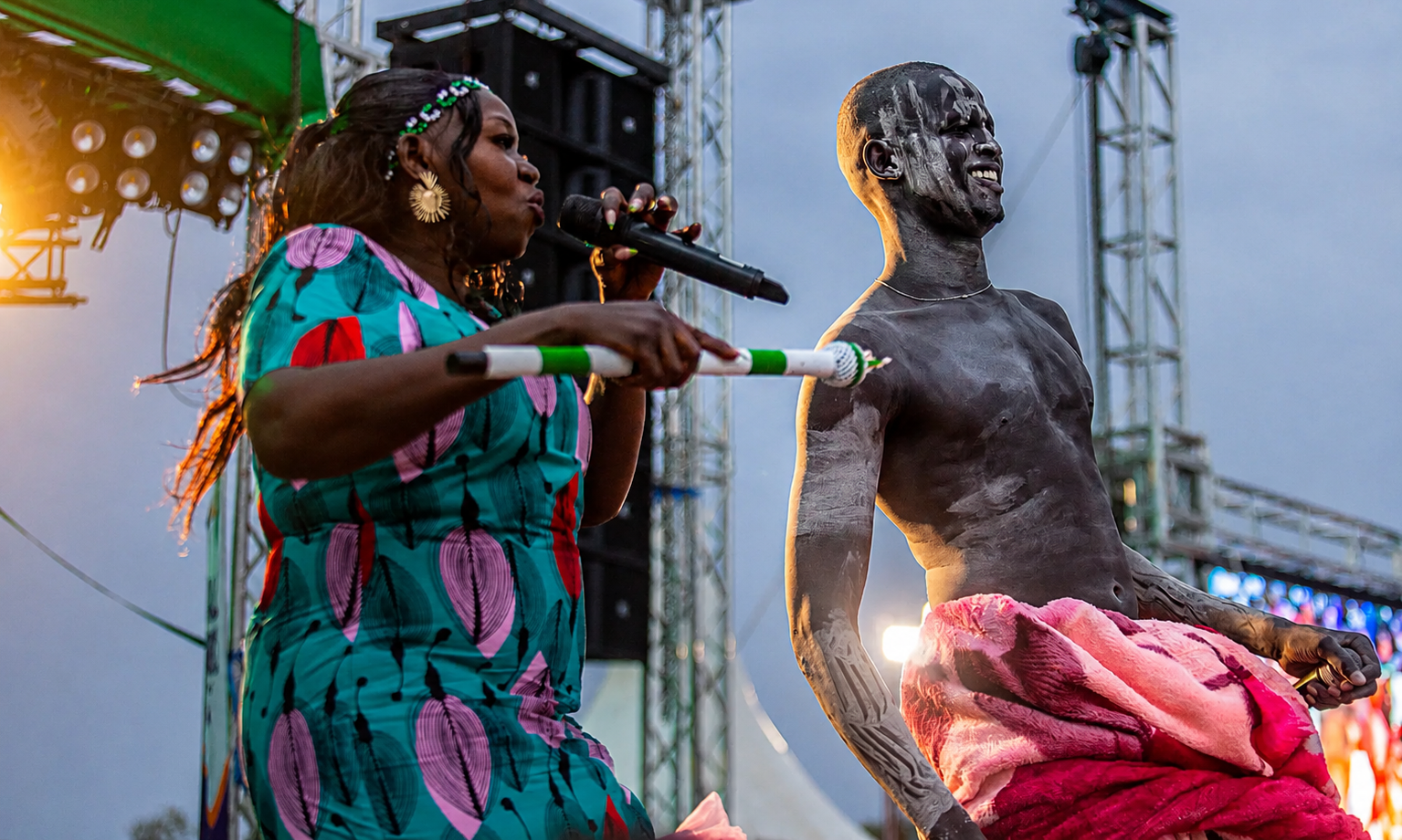
South Sudanese artists Dawa Luga and Bro Winner took part in the 2026 edition of the Pojulu Cultural Festival. Because specialised skills and professional services are scarce, many practitioners handle several roles themselves.
Why infrastructure matters#
A functioning music industry cannot be measured only by how many artists record or perform. It also depends on businesses, specialised skills, infrastructure, rights systems, financing and public institutions. These systems decide whether music remains informal and occasional or becomes a sustainable sector.

This is why culture needs to be considered within the South Sudan Development Plan (SSDP) 2026–2036.
The plan centres on four national priorities:
- peace and security
- economic diversification
- human capital development
- stronger institutions
Culture cuts across all four. Sustained advocacy is therefore needed to make sure culture appears in the plan’s implementation frameworks, budgets and measurable national priorities. If that integration does not happen, cultural activity may stay on the margins of national planning, despite contributing to employment, social cohesion and enterprise development.
Production gaps and reliance on Uganda#
South Sudan’s dependence on Uganda for recording and production shows why this matters. When production happens outside the country, South Sudan loses more than the money spent on recording. Skills build up elsewhere, local producers get fewer chances to grow their businesses, and equipment and technical service suppliers have less reason to appear. Over time, this can deepen reliance on external production networks.
The baseline found no professional, well-equipped studio in Juba, South Sudan, and fewer than five home studios. Many musicians and producers are self-taught. Rehearsal spaces and venues with professional sound are limited or non-existent, and much of the city’s live music happens in clubs, hotels and open spaces that were not designed for music.
These conditions affect production quality and limit artists’ ability to rehearse, experiment and prepare for professional performances.
Large cultural monuments are not the starting point for South Sudan. Smaller rehearsal spaces, shared production facilities and properly equipped mid-sized venues could close some of the most immediate gaps.
Rehearsal facilities matter especially because many performances now depend heavily on playback, and live bands may lack complete sets or enough chances to practise together. Regular access to suitable spaces would help musicians build fuller live repertoires and arrangements, and would create contact points among artists, producers, technicians and audiences.
Skills, training and copyright#
The people who run these spaces are just as important. Formal training and professional support in music production, sound engineering, artist management, event production and other specialised areas remain limited. Publishing, royalty administration and other copyright-related activities cannot yet function as established parts of the industry because South Sudan has no comprehensive copyright framework or the institutional systems needed to administer it.
As infrastructure grows, South Sudan will need people who can manage, maintain and commercialise it. What exists today is mostly informal and practice-based. Musicians, producers, event organisers, sound technicians and other practitioners learn through experience, peer networks and short-term opportunities. These are important foundations, but they do not yet form a fully developed music ecosystem.
The challenge is to build on that existing knowledge while creating structured training, professional standards and long-term career pathways. Training should move beyond one-off workshops. Professional development needs to be continuous and tied to the industry’s practical needs, with chances for participants to apply their skills in studios, venues, events, media organisations and creative businesses.
Regional exchange should remain part of this process, but the goal should be to strengthen local expertise and make sure knowledge gained through international partnerships feeds the domestic market.
Digital platforms and the copyright gap#
South Sudanese artists and cultural practitioners already use platforms such as Facebook, WhatsApp, TikTok and YouTube, including to reach diaspora audiences. But being visible online is not the same as running a digital music business.
Turning online activity into income requires systems that link creative work to ownership, distribution, payment and accountability. Creators need professional distribution, accurate metadata, clearly documented ownership, reliable payment channels and mechanisms for identifying and collecting royalties and licensing income.
Copyright sits at the centre of this chain. Ownership has economic value only when institutions can administer rights, issue licences, collect revenue and return it to rights holders. Without those systems, digital platforms may increase exposure without delivering reliable income.
This is why South Sudan’s long-delayed Copyright Bill matters economically. The country needs legislation, but it will also need institutions and professional expertise to implement it. Publishers, rights administrators, entertainment lawyers, managers and licensing specialists are as much a part of the commercial infrastructure of a music industry as studios and stages.