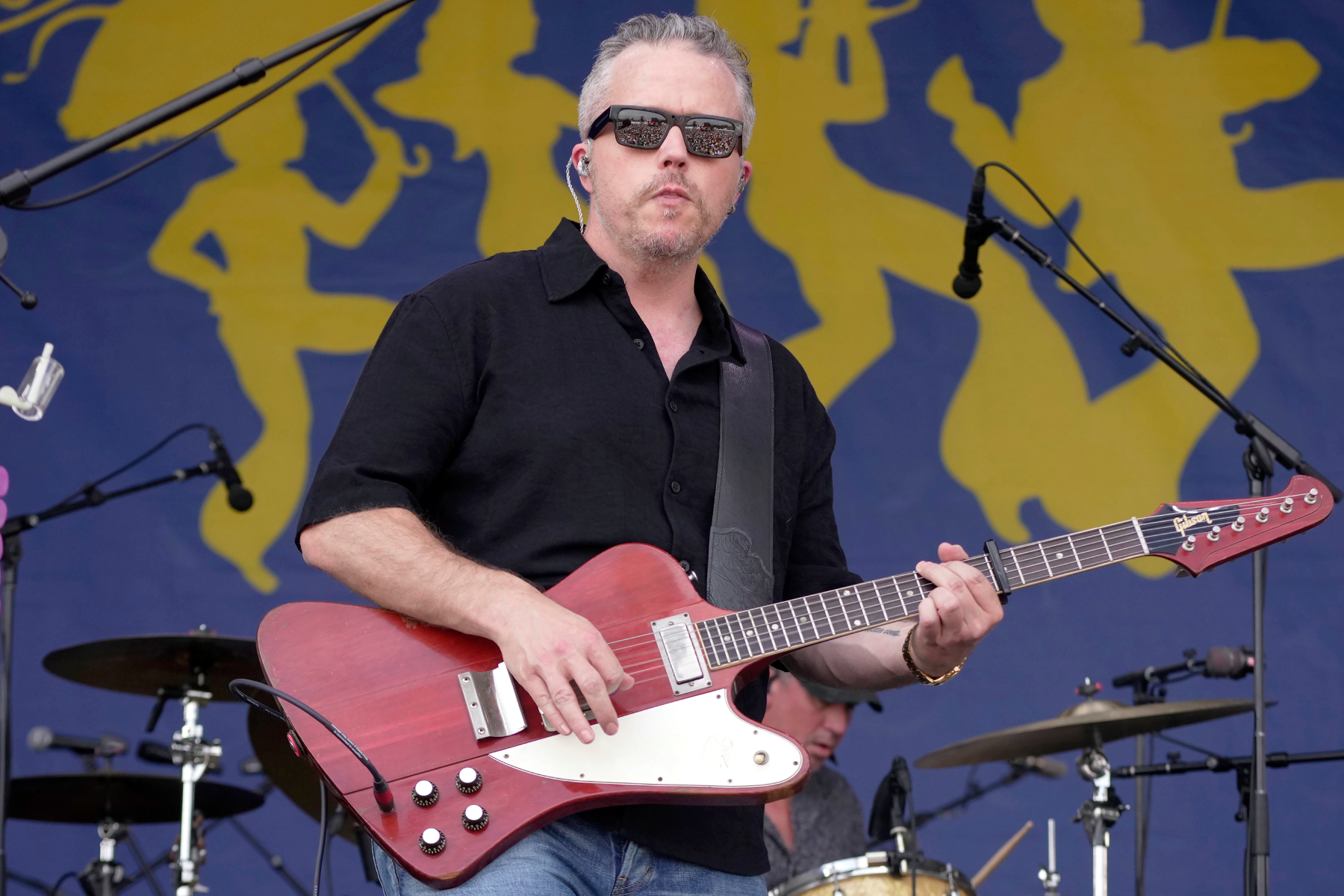

The Jason Isbell Suno lawsuit, filed in federal court in Massachusetts alongside David Lowery, Guy Forsyth and Ed Calle, contains no copyright claim at all. That is the detail getting lost in the coverage of who sued whom, and it is the detail that actually matters for artists outside the United States, including in Nigeria and South Africa, where the copyright-based cases against Suno have no real equivalent route to court.
Afrobeats Wire has already reported the filing itself and the examples inside it. This piece is about the mechanics: what legal theory the case actually rests on, how that differs from the copyright suits already working through other courts, and why one narrow piece of it, a claim about “voiceprints,” lines up with data protection laws that Nigeria and South Africa already have on their books.
What the Jason Isbell Suno lawsuit actually argues#
Every other major action against Suno, from the major labels’ case in Boston to Germany’s GEMA and Denmark’s Koda, argues that the company trained its models on copyrighted recordings or compositions without a licence. The Isbell and Lowery suit argues something structurally different: that Suno built a product which responds to a musician’s name by generating a song, a description and cover art evoking that person, and that doing so appropriates the musician’s identity regardless of who owns the underlying recording.

The complaint states this distinction directly: the rights it asserts “do not arise from ownership of any copyright and do not depend upon who owns, licenses, or is otherwise entitled to exploit any particular work.” It rests instead on state right-of-publicity statutes, led by Illinois’ Right of Publicity Act and California’s common-law publicity right, plus one additional claim under the Illinois Biometric Information Privacy Act over what the filing calls “voiceprints,” defined as “the unique identifying characteristics of an individual’s voice that can be used to identify that person.”
Two different rights, two different kinds of exposure#
The distinction is not academic. A copyright claim belongs to whoever owns the recording or composition, which for most working musicians is a label or publisher, not the artist personally, and pursuing it requires the standing and balance sheet to litigate. That is exactly why Afrobeats Wire has previously reported that none of the copyright-based routes against Suno are currently open to an African rights holder: no African collecting society has the reciprocal standing that let GEMA and Koda sue in Europe, and no African label or publisher holds a catalogue anywhere near the scale that let Round Hill Music sue in the United States.
A right-of-publicity claim, by contrast, belongs to the person, not to whoever holds the copyright. It does not require owning a master or a share of a song. It requires only that the defendant commercially exploited a name, voice or likeness without consent, which is a much lower ownership bar and, in principle, a right a touring artist with no label deal at all could still assert. The obstacle for an African artist is not standing. It is that almost no African country has a statute that creates this right in the first place.
Where Nigeria and South Africa actually already regulate this#
Neither Nigeria nor South Africa has a dedicated right-of-publicity law. Nigerian courts have allowed celebrities to act against unauthorised commercial use of their image mainly through the common-law tort of passing off, the same route used successfully by Rihanna against a UK retailer in Fenty v Arcadia Group, and through Section 37 of Nigeria’s constitution, which protects privacy rather than publicity as such. South African courts protect identity through a delictual remedy, the actio iniuriarum, built on case law rather than statute, most clearly in Kumalo v Cycle Lab, where a court held that using a celebrity’s photograph in an advert without consent falsely implied her endorsement. Both routes require the artist to prove reputation and goodwill in their name, workable for a well-known act and much harder for a session musician or a mid-tier artist, the exact category of plaintiff the Isbell suit is designed to represent.
The biometric voiceprint claim in the lawsuit sits on different ground, and this is the part with an actual African analogue already in force. Nigeria’s Data Protection Act 2023 defines “biometric data” to expressly include voice recognition, and classifies it as sensitive personal data when processed to uniquely identify a person. South Africa’s POPIA does the same: its statutory definition of “biometrics” names voice recognition directly, and processing biometric information is prohibited by default under Section 26 unless a specific exemption applies. Both provisions were written before generative AI was a mainstream concern, but neither excludes it. If a company captures the distinguishing characteristics of a Nigerian or South African musician’s voice and uses that data to identify or reproduce them, both statutes already describe that as processing sensitive or special personal information, the same category of harm the Isbell complaint argues under Illinois law.
The two data laws are not equally reachable, though, and the difference matters. Nigeria’s Data Protection Act applies to any data controller, wherever it is based, that processes personal data of someone physically in Nigeria, a genuine extraterritorial hook. Nigerian regulators have already tested that kind of reach against a foreign platform: the Federal Competition and Consumer Protection Commission fined Meta $220 million in a case built on a joint investigation with Nigeria’s Data Protection Commission, and the Commission separately fined Meta $32.8 million under its own data-protection powers in February 2025, a matter later resolved by consent judgment rather than payment in full. Neither action involved an AI company or a voiceprint claim, but both show the infrastructure to reach a foreign tech company already exists and has been used. South Africa’s POPIA is narrower: it turns on whether the company processing the data is domiciled in South Africa or uses equipment situated there, not on where the person whose data is processed happens to be, so its reach over a US-based company with no South African infrastructure is genuinely contested among South African privacy lawyers, not settled.
What’s still missing#
None of this has been tested. Neither Nigeria’s Data Protection Commission nor South Africa’s Information Regulator has brought an action against an AI music company, and no African artist has been named as a plaintiff in any Suno litigation anywhere. Suno has not said, in any filing Afrobeats Wire has reviewed, that it excludes African voices from training or from the name-prompt behaviour the Isbell complaint describes, and the company’s own public statements about its training data have described drawing on music files accessible on the open internet without carving out any region.
The United States is also still building the law this case leans on. Tennessee’s ELVIS Act, signed in March 2024, was the first state law to add voice specifically to an existing right-of-publicity statute, and a federal version, the NO FAKES Act, cleared the Senate Judiciary Committee unanimously in June 2026 but has not passed the full Congress. No African country has anything comparable on voice and likeness specifically. What Nigeria and South Africa have instead is broader and older: general data protection law that happens to name voice recognition as biometric data, sitting there unused for this purpose.
What this means for artists#
If you are a Nigerian or South African musician, the practical takeaway is not that you can sue Suno tomorrow. It is that your voice, in the specific technical sense of a voiceprint, is likely already classified as sensitive personal data or special personal information under a law your country has had on the books since 2023, and no regulator has yet acted on that classification against an AI company. That is a gap in enforcement, not an absence of law.
The more immediate exposure sits in contracts already being signed. Distribution and label agreements increasingly carry AI-training clauses, and an artist should read for language granting rights to a musician’s “voice,” “vocal characteristics” or “performance data,” not only to the master recording itself, since those are legally distinct rights that can be signed away separately and often are not read separately. Owning your master no longer means you have accounted for who can train a model on how you sound.