African Music’s Spotify Export Column Grossed $411.64 on 27 November, Down 7.4 Per Cent in Six Days. The Same Eight Egyptian Artists Have Supplied It on Five of the Last Six Readings
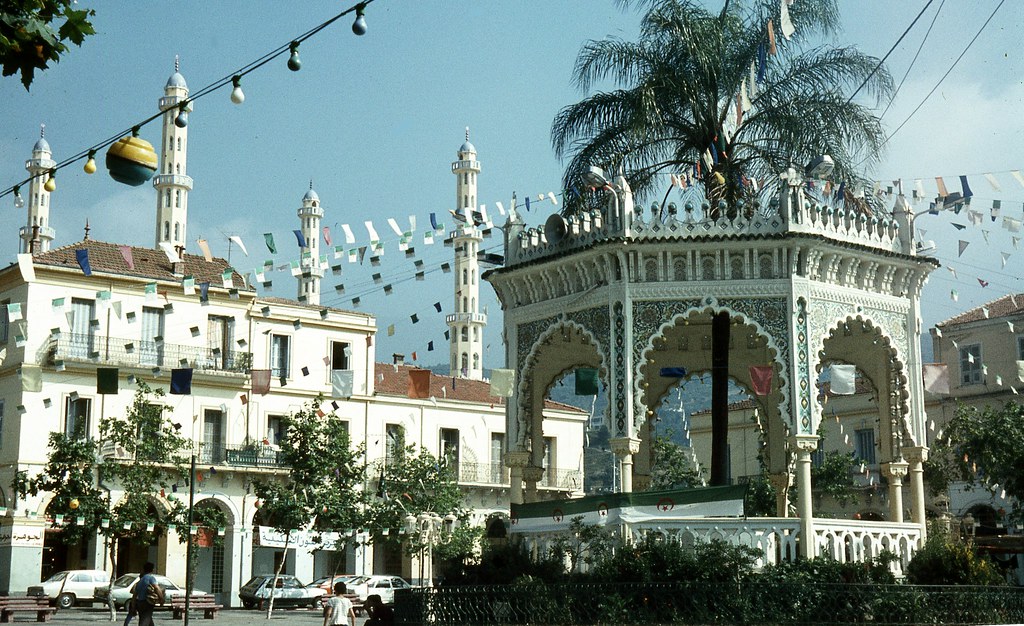
Photo: Mohamed.watny / CC BY-SA 4.0 via Wikimedia Commons
Eight Egyptian artists supplied the entirety of Spotify’s priced African export column on 27 November 2026. Priced at Duetti Music Economics’ measured 2024 global blended rate of $0.003 per stream, the column grossed
sum:gross_usd
, down 7.4 per cent from the $444.63 this desk measured on the same artists six days earlier, on 21 November.
The export column is not the same thing as “African music streaming abroad.” It is a narrower, specific number: the combined cross-border Top 200 chart streams of the 50 artists on this desk’s flagship African panel, on days this desk happened to price the column. On 27 November, that was 137,208 streams, almost all of it one market’s chart activity reflecting one country’s artists.
The export column, 27 November 2026Show the numbers
The same eight names, five of the last six readings#
This desk has priced the export column six times since 14 November. On five of those six readings, the artist set was identical: TUL8TE, Ramy Sabry, Cairokee, Marwan Pablo, Mohamed Hamaki, Sherine, Amr Diab and Wegz, all Egyptian. The one exception was 22 November, when Angola’s Jireel and Nigeria’s Rema briefly joined the set, taking it to ten names, before it reverted to the same eight on every reading since.
Composition of Spotify’s priced African export column, six dated readings, 14 to 27 November 2026
These six readings are not a daily series. Gaps exist on 15, 17, 19 to 20, and 23 to 26 November, dates this desk did not separately price the column, so those gaps are not evidence that the roster held or broke on days this desk did not check. What the six dated readings do show is that whenever this desk has looked, across a two-week window, the export column has been functionally a single-country, eight-artist phenomenon, not a pan-African one.
TUL8TE alone has priced at over a third of the column’s gross on every reading this desk has taken, including 36.4 per cent on 27 November. That concentration is the column’s defining feature, not an artifact of one date.
To size the export column, this desk compared it against Nigeria’s own home-market Spotify streams on the same day, priced at the same rate. On 27 November, the 25 Nigerian-origin artists on this desk’s flagship panel generated 10,612,016 streams inside Nigeria, worth $31,836.05 at Duetti’s blended rate. That is 77.3 times the gross of the entire African export column, eight artists’ combined cross-border total, on the same day.
Nigeria’s home Spotify chart versus the entire African export column, 27 November 2026
This is not a claim that Nigerian artists outperform Egyptian artists abroad; the two rows measure different things; one country’s full home-market total against eight artists’ cross-border total. It is a claim about scale: even the smallest, most concentrated slice of this desk’s export measurements is worth a rounding error next to a single major market’s home-chart activity.
Run against Duetti’s measured 2024 global blended rate, the column’s concentration survives removing its biggest contributors, though the gross does not. This desk’s robustness test on the 27 November reading found that excluding TUL8TE drops the column’s gross by 36.4 per cent, to $261.64. Excluding the top three names, TUL8TE, Ramy Sabry and Cairokee, drops it by 69.5 per cent, to $125.42. Excluding the top five leaves $51.30, a 87.5 per cent drop from the full eight-artist reading.
The column is also narrower than this desk’s broader africa-wide market-share tracking, which counts every African-origin artist’s streams in every non-African market, not just the eight names that clear onto a non-African Top 200 on a given day. The export column measures only artists who chart abroad; most African-origin artists on this desk’s panel, on most days, do not. A separate anomaly check on this panel’s classification decisions, logged 22 November, confirmed the panel’s African-origin flags for that reading were not in dispute, so the roster swing on 22 November reflects real chart movement, not a data-cleaning artifact.
For an Egyptian label or artist, charting on a non-African Top 200 is a real, trackable, if small, revenue line, and TUL8TE’s five-reading run at the top of it is worth watching as a durability test. For a Nigerian, Ghanaian, or South African label measuring against this desk’s export series: do not. The export column prices a specific, narrow kind of cross-border chart visibility that has so far been almost entirely Egyptian. A Nigerian label’s home-market numbers, priced at the same rate, are not competing with this column; they dwarf it by a factor of 77.
We use essential cookies to run the site. With your permission we would also use analytics cookies to understand which stories are read, so we can commission more of what works. You can change your mind at any time. Cookie Policy · Privacy Policy