
Nine of Spotify’s 75 published daily country charts have carried at least one African-origin lead artist on every one of the last seven collection dates this desk has measured, from 16 to 24 September 2026. That is the longest unbroken run of any single footprint value in the 27-date series this desk has run since 13 August, more than half again as long as the next-longest run of four.
Spotify publishes 75 daily country charts. This counts how many carried at least one African-origin lead artist on each of this desk's collection dates.
Show the numbers
| Date | Markets with any African artist |
|---|---|
| 2026-08-13 | 12 |
| 2026-08-24 | 12 |
| 2026-08-17 | 11 |
| 2026-08-20 | 11 |
| 2026-08-21 | 11 |
| 2026-08-22 | 11 |
| 2026-08-31 | 11 |
| 2026-08-27 | 10 |
| 2026-08-28 | 10 |
| 2026-08-30 | 10 |
| 2026-09-02 | 10 |
| 2026-08-25 | 9 |
| 2026-09-01 | 9 |
| 2026-09-04 | 9 |
| 2026-09-07 | 9 |
| 2026-09-16 | 9 |
| 2026-09-17 | 9 |
| 2026-09-19 | 9 |
| 2026-09-20 | 9 |
| 2026-09-21 | 9 |
Source: kworb.net Spotify daily country charts, artist origin from MusicBrainz, retrieved 24 Sep 2026 · download the data

The nine are the four markets where Spotify publishes a chart inside Africa at all, Nigeria, Egypt, Morocco and South Africa, plus five markets outside the continent: Saudi Arabia, France, Italy, Portugal and the United Arab Emirates. On 19 September, a date inside this run, this desk’s registry of gained and lost export markets recorded the identical five non-African markets carrying African artists. Five days and three collections later, on 24 September, they are still the same five. The count of nine has not moved, and on the two dates this desk has itemised individually within the run, neither has the membership.
What has moved, underneath a flat headline number, is who is charting. The population of African-origin artists appearing anywhere on Spotify’s 75 charts rose from 111 on 16 September to a run-high of 116 on 22 September, then fell back to 112 on 24 September, a net swing of five up and four down while the market count sat still at nine throughout. The footprint, in other words, is measuring something coarser and stickier than the artist roster behind it: markets can keep carrying African music even as the specific artists doing the carrying turn over.
| # | Name | Type | African artists charting | African chart streams | African share, % |
|---|---|---|---|---|---|
| 1 | Nigeria | African home chart | 35 | 12.74m | 84.14 |
| 2 | Egypt | African home chart | 30 | 4.7m | 77.84 |
| 3 | Morocco | African home chart | 26 | 938,172 | 45.08 |
| 4 | South Africa | African home chart | 22 | 781,311 | 15.86 |
| 5 | Saudi Arabia | non-African export chart | 7 | 168,059 | 12.08 |
| 6 | France | non-African export chart | 1 | 63,039 | 0.34 |
| 7 | Italy | non-African export chart | 1 | 54,511 | 0.34 |
| 8 | Portugal | non-African export chart | 2 | 36,936 | 1.10 |
| 9 | United Arab Emirates | non-African export chart | 3 | 20,989 | 3.10 |
Source: kworb.net Spotify daily country charts, artist origin from this desk's roster, read from this desk's registered spotify-african-share-by-market dataset, retrieved 24 Sep 2026 · download the data
Treating all nine markets as equal, because they are a flat count, obscures how unevenly the actual listening sits across them. Nigeria’s chart alone is 84.1 per cent African by stream share and, on 24 September, held 65.3 per cent of the entire nine-market footprint’s stream volume by itself. Add Egypt and Morocco and three of the nine markets hold 94.2 per cent of it. The five markets outside Africa, the ones that make “nine” sound like continental reach rather than four home charts plus a scattering, together carried 343,534 streams on the day, 1.8 per cent of the footprint’s total.
The scenario table below removes the largest markets from the footprint’s stream total one tier at a time. It shows exactly how much of the “nine markets” figure is really “Nigeria, at scale, with eight much smaller markets attached.”
| # | Scenario | Rows | Total | Largest row share, % | Change in total, % |
|---|---|---|---|---|---|
| 1 | All rows | 9 | 19.5m | 65.30 | 0 |
| 2 | Excluding the top 1 (NG) | 8 | 6.77m | 69.51 | -65.30 |
| 3 | Excluding the top 3 (NG, EG, MA) | 6 | 1.12m | 69.46 | -94.23 |
| 4 | Excluding the top 5 (NG, EG, MA, ZA, SA) | 4 | 175,475 | 35.92 | -99.10 |
Source: Recomputed from spotify-african-market-footprint-composition-24-september-2026, retrieved 24 Sep 2026 · download the data
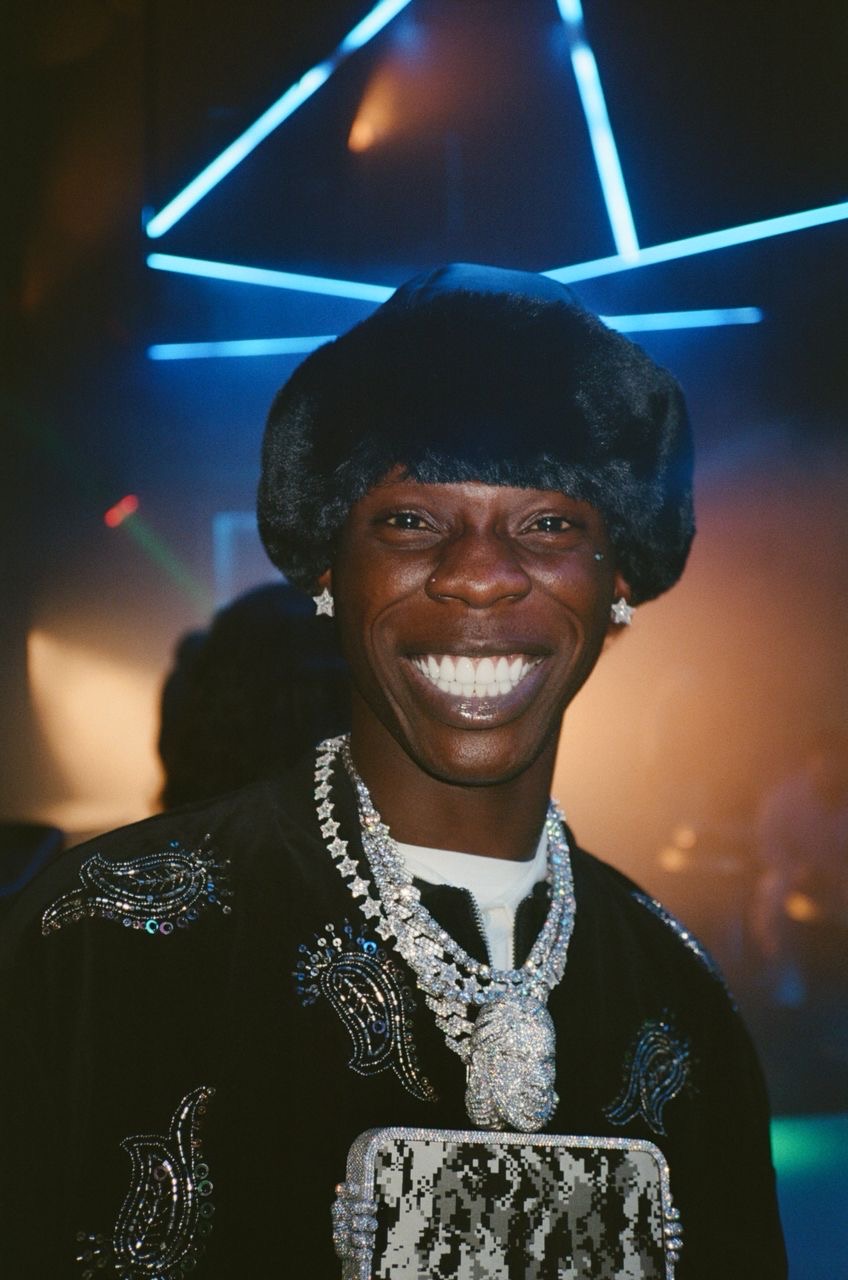
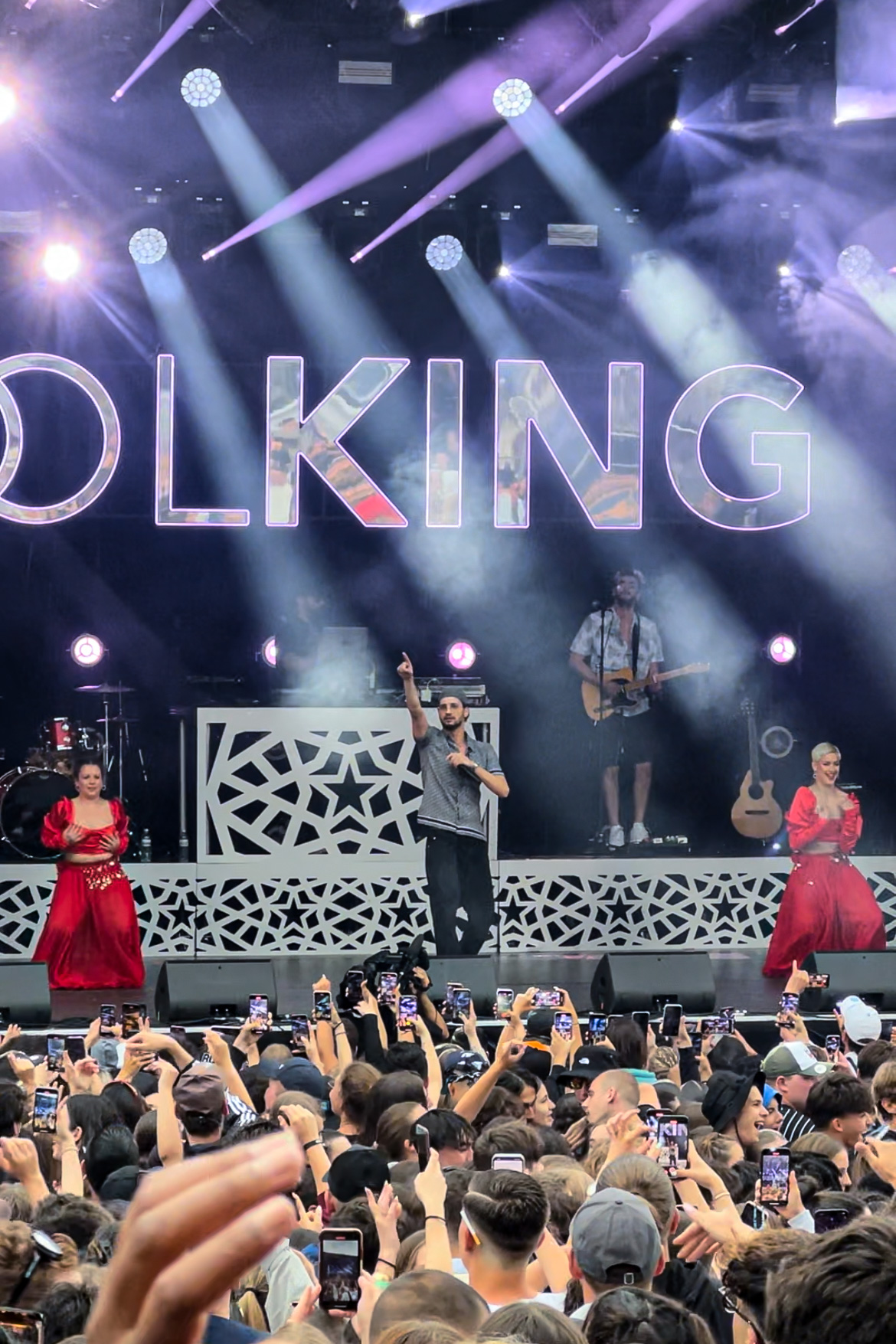
There is a second, more direct fragility in the run itself. Two of the five non-African markets, France and Italy, carried exactly one African-origin artist each on 24 September: Soolking, the Algerian-French rapper, alone on France’s chart, and Nabi, the Guinean-born, Milan-based singer, alone on Italy’s. Both are genuine cross-border exports, confirmed against their own biographies rather than assumed from a name match, and neither is new to this desk’s classification queue; both have been checked and carried forward on five collections running. But a single-artist market is a single point of failure for the count. If either Soolking’s or Nabi’s current single is followed by nothing charting on the day it falls off Spotify’s public chart, the footprint drops to eight and the seven-collection run ends, with no change at all in Nigeria, Egypt, Morocco or South Africa, the markets actually carrying the volume.
For an independent label or a manager plotting a European or Gulf push, the honest reading of “African artists reached nine of Spotify’s charts” is not that momentum is broadening. It is that two of those nine data points are one song each, and building a release calendar on the assumption that a market like France or Italy will keep showing an African artist by default, rather than because a specific track is still charting, is building on the least stable row in this table. The markets worth planning around on the strength of what has actually held are the four with a real base under them, and Saudi Arabia, whose seven charting African artists and 12.1 per cent African share on 24 September make it the only non-home market in the footprint that is not resting on a single act.