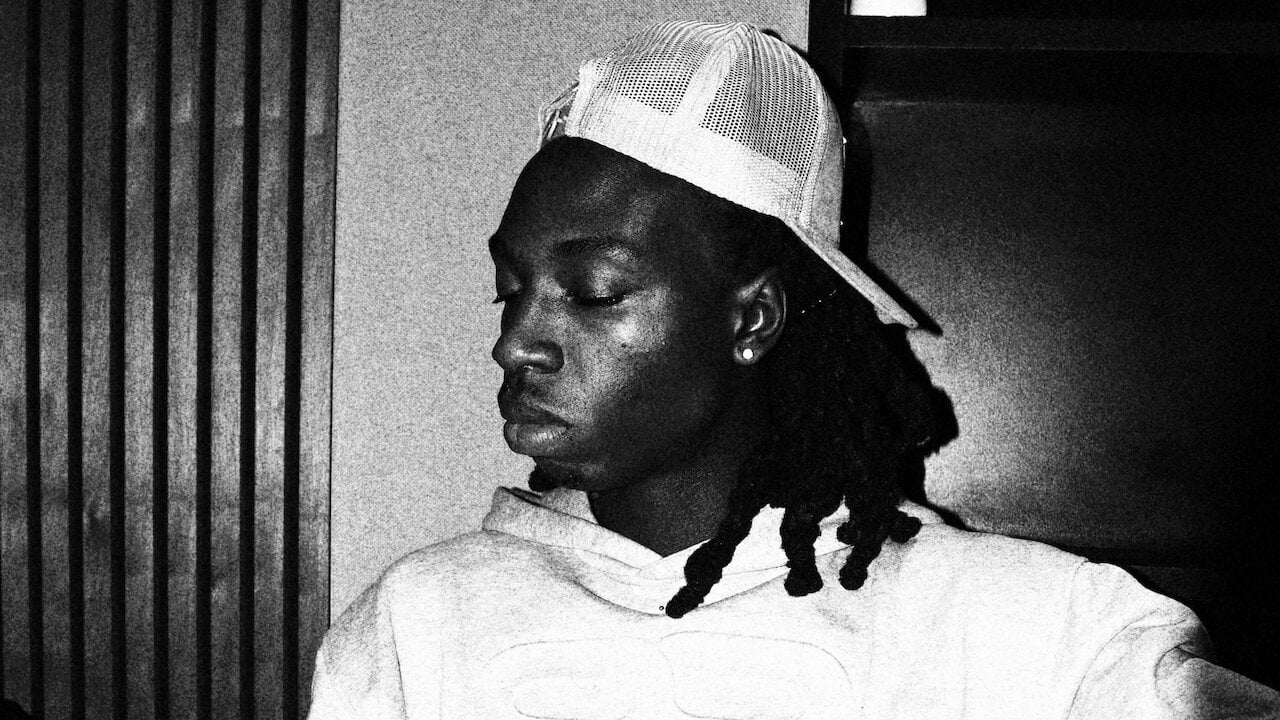
On 11 November 2026, Since ’93, the Sony Music Entertainment UK label built inside the RCA Label Group, announced Solana as a new signing. Co-president Riki Bleau called her “the Queen of YoruPop” and framed the news as the label continuing its run of African female talent after Tems and Tyla. Solana, a Lagos-born singer who built her sound on Yoruba language and synth-pop, called it “this next chapter.”
Her own catalogue tells a different story about when that chapter actually started. Apple Music’s phonogram credit, the line every digital release carries by law to state who owns the recording, has read “Since 93, a division of Sony Music Entertainment UK Limited under exclusive licence from Solana” since 19 June 2026. That is five months before the label called her a new signing, not five days. This desk fetched that credit directly, and confirmed it has held unchanged across every release checked since: the October single “O ri mi,” and the EP “Girl From The West,” out 13 November 2026.
What changed hands, and when#
Strip away the announcement date and the facts are these. Solana’s masters are licensed, not sold, to Since ’93. The credit line names her personally, not a company, as the licensor, which means Since ’93 holds an exclusive licence to her recordings while she, not the label, remains the rights holder of record. That is the same structure this desk has found on other Since ’93 artists, including Shallipopi, whose own imprint Plutomania Records licenses to the label rather than assigning ownership outright. The difference here is that Solana’s credit skips a company entirely and names her as an individual, which either means she has not incorporated a loan-out entity for her masters, or that whatever entity she uses was not disclosed on the credit line Apple displays.

Before the Since ’93 credit appeared, Solana’s catalogue carried two other names that have nothing to do with Sony or RCA. Her single “Most High,” released 1 February 2024, carries the phonogram credit “Uncle Shaba.” Her EP “OMG,” out 5 June 2024, carries “Kidding Aside.” Neither name matches a company on the UK’s Companies House register by a direct name search run on 12 November 2026, and Nigeria’s company register, the CAC, has no public search tool this desk can use to check further. Both could be informal trading names rather than incorporated entities; this record does not resolve which.
Between that June 2024 EP and the June 2026 single “Okunkun” that first carries the Since ’93 credit, Solana released nothing. That is a two-year silence in her public discography, and it lines up exactly with the window in which the credit line changed. No source checked, including Since ’93’s own statement and Solana’s own statement, says when inside that two-year window the actual agreement with Since ’93 was signed. 19 June 2026 is simply the earliest date this desk can prove the relationship existed from a document fetched directly. The real contract date could be earlier. It cannot, on this evidence, be later than June 2026, which already makes “new signing” an odd description for a November announcement.
Two different claims, doing two different jobs#
It is worth separating what Bleau’s statement and the phonogram credit are each actually claiming, because they are not contradicting each other in the way a reader might assume. “New signing” is roster language: it tells the public that Since ’93 is now actively promoting Solana as part of its stable, alongside Cat Burns, Nectar Woode and Shallipopi. A phonogram credit is a legal statement about who owns a specific recording and who, if anyone, has a licence to exploit it. A label can hold an artist’s recordings under licence for months, quietly, building a release schedule, before making the commercial case to the public that the artist has “joined.” Both things can be true. What is not disclosed by either party is the one fact that would resolve the gap: the date the actual licence agreement was signed. Since ’93 has not published one, and no court filing or regulatory document exists to check it against.
This desk could not establish Solana’s publishing arrangement at all. No source checked, Apple Music’s credit included, names a publisher, an administrator or a collecting society for her songwriting. The phonogram credit covers the sound recording only. A deal that licenses an artist’s masters and a deal that administers their publishing are different legal relationships, and nothing here should be read as describing both.
What this means for artists#
The lesson for any Nigerian or wider African artist watching a “signing” headline is to ask what the headline is actually describing. A label announcement is a publicity event, timed for a release. The phonogram credit on the artist’s own back catalogue, checked on Apple Music, Spotify or Deezer, is a legal fact that often exists quietly before the announcement, and sometimes contradicts the announcement’s framing entirely. Solana’s case is the gentler version of that gap: the label’s claim and the credit line are not in conflict about who owns what, only about when the public was told. This desk has found sharper versions elsewhere, where an artist’s own catalogue names a company the artist has publicly denied signing with, or where a “joint venture” turns out, on the credit line, to be a plain licence with no joint anything.
The practical habit worth building is simple. Before taking a label’s “signing” date at face value, pull up the artist’s own catalogue and read the small print at the bottom of the page. It is public, it is free, and in Solana’s case it moved the actual date by five months.
No financial terms for the Since ’93 arrangement are public: no advance, no royalty rate, no contract length, no territory. “Not disclosed” is the accurate description, not a gap this desk is guessing at. What is confirmed, and documented directly, is the structure: Solana licenses her masters to Since ’93, exclusively, and has done so since at least 19 June 2026.