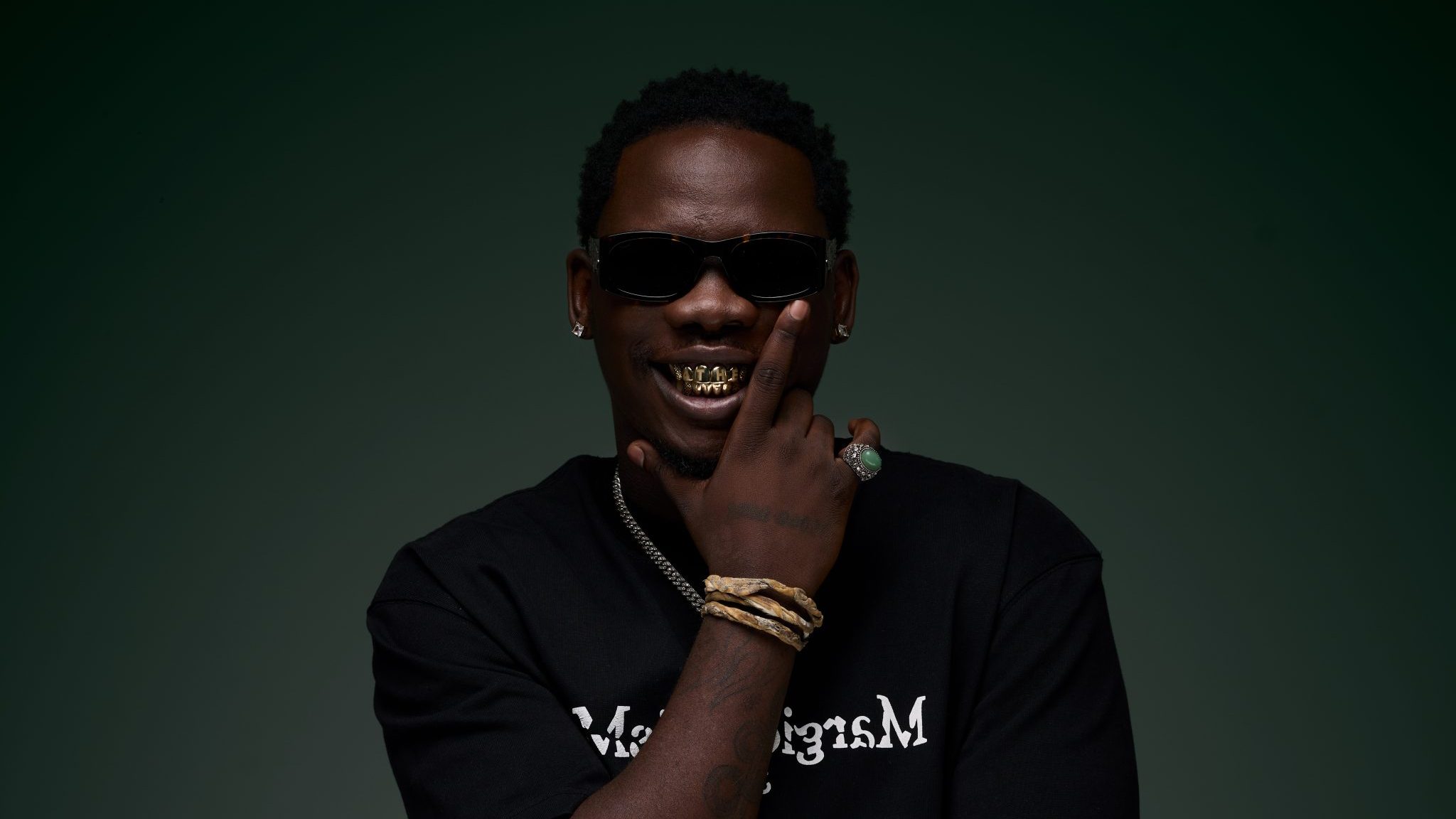
On 6 March 2025, Reservoir Media and its Middle East and North Africa subsidiary PopArabia announced they had bought Egyptian star Omar Kamal’s entire catalogue, “both publishing and master rights,” in the companies’ own words. Twelve weeks later, in a document Reservoir filed with the US Securities and Exchange Commission for the same financial quarter, the same company described the same transaction as a signed publishing deal, grouped with songwriters who never sold a recording to anyone. A week after that, a second SEC filing swung back to calling it an acquisition. Reservoir has not reconciled the three accounts, and no document obtained by this desk resolves which one is operative.
What the companies said in March#
Reservoir’s own newsroom carried the announcement under the headline “Reservoir and PopArabia Acquire Catalog of Egyptian Star Omar Kamal,” dated 6 March 2025. The release is unambiguous about scope: “The deal includes both publishing and master rights to his catalog.” That is a specific legal claim. Publishing rights cover the compositions, the underlying songs. Master rights cover the recordings, the actual audio. A company that owns both no longer needs anyone else’s permission to license, place or exploit either side of the work. Reservoir founder and chief executive Golnar Khosrowshahi called the purchase “another key growth moment for Reservoir and PopArabia’s market share in Egypt,” and PopArabia’s vice president of A&R and acquisitions, Wissam Khodur, said the companies were “thrilled to bring his music to PopArabia.” Kamal, best known for the 2020 mahraganat hit “Mahragan Bent El Geran” with Hassan Shakosh, a track Rolling Stone later named one of the 50 best Arabic pop songs of the century, welcomed the deal in his own quote. Digital Music News ran the same facts, including the “both publishing and master rights” line, the same day. No price was disclosed anywhere in this round of coverage.
What Reservoir told the SEC#
Reservoir Media is a Nasdaq-listed company (RSVR), which means its disclosures about its own business carry legal weight that a press release does not. The transaction falls inside Reservoir’s fiscal fourth quarter, the three months to 31 March 2025. Two SEC filings cover that quarter.

The first is the earnings release itself, filed as Exhibit 99.1 to an 8-K on 28 May 2025, headlined “Reservoir Media Announces Fourth Quarter and Fiscal Year 2025 Results.” Its list of the year’s highlights reads: “Signed publishing deals with Snoop Dogg and Death Row Records, k.d. lang, Wrabel, Travis Heidelman, Jon Decious, Aaron Zuckerman, Jeff Trott, Lewis Thompson, and Omar Kamal among others.” Every other name in that sentence is a songwriter or performer whose publishing Reservoir administers or co-owns under a deal that, going by how Reservoir describes its own publishing roster elsewhere, does not typically carry the writer’s recordings with it. The same release draws a visible line between that category and catalogue purchases elsewhere in the same document: “Struck deals for rights to the publishing catalog of Lebo M and recorded music catalog of Jack Douglas” is one bullet; “Acquired the publishing catalogs of Lastrada Entertainment, Big D Evans, and Billy Strange” is another. Omar Kamal sits in neither of those. He sits with the signed songwriters.
The second filing is an investor presentation, also filed as an 8-K Exhibit 99.1, dated June 2025 and filed with the SEC on 4 June 2025, a week after the earnings release. Its slide on “Q4 Fiscal Year 2025 Results” lists: “Acquired catalog of Egyptian star Omar Kamal in conjunction with PopArabia.” That bullet sits apart from “Announced publishing deal with 5x Grammy-nominated R&B songwriter and performer El DeBarge,” on the same slide, which means this document draws exactly the distinction the earnings release blurred, and places Kamal on the acquisition side of it.
Reservoir’s 10-K for the same fiscal year, also filed 28 May 2025, discusses PopArabia’s strategy in general terms, “signing artists, acquiring catalogs and establishing a rights management company in the Middle East and North Africa,” and names Mohamed Ramadan and Nancy Ajram as examples of artists whose work PopArabia has signed or acquired. It does not name Omar Kamal at all. The deal that got a headline press release in March does not rate a sentence in the annual report two months later, and the number it might have anchored, a purchase price, is absent from all four documents this desk checked.
Why the gap matters#
This is not a case of one outlet getting a detail wrong and another getting it right. It is the same public company describing its own transaction three different ways inside the same three-month reporting window: full ownership of two distinct rights categories in the press release, a signed publishing deal in the earnings release, an acquired catalogue in the investor deck. The most innocent explanation is that the earnings release’s bullet was written loosely, a drafting shortcut that lumped a catalogue purchase in with a list of songwriter signings because both get summarised as “publishing deals” in casual usage. That explanation cannot be ruled out. But it does not change what the document says, and a reader relying on Reservoir’s own SEC filing, rather than its press office, would come away believing Reservoir signed Omar Kamal’s publishing and nothing more, which is a materially smaller claim than owning his masters too.
None of the four documents states what Reservoir paid, what the legal form of the master-rights transfer is (an outright assignment of copyright reads very differently from an exclusive licence with a reversion clause, and the two carry different consequences for Kamal if the relationship ends), or what territory and term apply. “Not disclosed” is the honest answer to all three, and this desk is publishing it as such rather than estimating.
What this means for artists#
For an artist weighing a catalogue sale, the Omar Kamal record is a reminder that a company’s press release is not the same document as its regulatory filing, and the two can describe the identical deal in materially different terms without either one being retracted. An artist, or their lawyer, who wants to know exactly what was sold should ask for the sale-and-purchase agreement itself, not rely on how either side later characterises it in marketing copy or in a quarterly highlights slide. The distinction between selling your masters outright and licensing them, or between a full catalogue sale and a publishing administration deal, determines who controls the work if the artist and the company later part ways, and whether the artist can ever get the recordings back. Reservoir’s own paperwork shows that even the buyer’s internal language on that point is not stable from one filing to the next.
This desk checked Reservoir Media’s own newsroom, two SEC filings covering the same fiscal quarter and Reservoir’s FY2025 annual report for any document that resolves the gap between them. None does. If Reservoir or PopArabia issues a filing that clarifies the deal’s structure, this record will be updated.