Log in or create a free account to get started.
Log in or create a free account to get started.
Nigeria is developing a national network of cancer samples and patient data to strengthen local research, improve understanding of the

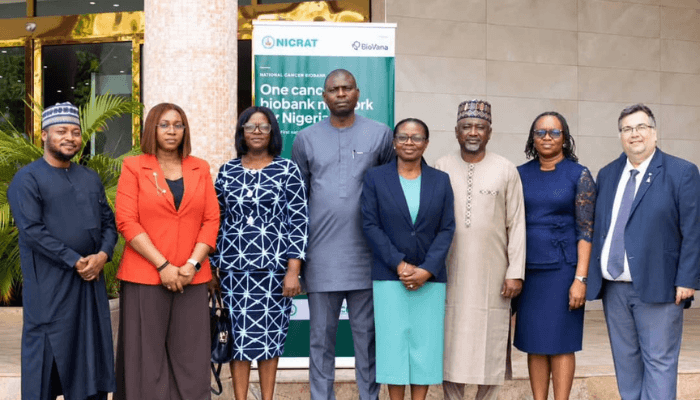
Nigeria is developing a national network of cancer samples and patient data to strengthen local research, improve understanding of the disease and support the development of more targeted treatments. The National Institute for Cancer Research and Treatment (NICRAT) has partnered with health data infrastructure company BioVana to implement the National Cancer Biobank Network (NCBN), which will connect eight federal hospitals across the country’s six geopolitical zones. Read also: African economies see $99.4bn GDP upgrade amid renewed Iran war shocks The first phase aims to collect and catalogue 10,000 cancer biospecimens, with a longer-term target of expanding the network to 100,000 by 2028. The initiative builds on a memorandum of understanding signed by the two organisations in 2025. According to the Global Cancer Observatory, Nigeria recorded an estimated 152,000 new cancer cases and more than 90,000 deaths in 2024, highlighting the need for stronger research capacity and better evidence to guide diagnosis and treatment. A biobank collects, processes, stores and manages biological samples, such as tissue and blood, alongside relevant health information for scientific research. By bringing these resources together under common standards, the Nigerian network is intended to help researchers study cancer across multiple institutions rather than work with separate collections that may be difficult to compare. The network could support research into biomarkers, the development of diagnostic tools and precision oncology, an approach that uses information about a patient and their cancer to guide treatment decisions. It could also help generate evidence that better reflects the experiences and biological characteristics of Nigerian patients. Read also: STL Capital Group, COPE partner for breast cancer awareness walk, offer free screening Under the partnership, NICRAT will provide national oversight and coordinate participating institutions, while BioVana will develop the digital infrastructure, align sample collection and data management standards, and support training and research systems at the hospitals. “The NCBN is about connecting those resources through the standards, infrastructure and governance required to make them more useful for research,” said Estelle Dogbo, co-founder and chief executive of BioVana. Dogbo said the network could also provide a model for other African countries seeking to strengthen their biomedical research systems and improve collaboration with international scientific institutions. The initiative has moved beyond planning, with initial assessments of participating hospitals completed and a stakeholders’ workshop held with representatives of the World Health Organisation (WHO) and the International Society for Biological and Environmental Repositories (ISBER). The next phase will focus on training hospital teams, harmonising biobanking procedures, establishing shared data and quality standards, and recruiting the first 10,000 samples. Aliyu Malami Usman, a professor, director-general of NICRAT, said the project was part of a longer-term plan to establish a central national cancer biobank supported by institutions across the country. “Our ambition goes beyond connecting institutions today. We are laying the foundation for a national cancer research infrastructure that can serve Nigeria for generations,” Usman said. He added that the partnership would help build the standards, skills and systems required to support cancer research and precision oncology in Nigeria. Stella Somiari, president of ISBER, said high-quality biobanking was essential to reliable research and international collaboration. She said the network could help ensure that African populations contribute to precision oncology research and benefit from its findings. Read also:Cancer survivors face gaps in post-treatment care Zisis Kozlakidis, group head of laboratory support, biobanking and services at the International Agency for Research on Cancer, a WHO agency, said connected research infrastructure could help ensure that samples and data from African populations contribute more meaningfully to global scientific discovery. Africa’s cancer burden adds urgency to such efforts. Africa Cancer Control Partners reported more than one million new cancer cases on the continent in 2020 and projected that the number could double over the following 15 years. However, the network’s impact will depend on more than the number of samples collected. Sustained funding, consistent sample quality, reliable data management and safeguards for participants’ privacy and consent will be important to maintaining public trust and making the collections useful for research. BioVana, founded in 2025 by Dogbo and Jumi Popoola, works to connect African research institutions with the global scientific community. Through the NCBN, the partners aim to build a coordinated system that allows Nigerian researchers to collaborate more effectively and generate evidence relevant to cancer care in the country. Related News The workplace equity gap: Why representation alone is not enough When an Emperor’s speech became Bob Marley’s war Moniepoint restructures technology operations to drive efficiency, expansion Faith Omoboye Faith Omoboye is a foreign affairs correspondent with background in History and International relations. Her work focuses on African politics, diplomacy, and global governance.