Ghana‘s Minerals Income Investment Fund (MIIF) has exceeded its 2026 mineral royalty mobilisation target of GH¢6.9 billion in Ghana cedis, recording more than GH¢9 billion with two months left in the year.
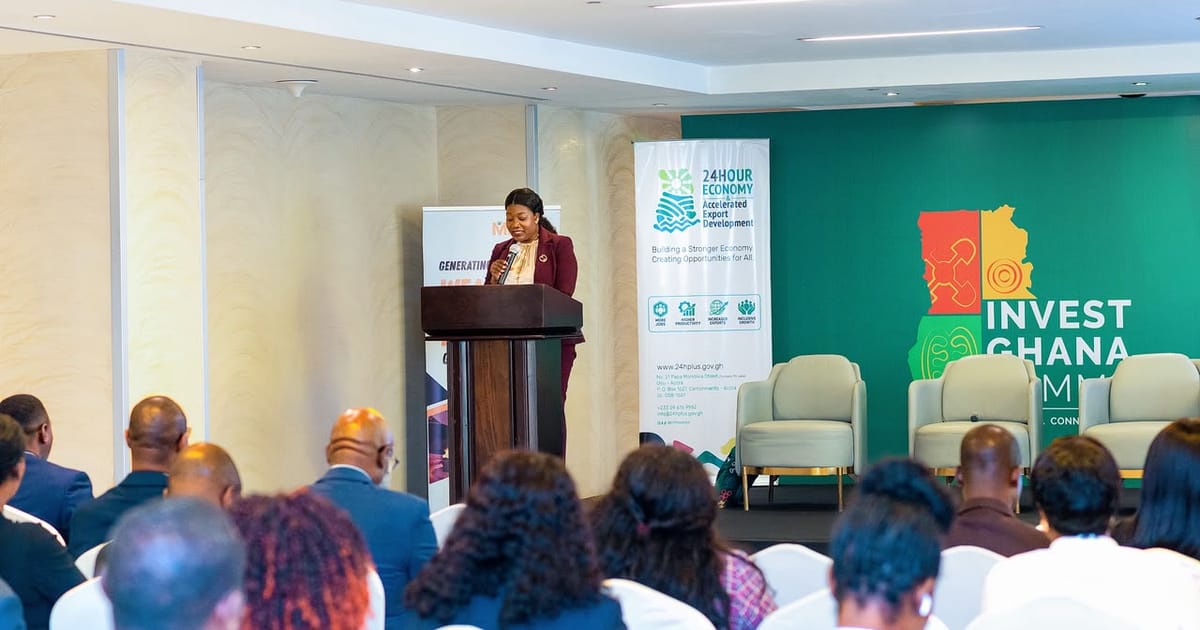
The announcement was made by MIIF Chief Executive Officer Mrs Justina Nelson on Monday, November 16, 2026, at the Invest Ghana Summit 2026, held at the Kempinski Gold Coast Hotel in Accra, Ghana.
Speaking at a breakaway session on Mining, Minerals and Downstream Value Addition, Mrs Nelson told global investors, corporate leaders, policymakers and financial institutions that the result reflected significant growth in the Fund’s revenue mobilisation efforts.
Royalty receipts and profit rise#
Mrs Nelson said mineral royalty receipts climbed from GH¢1.25 billion in 2020 to GH¢5.43 billion in 2025, growth of 334 per cent. The Fund also recorded a profit of GH¢1.1 billion in 2025.
- Mineral royalty receipts, 2020: GH¢1.25 billion
- Mineral royalty receipts, 2025: GH¢5.43 billion
- Growth in royalty receipts, 2020 to 2025: 334 per cent
- Fund profit, 2025: GH¢1.1 billion
Gold output and royalty policy#
Mrs Nelson attributed the growth partly to higher gold production and to the government’s introduction of a sliding-scale royalty regime.
Ghana’s gold production rose by 23.41 per cent in 2025, from 4.82 million ounces to 5.94 million ounces. Small-scale mining accounted for 3.11 million ounces, or 52.4 per cent of total output.
Managing revenues and building domestic industry#
Mrs Nelson said MIIF’s responsibility extends beyond mobilising royalties. The Fund must also ensure the revenues are prudently managed and invested to generate sustainable returns for national development.
She said the Fund is aligning its investment activities with Ghana’s shift from raw mineral exports toward domestic processing, refining and manufacturing.
Mrs Nelson called for closer collaboration among government, investors, mining companies, technology providers and development partners. She urged local and international investors to look beyond mineral extraction to opportunities in mining, processing, infrastructure and related industries.
She said Ghana’s mineral wealth should be judged not only by production and exports, but also by the industries developed, jobs created, technology acquired and opportunities generated for future generations.