

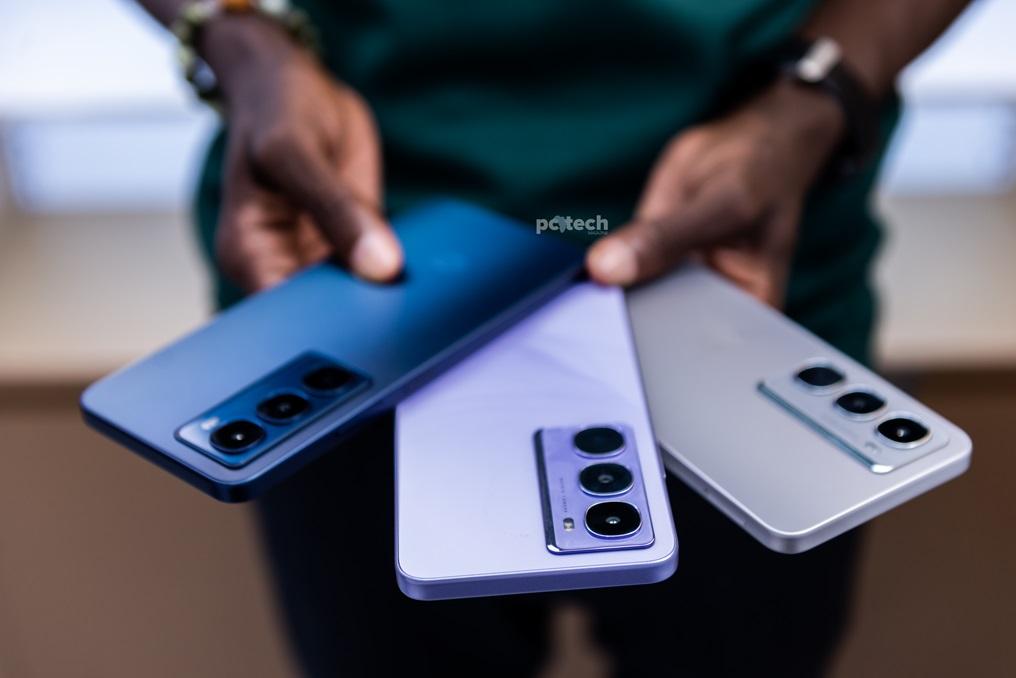
For years, the “kabiriti,” the humble, durable feature phone, has been the undisputed king of mobile phones. It connects millions, facilitates mobile money transfers, and survives days without a charge. But in an increasingly digital world, a feature phone is a closed door. It cannot access e-government services, run an agricultural weather app, or allow a young entrepreneur to market their crafts on social media.
The primary lock on that door has always been the upfront cost of hardware. When a decent entry-level smartphone costs upwards of UGX300,000, asking an average Ugandan earner to pay cash upfront is asking the impossible.
Enter the buy-now-pay-later smartphone schemes. Device financing spearheaded by telecom giants like MTN and Airtel alongside asset-financing fintechs like M-KOPA has aggressively entered the mainstream; the same goes for MOGO. By allowing users to walk away with a smartphone for a deposit as low as UGX50,000 and daily mobile money micro-payments of UGX1,000, device financing is rewriting the rules of access.

The schemes have made more than half a million Ugandans own a smartphone for the first time in the past year alone. That’s real progress.
Somewhere in Kampala today, a boda boda rider, a market vendor, a farmer, will hand over a deposit worth about a day or two of fares and walk out of a shop with a Tecno smartphone. S/he’ll finish paying for it over the following months in small instalments, automatically deducted from his/her mobile money wallet each day or weekly. Miss a payment, and the phone’s screen locks, rendering it unusable for anything other than emergency calls and mobile money deposits.
Multiply that transaction by roughly half a million, and you have one of the more consequential digital-inclusion experiments underway in Uganda right now, one that no ministry designed and no regulator mandated. It was built by fintech companies chasing a market, not a policy goal. So, a critical question arises: Is device financing the silver bullet to Uganda’s smartphone penetration problem, or is it merely a temporary patch covering deeper infrastructural cracks?
Start with the paradox at the centre of Uganda’s digital story. Mobile broadband networks now reach an estimated 96% of the population, according to GSMA data, among the highest coverage rates on the continent. Yet the same GSMA research found that only about 22% of Ugandans actually use mobile internet. That’s a usage gap of roughly 3 in every 4 people who technically have access but never go online.
Uganda has built the highway. Most people still don’t have a car.
The car, in this case, is a smartphone, and Uganda doesn’t have nearly enough of them in circulation. Smartphone penetration is estimated at around 35%, against more than 60% in Ghana, over 72% in Kenya, and above 90% in Egypt and South Africa.
Of the 58.3 million devices connected to Uganda’s mobile networks, the Uganda Communications Commission (UCC) counts only about 20 million as smartphones; the rest are feature phones and basic handsets, fine for calls and texts but useless for mobile money apps, e-government portals, digital marketing, online classes, or most of the services the country is otherwise racing to digitise. As recently as the last quarter of 2025, feature phones still made up 61.7% of mobile subscriptions against 38.3% for smartphones.
This isn’t a small technical footnote. The GSMA estimates that closing Uganda’s digital gaps could generate UGX14.6 trillion in additional economic value, connect four million more citizens, and create 1.79 million jobs by 2030. Government has taken the ambition seriously on paper, lifting its ICT budget allocation in the 2025/26 financial year and folding digital transformation into National Development Plan IV (NDP IV). None of it delivers much, though, if the vast majority of Ugandans are still holding a basic handset that can’t run a banking app.
It’s tempting to explain Uganda’s low smartphone uptake as reluctance or preference. The evidence doesn’t support that. Telecom operators, the regulator, and independent researchers converge on a blunter explanation: most Ugandans simply can’t afford the entry ticket.
The GSMA estimates the cheapest usable smartphone in Uganda costs around US$39 (approx. UGX 145,000), equivalent to roughly 39% of the country’s monthly GDP per capita. Imagine handing over more than a third of a typical month’s economic output in one lump sum just to get online. Layer on Uganda’s stack of handset import taxes: a 10% import duty, a 6% withholding tax, a 1.5% infrastructure levy, and 18% VAT, and even a cheap device arrives at the till markedly more expensive than it left the factory.
MTN petitioned Parliament’s Finance Committee in April 2026 to scrap import duty on entry-level handsets, arguing that the tax prices out low-income buyers while doing little to protect revenue, since a significant share of phones in the market already enter the country through smuggling rather than paying duty at all.
UCC has separately proposed cutting VAT and excise duty on entry-level smartphones and mobile data, and reclassifying internet access as an essential service rather than a luxury. The GSMA has gone further still, naming Uganda 1 of 6 pilot countries in its Handset Affordability Coalition, an effort to get functional 4G smartphones onto shelves for US$30–US$40 (approx. UGX110,000-UGX150,000).
In short: the industry’s own diagnosis is that this is a price problem before it’s anything else. That sets a high bar for any proposed fix.
This is the gap device financing walks into. Instead of asking someone to pay UGX200,000 at once, companies like M-KOPA, Watu Simu, or MOGO let buyers put down a fraction of that as a deposit and clear the balance in small daily or weekly instalments, usually auto-debited from mobile money.
Qualifying for most of these plans typically requires a national ID, an active mobile money line for at least six months, and a deposit starting around UGX50,000.
Desposits dependable to the type of phone. Watu Simu’s partnership with Samsung, for example, currently offers a Samsung A07 for a UGX150,000 deposit and roughly UGX3,000 a day, or a higher-spec A17 for a UGX230,000 deposit and about UGX3,770 a day. The logic is simple: match repayment to how informal earners actually make money daily, in small amounts instead of forcing them to save toward one big purchase they may never quite reach.
Judged purely on reach, this has outperformed almost anything government has tried. It is reported that Watu alone has put smartphones into the hands of more than 500,000 Ugandans.
Regionally, M-KOPA, which pivoted from solar-panel financing into smartphones in 2020, crossed 10 million customers across Kenya, Uganda, Nigeria, Ghana, and South Africa, adding roughly 10,000 new customers a day, many of them boda riders, market traders, tailors, and shopkeepers the formal banking sector has never bothered to serve.
The company [M-KOPA] reports that 42% of its 2025 buyers were first-time smartphone owners. More strikingly, for 38% of customers, the purchase was also their first formal loan; for 67%, their first insurance product; for 55%, their first formal financial product of any kind.
MOGO, another regional player, is chasing a million financed smartphones of its own across East Africa. In June this year, the company reported financing more than 500,000 smartphones across East Africa in just 14 months. In Uganda alone, MOGO financed more than 250,000 smartphones during the same period, accounting for over half of the company’s regional total.
But the same mechanics that make device financing work also make it worth real scrutiny, and Uganda hasn’t done nearly enough of that yet.
The first major caveat of device financing is the cost premium. Device financiers/financing companies have been accused of price exploitation: a device costing UGX150,000 is effectively doubled once instalments and markups are added, roughly three times the cash price. When you calculate the total cost of ownership by the end of the payment cycle, a financed phone often costs 30% to 50% more than its cash price. For the lowest-income earners, this means the poorest Ugandans pay the highest premium for digital access.
Industry defenders counter that the markup prices include genuine default risk and the cost of extending credit to people with no formal credit history; critics call it exploitation dressed up as inclusion.
Both arguments have some merit, which is exactly why the pricing needs regulating rather than assumed away.
Furthermore, there is a social cost. The enforcement tool behind these plans is remote device-locking software that disables a phone the moment a payment is missed. The mechanism is highly effective, but it is also unforgiving. In a cash-strapped week, perhaps due to illness or a poor harvest, or the boda rider didn’t make much that day to survive, a locked phone cuts the user off from their primary communication tool, their digital wallet, and potentially their source of income.
This issue has repeatedly surfaced on social media as a source of frustration among customers, including reports from users whose phones were locked despite being up to date with their payments.
Even a perfectly regulated, fairly priced financing sector would only solve half the problem, because owning a smartphone and using one productively are not the same thing.
Uganda’s own data shows a widening gap between access and skill: smartphone ownership more than doubled between 2020 and 2024, but digital literacy hasn’t kept pace, so many owners still use their devices mainly for calls, texting, and entertainment rather than banking, business, or education. These uses actually generate economic value. Handing more people a device does nothing, by itself, to close that gap.
Gender exposes the limits of a purely financial fix even more starkly. Uganda’s rural gender gap in mobile ownership sits at around 22%, against roughly 45% in urban areas, and recent census-linked data suggests only 8% of Ugandan women use the internet, compared with 11% of men. Roughly three in ten Ugandan women may not own a mobile phone at all.
A 2024 pilot study with savings groups in Uganda and Rwanda covering more than 2,600 members, most of them women found that phone access alone did not close the gender gap in digital participation: 73% of participants had no smartphone and more than a quarter had no phone access whatsoever, but the deeper, harder barrier turned out to be the gender norms shaping whether women could use a phone freely even once they had one.
A financing plan is gender-blind on paper. It doesn’t change who in a household controls spending decisions, or whose phone use gets treated as a priority.
Not alone. And it was never going to. It’s nowhere near a complete answer to Uganda’s digital divide, and treating it as one would be a mistake.
Device financing is a genuinely effective demand-side tool for a problem that is simultaneously fiscal, industrial, regulatory, and social. It has proven, at real scale, that when an unaffordable lump sum becomes payments matched to how people actually earn, hundreds of thousands of Ugandans who wanted a smartphone all along will buy one. That’s not nothing, and critics who wave the whole model away as a debt trap and stop there are missing genuine, measurable progress.
But financing a device doesn’t shrink the four-tax stack that makes even the cheapest smartphone cost more than a third of a month’s economic output before a single instalment is added. It doesn’t build the local assembly capacity that could push prices toward the GSMA’s US$30–40 target. It doesn’t require a single financing company to disclose its default rate, cap its markups, or prove its device-locking practices are fair. And it does nothing to teach a first-time owner what to do with the device once it’s unlocked, or to shift the household norms keeping a large share of Ugandan women offline regardless of who’s holding the phone.
Solving Uganda’s smartphone gap for real means running several tracks at once: cutting the import taxes, backing local assembly & bulk-procurement efforts like the Handset Affordability Coalition, extending Uganda’s new digital-lending consumer protections to cover asset financing specifically, with mandatory disclosure of completion and repossession rates, and funding digital literacy programmes aimed squarely at the rural women currently furthest from the network.
The boda rider who finances his Samsung today has genuinely gained something: a foothold in the digital economy he didn’t have a month ago. Whether that foothold turns into mobile money savings, a growing business, or his children’s access to online learning depends on a much longer list of policy choices than any single fintech app can make on his behalf.
Device financing is an undisputed triumph. It is placing sophisticated, internet-enabled computers into the hands of hundreds of thousands of Ugandans who would otherwise be left on the wrong side of the digital divide.