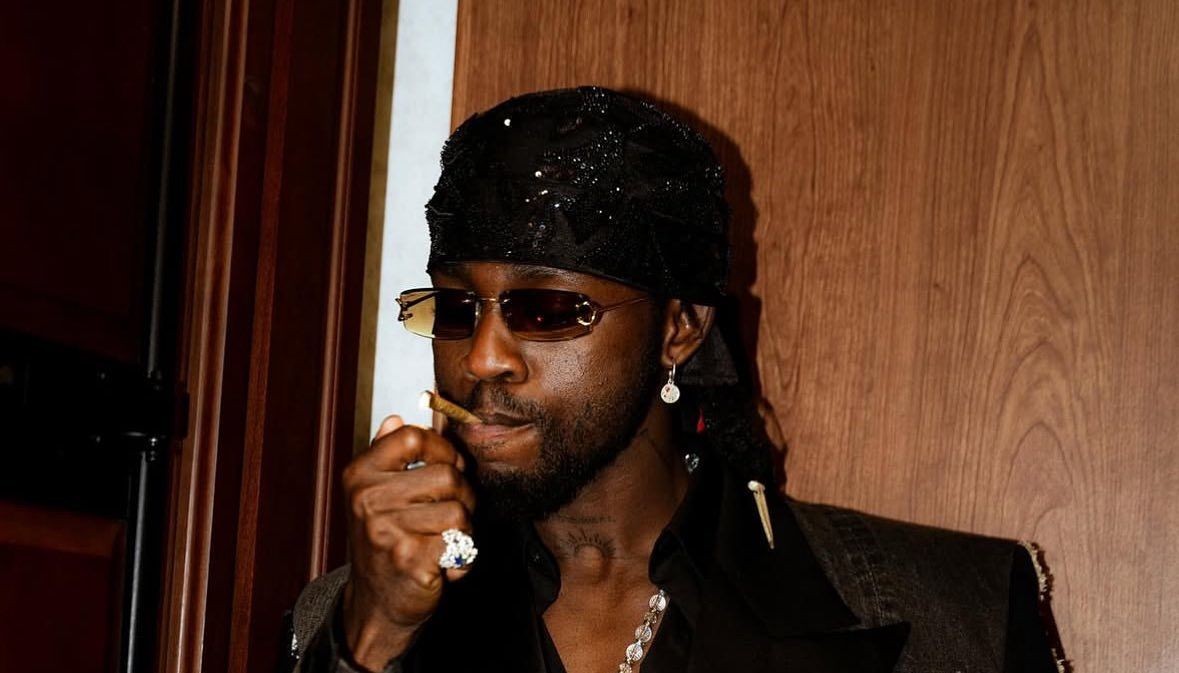

Burna Boy’s 2024 purchase of his own early masters from Aristokrat Records was supposed to be the clean version of an artist reclaiming his history. No major label standing between him and the recordings that built his career, no licence carving Africa out of his own continent’s catalogue, just Burna Boy and his mother and manager, Bose Ogulu, buying back what was theirs through their own company, Spaceship Music. Two years later, a Nigerian federal court is being asked to unwind it, and the reason has nothing to do with the music.
A sale nobody announced#
Court filings put the transaction in May or June 2024. Aristokrat, the Port Harcourt label that signed an unknown Burna Boy in 2011, transferred the master recordings and intellectual property behind his first two albums, L.I.F.E (2013) and Redemption (2016), along with early singles including “Like to Party” and “Tonight,” to Spaceship Music. No press release marked the moment. No party has ever confirmed a price; Nigerian trade coverage describes it only as “multi-million dollar,” which is a description, not a number. The sale sat outside public view entirely until February 2026, when a lawsuit made it impossible to ignore.
That lawsuit comes from 960 Music Group, which says it has held close to 40 per cent of Aristokrat since 2013, back when the label was an unproven bet on a singer nobody outside Port Harcourt had heard of yet. 960 Music’s case is not that the sale itself was wrong. It is that nobody asked.

“You cannot sell 100 per cent of an asset”#
In its filing at the Federal High Court in Port Harcourt, 960 Music Group lays out a straightforward corporate governance argument: Aristokrat’s founder, Piriye Isokrari, ran the label day to day, but running a company is not the same as owning all of it. A representative for 960 Music put it bluntly in court documents: “You cannot sell 100 per cent of an asset when you only have the authority to manage the company, not bypass the owners of 40 per cent of its soul.”
The suit, 960 Music Ltd v. Aristokrat Records Nigeria Limited & Ors, asks the court to void the entire transfer and recover whatever proceeds changed hands. A second and more pointed allegation runs alongside it: that the money from the sale never made it into Aristokrat’s own accounts in the first place, which is what pulled Nigeria’s Force Criminal Investigation Department into the matter, with a fraud-related charge filed against Isokrari personally.
The criminal case died. The real one didn’t.#
On 10 June 2026, a Federal High Court sitting in Ikoyi, Lagos, threw out that criminal charge. The reason had nothing to do with guilt or innocence. The prosecuting counsel did not show up, and police had failed to properly serve Isokrari despite already being granted permission to do so by substituted means. Justice Kakaki struck the case out for lack of diligent prosecution, a process failure, not a verdict, and one that leaves the door open for prosecutors to try again with the paperwork done properly.
The civil case in Port Harcourt, the one that actually decides who owns the catalogue, is a different court and a different track entirely. Its own hearing calendar also pointed to 10 June 2026, the very day the Lagos criminal charge collapsed. What happened at that Port Harcourt hearing has not surfaced in any account checked for this piece. The ownership question Burna Boy’s early catalogue actually turns on is still sitting, unresolved, in front of a judge.
Warner Music gets a letter it hasn’t answered#
The dispute has already reached beyond the two companies actually named in court. In 2026, a Lagos law firm, Creative Legal, acting for 960 Music Group, sent Warner Music Group, Spaceship Music’s distributor, a formal demand: stop distributing, marketing, monetising or licensing the disputed catalogue until the ownership question is settled. As of the most recent reporting checked, Warner Music Group had said nothing back.
Nobody accuses Warner Music Group of doing anything wrong here. It didn’t buy the catalogue, didn’t structure the sale, isn’t named in either lawsuit. It is simply the company positioned to press play, and that is apparently enough to get a legal letter. Any distributor sitting on a catalogue with a live ownership dispute attached to it, anywhere in the world, should read that letter as a preview of a conversation it may eventually have to have too.
Was Burna Boy even part of the problem?#
Not everyone reads this dispute the same way. At least one prominent Nigerian music journalist has argued publicly that the fight is entirely between Aristokrat and 960 Music Group, an argument over a shareholding nobody outside the company knew about, and that Burna Boy himself bought his masters back in good faith, with clean hands. On that reading, the artist is collateral in a fight that predates his global stardom by more than a decade, not a participant in it.
That framing has not been independently verified here. Nothing checked for this piece states what Spaceship Music knew, or should have known, about Aristokrat’s internal shareholding at the time it bought the catalogue. It is a plausible account, offered by a named commentator, and it is worth holding in mind precisely because it cuts against the more dramatic version of this story, the one where an artist’s own homecoming purchase turns out to be built on someone else’s fraud.
What this means for artists#
The uncomfortable lesson here is not really about Burna Boy at all. It is about what “buying back your masters” can actually mean when the seller’s own house is not in order. An artist doing everything right, negotiating a purchase, paying a price, taking possession, can still end up owning an asset with someone else’s unresolved claim attached to it, because the defect was never in the deal itself. It was in who actually had the authority to sign it.
That cuts against a comforting assumption a lot of artists make: that once you own something outright, the story is over. For Burna Boy, on the evidence sitting in a Port Harcourt courtroom right now, it might not be. A win for 960 Music Group would not touch his current catalogue or his standing with Atlantic and Bad Habit overseas. It would touch the very beginning of his story, the albums that made the rest of it possible, and whether the company he formed with his mother actually holds clear title to them.
The practical takeaway for any artist buying their own history back from a former label: ask who else owns a piece of that label before you close, not after. A cap table is not usually shown to the artist, and by the time a shareholder surfaces to contest a sale, the money has already moved and the recordings have already changed hands. Nothing about winning your masters back guarantees you got them from someone who was fully entitled to sell.