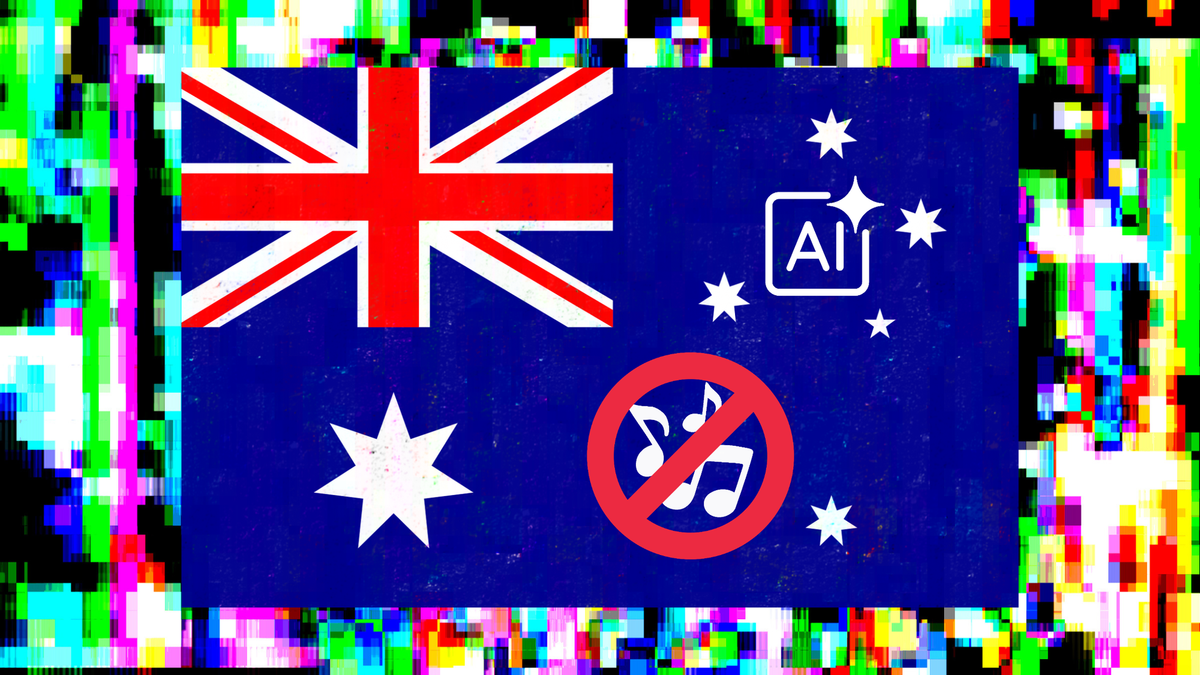
Australia’s proposed copyright reforms, which would make it easier for artificial intelligence (AI) companies to use existing content for training, may not apply to music, according to sources. The reported carve-out comes as the country’s creative and media industries, including music, have united in a campaign against the reforms.
What the proposed system would cover#
The reforms under consideration by the Australian government would effectively create a statutory licensing system. Under it, AI companies could use existing content for training in return for payments into a collective licensing scheme.
Under the reported plan, AI companies could gather written and visual media from the internet and use it for training, but they could not make copies of music. For music, they would need bespoke licences from the music industry.
Rightsholders would likely be able to opt out of the system, in which case their content could be used only under a bespoke licence. Major rightsholders are expected to opt out almost immediately, while ministers are thought to assume that independent and individual rightsholders would stay in the system and share in the money generated by permits.
Music industry opposition#
The creative and media industries, including music, have launched a campaign against the reforms. Independent senator David Pocock has suggested that the proposed music carve-out could be an attempt to divide that united front.
Annabelle Herd, head of the Australian Recording Industry Association (ARIA), described the proposed carve-out as “unworkable” and said, “we stand with the rest of the creative and media industries.” The principle that AI companies must obtain explicit permission before training on any copyright-protected work is described as “fundamental.”
The campaign launch coincided with ARIA’s annual awards event, where many music artists formally backed the campaign. Elton John sent a recorded message to the event, saying, “I want to send an important message to the Australian government. You have a duty to protect Australian artists and their work. Don’t let AI use any Australian artist’s work without full permission. Please, protect the next generation of Australian artists.”
Government position#
A year ago, Attorney-General Michelle Rowland said the government would not introduce a new copyright exception that would allow AI companies to do as they wish with existing content when training generative AI models. In July, Prime Minister Anthony Albanese said, “no company should use Australian books, music, art or news to build or train AI without the artist’s control.”
In recent months, ministers have been considering copyright reforms under heavy lobbying pressure from the AI sector. Some large US technology companies have said Australia could become a key secondary base for their operations if copyright rules are relaxed.
It is thought that Albanese and his team favour a statutory licensing system, although they have not called it that. Rowland and Albanese appear to believe that supporting this approach does not break their earlier commitments on copyright exceptions and artist control.
The fair use dispute#
The government is also likely to argue that, under the current system, Australian creators and rightsholders earn nothing because AI companies train their models in the US, where they can rely on the fair use principle. Under that principle, companies do not need rightsholder permission or need to pay licensing fees, so payments under the proposed system would be a benefit.
Creative and media industries contend that AI training does not constitute fair use under US law, and dozens of lawsuits in American courts centre on that question. If the copyright industries win those cases, they will seek trillions of dollars in damages from AI companies.
Why music may be treated differently#
It is not yet clear why music could be excluded. One question is whether the exclusion reflects the fact that prominent pop stars have been particularly vocal in opposing AI-friendly copyright reforms.
The proposal may also suggest that large US AI companies pushing for the reforms, including Anthropic and OpenAI, are less concerned about free access to music. Both companies have copied large volumes of lyrics without permission and have been sued over that conduct. Any music carve-out may apply only to compositions and recordings, not to lyrics.
Open questions#
Copyright obligations for AI companies may be shaped by court judgements or legislative reforms, and the rules could differ by type of work. Written works often contain facts and information that are not themselves protected by copyright, whereas visual works generally are, and musical works especially so.
All the copyright industries maintain that AI training requires permission and therefore licences, and that position seems likely to remain for the foreseeable future. Whether formal AI copyright proposals that carve out certain art forms will affect joint lobbying campaigns is not yet known.