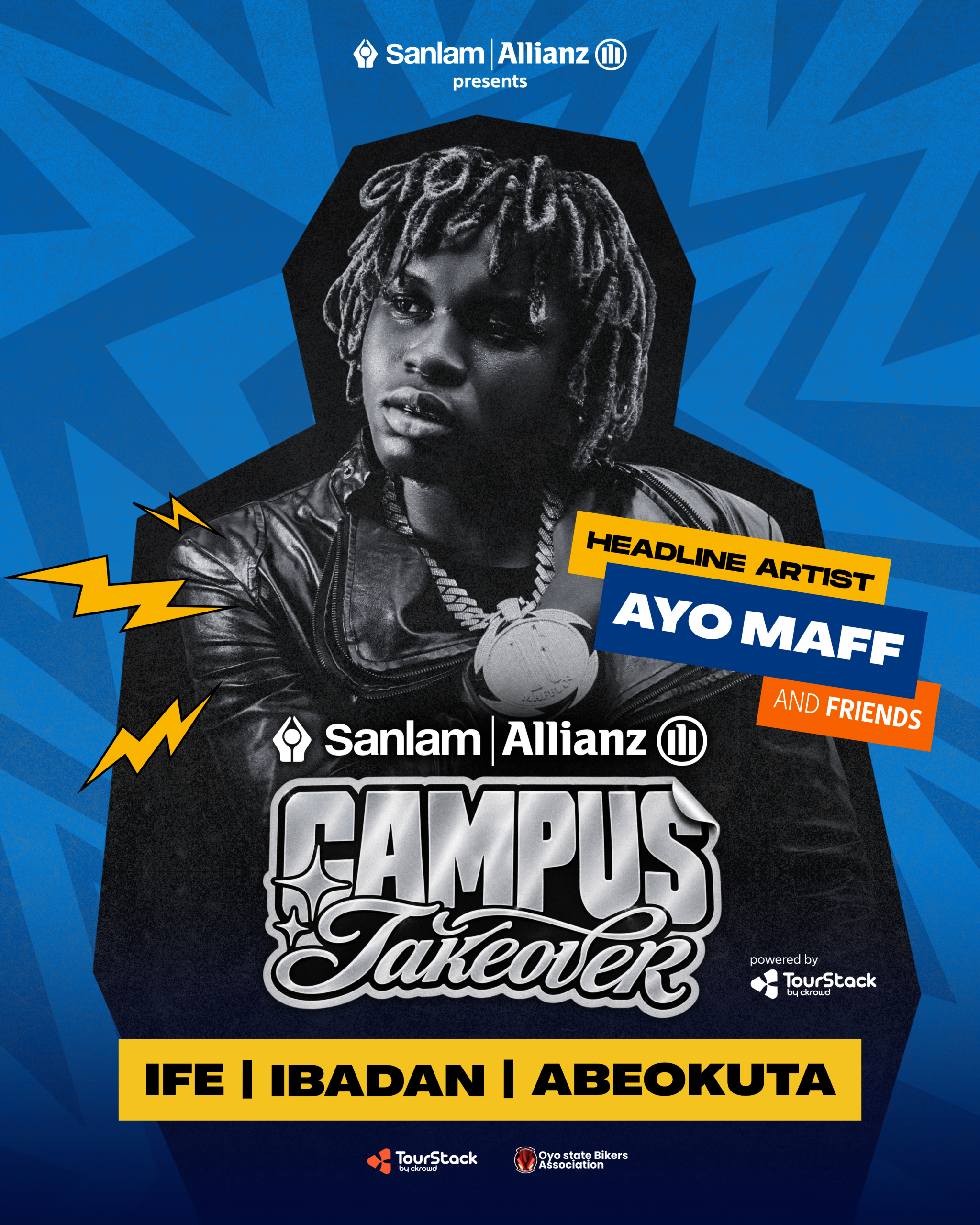
In Nigeria, CKROWD is presenting a set of linked services as infrastructure for African live music. Its first major test is a student tour by Ayo Maff in November, and the evidence so far is limited.
Infrastructure model and early evidence#
Kayode Adebayo cited United Parcel Service (UPS) and Amazon Web Services (AWS) as reference points, and Live Nation as his model. In that model, a promoter connects to financing, insurance, micropayments, sponsorship, certification and talent through services that already exist. CKROWD is therefore best understood as a group of products serving one purpose: infrastructure for live entertainment on the African continent.
The central question is whether other promoters can run their shows on CKROWD, not only whether CKROWD can stage a good show. At present the evidence consists of one client and one tour. SanlamAllianz, an insurer, has committed to a two-year partnership agreement rather than a one-off deal.
Under the arrangement, SanlamAllianz pays CKROWD to build a live entertainment property for students. The work includes a logo, merchandise and a talent search in each city. The insurer is seeking customers who will be more valuable after graduation, along with data and a pipeline of student agents.
A student ticket priced at ₦2,000, the Nigerian naira, cannot cover the cost of a three-city production on its own, so the sponsor covers it. The current arrangement is therefore closer to a brand-experience agency built on software than to shared infrastructure that any promoter can use.
Student tour targets#
Adebayo said the team checked Spotify and YouTube to see where its listeners are. The data showed a largely student audience in Nigeria’s Southwest, and the team chose to hold the shows outside Lagos. The target is five to seven thousand people per city.
- Ile-Ife: November 14
- Ibadan: November 21
- Abeokuta: November 27
At those targets, the three nights would reach between 15,000 and 21,000 people. Adebayo acknowledged that Ayo Maff might not fill seven thousand seats alone. Whether a student price and the audience turn out in sufficient numbers will be the first public result for CKROWD.
Insurance and financing claims#
Informal live music often runs on verbal agreements, so if a stage collapses or a crew member is injured, the cost can fall on individuals. Adebayo wants promoters, artists, lighting and sound crews, stage builders and ticket sellers covered by insurance built into the ticket.
Details of what the cover pays out, who handles claims and whether students know they are covered were not discussed in the interview. They could not be found in the public material either.
Adebayo says banks and institutional investors avoid live entertainment because it is built on atmosphere, and little remains once a promoter finishes and the stage is dismantled. He argues that ticket and audience data could serve as the risk assessment that lets a lender finance a tour. Three shows make a small sample, and a lender would typically want a track record across many promoters and years.
The CKROWD website lists Access Bank as a partner, and Adebayo describes a memorandum of understanding (MOU). An MOU is not a loan. By Adebayo’s own measure, the milestone would be banks willing to fund touring, and that has not yet happened publicly.
Ecosystem clarity and next tests#
The CKROWD website presents a platform for hiring vetted African music professionals, with figures claiming tens of thousands of verified profiles. Its Instagram presence features TourStack and a campus tour, alongside a separate @ckrowdbusiness account. The company previously operated as a streaming platform that hosted Yinka Ayefele’s digital world tour.
Adebayo describes a layered offering, but a newcomer must still assemble those layers into one picture. For a service whose purpose is to help people connect to infrastructure, the pieces need to read as a single ecosystem from the first click.
On the current evidence, CKROWD has not yet shown that the model works without its own involvement. The following would indicate that it does:
- A promoter other than CKROWD running a show on TourStack
- Insurance claims that are paid and published
- A bank financing a tour using the company’s data
- A client beyond SanlamAllianz that renews its contract
- A public statement of who owns the information students generate at each event
Adebayo’s own test is whether anything lasts after a promoter leaves. The three Nigerian dates in November will show whether it does.