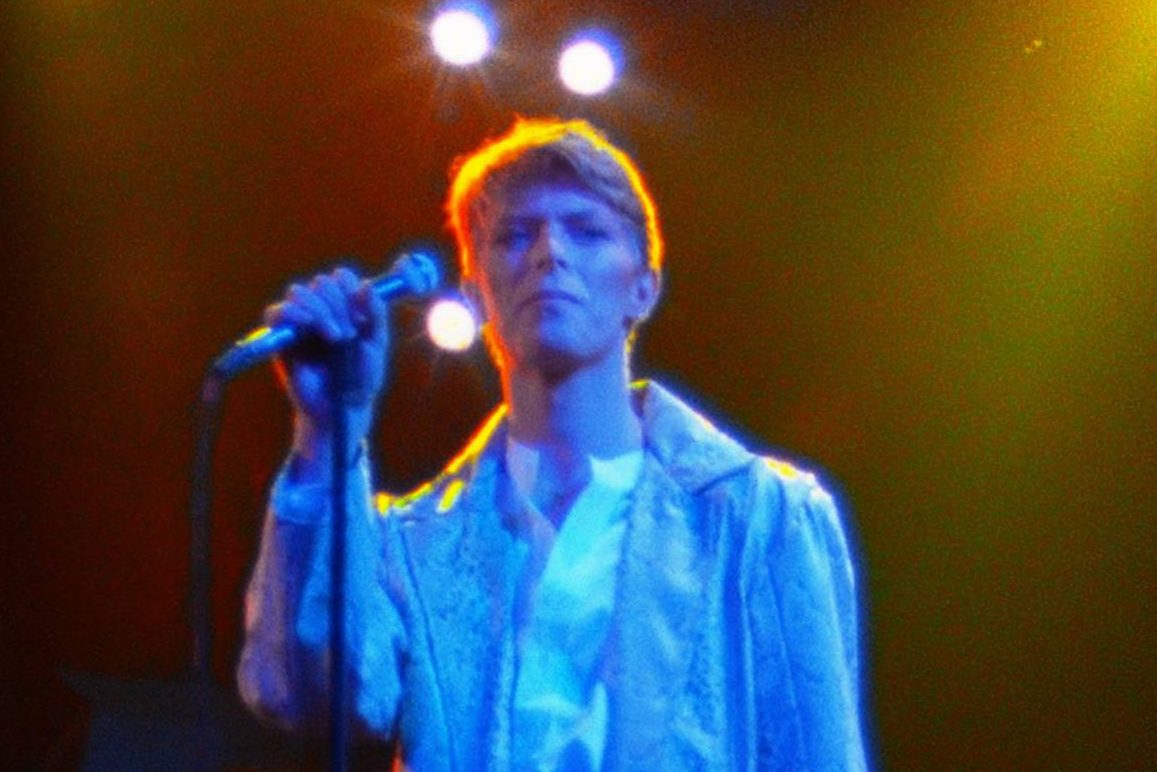
The wind on the Lagos waterfront rarely announces its intentions before it arrives, and on the evening of the Afro Festival, it chose the exact moment Wande Coal reached his hotel room to turn into a gale. The team had paid a rainmaker the night before to hold the weather, a standard albeit superstitious insurance policy for outdoor events in the city, but the heavy downpour that followed proved the arrangement had completely failed. As the coastal storm battered the beach, the physical infrastructure of the festival began to yield to the elements. A member of the production team rushed forward to protect the audio equipment from the sudden downpour, only for the entire stage structure to give way and collapse almost directly on him.
Inside a nearby production tent where attendees had sought shelter, panicked staff cared for the bleeding man till he got medical care, while government officials arrived on the scene to effectively shut the entire festival down for several hours. It was the kind of logistical nightmare that ends careers, compounded by the fact that Chibuzor had already lost between fifteen and twenty million naira in sponsorships in the final days leading up to the event, forcing him to borrow money just to keep the production afloat. Yet, despite the storm and the lack of a functional stage, the crowd anchored in the sand refused to leave. People stood their ground in the rain, pulling out their own portable speakers and playing songs from their phones while shouting their continued support for the promoter who had brought them there, yelling that they were not going anywhere.
The night eventually concluded with Wande Coal honouring his commitment after telling Chibuzor, “Fuck it, I’ll perform in the rain, I don’t care,” executing his set on a makeshift platform under an umbrella before an equally soaked surprise set from Fave followed. But the financial damage to the operation was already sealed. Because the government had halted the event for hours, ticket sales at the gate stopped entirely, and patrons were turned away at the door. By the time Chibuzor finally sat alone in his car at six in the morning to thank God it was over, he was looking at a staggering twenty-five million naira in personal debt.

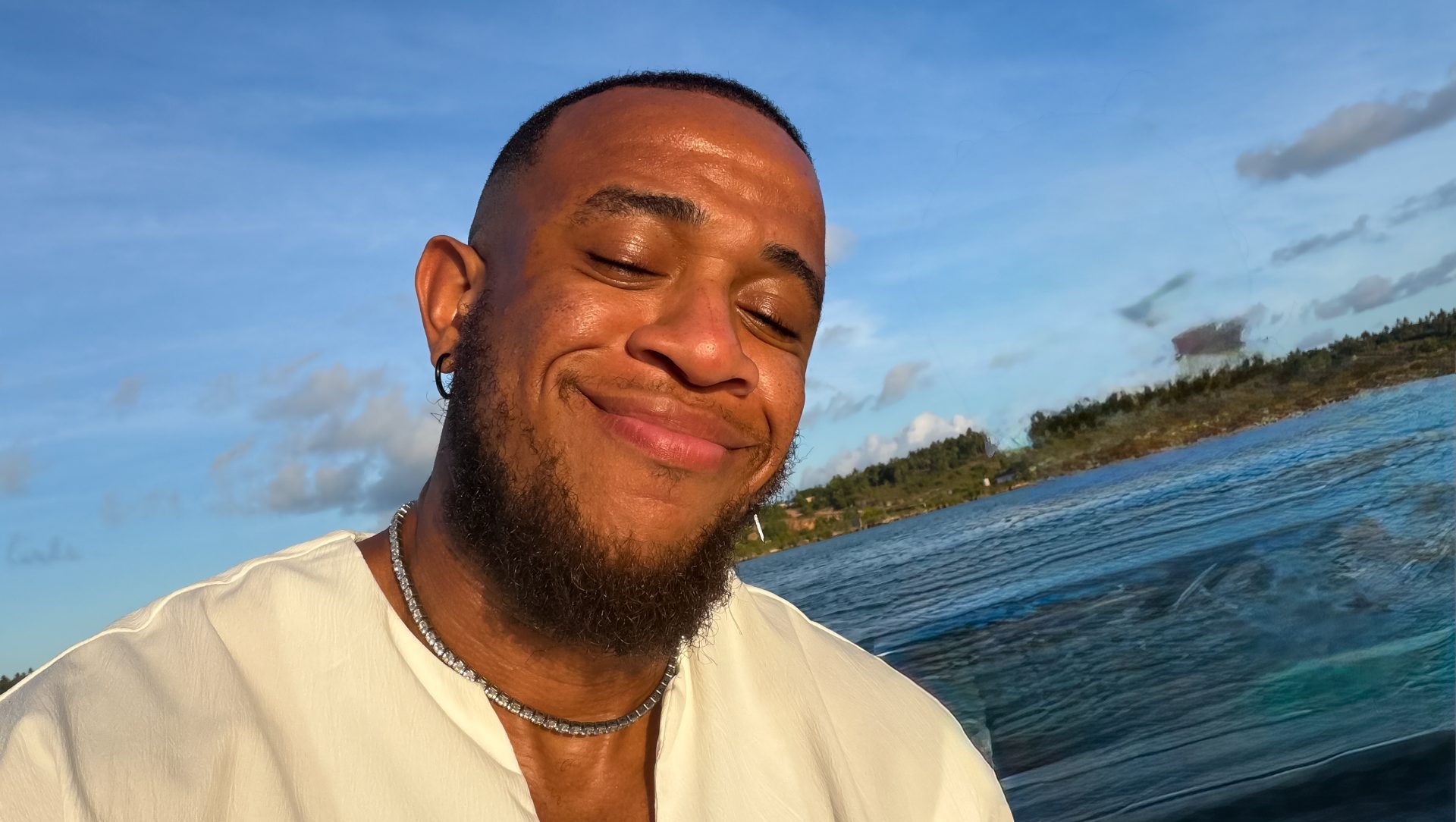
Most nightlife operators would have quietly folded under that kind of immense financial and psychological pressure, looking for an exit from an industry that is notoriously unforgiving to independent promoters. Chibuzor, however, still views that massive deficit as an expensive operational masterclass that he genuinely has no regrets about enduring. He describes the entire ordeal as “a blessing in disguise, but also very traumatic,” acknowledging that the financial loss bought him an education he could never lose. It is a striking level of resilience for a man whose outfit is built on an ambition to master the mechanics of human connection. The sheer scale of the universe he commands today and the loyalty of the people who stood in the rain for him, are both immensely impressive. I thought it worthwhile to look at the path he took through the Nigerian cultural landscape, beginning in a digital era where he was already learning how to mobilize and move a crowd.
The Digital Architect and the Younis Bashorun Days
His entry into the mechanics of youth culture started long before he was negotiating with venue owners on Victoria Island. In 2010, as an undergraduate student at Delta State University in Abraka, Twitter was still a relatively new frontier in Nigeria, and Chibuzor was constantly online. Looking back at those years, he admits, “I won’t say I was a nuisance, but I was always tweeting and all that”. He was an early architect of digital mobilization, working with a friend on a company called Retro Hype, which was designed to push music and parties across the platform. In the early 2010s, this meant engineering hashtags, creating trends for releasing artists, and understanding exactly what made young Nigerians pay attention to a screen. It was an early education in the architecture of hype and community building that would serve as the bedrock for everything he would eventually build offline.
By the time 2019 arrived, the digital strategist had evolved into an extroverted young professional working as a programs officer at the Meadow Hall Foundation. He was a young man working a traditional desk job by day, spending his weekends socialising and navigating the city’s human circuits, while quietly observing how the industry functioned. His formal entry into event curation began in April of that year when he joined his friend Lala Alakija to help run South Socials, an event hosted at South House, on Younis Bashorun, owned by Karim and Ali Mattar. Lala had cultivated a strong crowd of her own peers from university and law school, and the older demographic in attendance focused heavily on the underlying business of the night, specifically the revenue generated from table sales and premium bottles.
It was in this environment that Chibuzor’s distinct philosophy began to take shape, separating him from the traditional archetype of the Lagos promoter. While the venue owners and older crowds focused on the margins, he realized his primary concern was the actual physical and emotional experience of the people in the room. If attendees complained about the heat inside the venue, his immediate instinct was not to shrug it off, but to rent more standing fans or bring in auxiliary air conditioning units to mitigate the problem. He flatly refused to accept physical discomfort as a standard nightlife tax. “I thought otherwise,” he recalls, “that if I please one person, it makes a change”.
When the original iteration of South Socials began to see a severe drop in numbers in early 2020 and eventually went dormant during the global pandemic, Lala focused on her 9-5 with Diageo. The platform could have easily become a memory, but the following year, after Chibuzor successfully hosted a few Johnnie Walker activations in exchange for a token of free cases of whiskey, Karim suggested they restart the party. The motivation at the time was refreshingly pure; as he puts it, “Because I like to party, I wasn’t even asking for money…I said, ‘You give me free bottles, then let’s go, I will do it’”.
Chibuzor took on the challenge alongside his then-girlfriend and now wife, Naomi, effectively taking full ownership of the brand’s direction and leveraging his deep roots on Twitter to generate a massive, dedicated following. Naomi stepped in as an essential critical eye for the operation, identifying aesthetic blind spots and keeping the entire brand grounded in a visual standard that Chibuzor freely admits he might otherwise miss while navigating the crowd. She served as “an extra set of eyes,” feeding him critical intel on the aesthetics that could quietly turn a crowd off.
The platform grew with a ferocity that demanded more space, eventually attracting the attention of larger, established venues like Hard Rock and 355 around 2022. It was during this phase of rapid geographic expansion that the brand formally evolved from its original nomenclature into TheChibyVerse, a title playfully inspired by the release of the Multiverse of Madness film. The events began to spread across different locations and sonic themes, including the After Dark party at Hard Rock, the Worst Behaviour party at 355, a dedicated brunch with Chef Obubu, and an R&B evening curated with Chukkie.
This sprawling curation required an extraordinary level of physical endurance, leading to a period in 2022 where Chibuzor threw a party every single Friday in Lagos, rarely ever sleeping at his own home. The sheer volume of these events transformed him from a popular host into a vital cornerstone of the city’s weekend infrastructure, but it also introduced a new set of philosophical clashes regarding how the Lagos nightlife machine historically treats its patrons.
At Hard Rock, the managing partner Dhiren Pawar wanted to maximize the venue’s revenue by pushing VIP table and bottle service onto the crowd, a standard practice in a city where nightlife is often treated as a competitive exhibition of wealth. Chibuzor actively pushed against this imposition, arguing that his carefully cultivated middle-class community, The ChibyVerse, was built entirely on a first-come, first-served ethos. He stood his ground with the venue, telling them, “See, you guys, it can’t work this way. I’m coming from a place where we don’t force tables on people. First come, first served”. He understood inherently that you cannot simply force bottle culture onto a crowd that is accustomed to arriving as early as seven in the evening just to secure a comfortable spot on the dancefloor.
This stubborn dedication to community accessibility is what cemented his reputation as a democratic operator. He wanted to protect a space where people could arrive early, buy a few drinks, and genuinely dance without feeling the crushing financial pressure of faux exclusivity. He asked the venue for time, insisting that if they allowed the crowd to breathe, the patrons would eventually see the value in premium service without being coerced into it, a vision that eventually proved profitable as the community organically adopted the culture on their own terms. Not every partnership survived this era of expansion, as the 355 partnership didn’t work out because there was a mismatch between what The Chibyverse needed and what 355 could support at the time.
The success of the surviving spaces, however, relied on something deeper than just good logistics. When I attend his parties today, there is a palpable sense of safety and familiarity in the room, and that feeling has remained remarkably consistent even as the city around it has transformed. He credits this rare multi-generational appeal to simply staying true to the core of Nigerian music. While much of the Lagos nightlife landscape has oddly shifted toward electronic music and niche alternative rave collectives, South Socials has remained steadfastly anchored in straightforward Afrobeats with side servings of other genres every other special edition.
This musical consistency is a commitment to providing a space where attendees can listen to the genres they grew up on, avoiding the subcultural gatekeeping that often accompanies newer dance movements. By standing still while the rest of the scene sprinted toward new subcultures, South Socials incidentally became a sanctuary for people who just want familiar rhythms. The marketing remains intentionally simple, built on curated and themed events, and recap videos that visually reinforce his manifesto from day one: building a space to “genuinely just dance and not feel like you’re embarrassing yourself, or the person beside you”.
South Socials on the beach was HOT last Friday 😮💨🔥 pic.twitter.com/sMBfe3GpdE
The logistics of maintaining this house have forced Chibuzor to navigate a gruelling, often heartbreaking gauntlet of venue changes and external hurdles. The brand experienced massive growth at Moist Beach, pulling in thousands of attendees and solidifying its place in the culture, right up until the government stepped in and reclaimed the land, completely destroying the location. Following the sudden loss of the beach, the party had to rely entirely on Hard Rock, where the ongoing clashes with Dhiren over table culture and brand direction eventually reached a breaking point. Recognizing that his brand would suffer if he compromised his values, Chibuzor made a tough but necessary decision to leave, navigating the exit for his brand’s benefit while maintaining his friendship with Dhiren, a man he respects for always telling him the truth.
The search for a new home was frantic and challenging. He tried to move the party to Carnival, a beautiful venue near Silverbird Cinemas that seemed perfect until management told him they had to end all events at midnight because a club on the floor above was operating. This curfew was clearly not going to work, so the continued search took them to Hook Lounge as a temporary holdover, before they were able to secure Praia exactly two years ago, a location that has finally provided the long-term stability and structural support the brand desperately needed. Praia currently serves as the perfect vessel for the South Socials ecosystem, offering a dynamic layout that allows the crowd to dictate their own night. Partygoers can move freely between a covered sitting area, a small VIP box tucked to the left, a wide open-air bar, and an open-air poolside. The architectural setup accommodates the community’s refusal to be confined to a single spot, though the steady influx of returning veterans and younger crowds means the venue may soon burst at the seams. Through all these chaotic transitions and sudden uprootings, major sponsors stayed firmly on board because they recognized the top-of-mind awareness and the unique camaraderie that existed within the ChibyVerse community.
Surviving these logistical nightmares required a necessary personal evolution, specifically regarding his ability to relinquish total control of the operation. He had always operated under the anxious notion that if anything went wrong with the brand, he wanted it to be his own fault rather than having to suffer the consequences of someone else’s mistake. “If anything goes bad, I’d rather it come from my hand,” he explains. “Let’s say I destroy ChibyVerse tomorrow, I’d rather it be my mistake than another person’s mistake”. This fear of delegating tasks was entirely unsustainable for a growing business, and this year he finally took the critical step of building a proper, formalized operational structure. He appointed Abayomi Olonade as the CEO and Head of Operations, a man who originally came on board as his manager, while simultaneously bringing on a project manager, a creative director, and a dedicated social media and website team. He also leans heavily on strategic partners like Nonso Iwuh from the Bole Festival, ensuring the physical weight of the events is distributed among trusted, capable hands.
Stepping back from the intense, granular micromanagement of the weekly parties has allowed Chibuzor to focus his energy on his demanding and highly successful corporate career. Having previously worked as a community manager for Heineken, where he organized viewing parties and activations for his peers, he now operates as an experiential marketing manager at Guinness Nigeria. In this senior role, he orchestrates major brand integrations for the exact same youth culture events and programs he operates alongside, securing connections for platforms like Big Brother Naija and Monochroma. The corporate world clearly still trusts him with people, recognizing that the very same community-building instincts that made South Socials a cultural staple are incredibly valuable to multinational brands operating in Africa.
Looking back at the venue disputes, the quiet pushback against the elitism of table culture, and the absolute financial wreckage of the Afro Festival, he now sees TheChibyVerse as a mature, robust business rather than just a weekend project. The initial thrill of simply throwing a party and being the centre of the room has evolved into the deep, quiet satisfaction of challenging himself at the highest levels of the industry. “This isn’t just fun anymore,” he reflects, looking at the scale of what he has built. “And I like the business part of it. I enjoy that I’m still being able to challenge myself… Even when I fail, I see that I can pick myself back up and push again”. He is motivated by the knowledge that he can pick himself back up after a catastrophic failure, secure in the absolute certainty that the next time he takes a massive operational risk, he has the hard-earned education to execute it flawlessly.
While there are no plans for another massive, high-risk festival this year, Chibuzor has disclosed that the 2026 Halloween edition will be the last party at Praia for the foreseeable future – as the party is headed back to Hardrock Cafe, now called CURATE. While he has nothing but absolute gratitude to Praia for housing his universe, he explained to me that the crowd-holding capacity was a major reason for this important decision. Chiby intends to spend December giving his community a taste of the old South Socials feel with Naomi by his side, focusing on quality lineups, familiar energy, and experiential brilliance rather than extraordinary spectacles. From the early days of crafting hashtags in Abraka to directing the vibe of Victoria Island nights, Chibuzor Iwobi has built his universe by refusing to compromise on the simple, radical idea that a party should be a place where everyone is allowed to dance.
This piece was submitted by a contributing writer, Temple Egemasi.
Your email address will not be published. Required fields are marked *
Save my name, email, and website in this browser for the next time I comment.