The justices used a rare maneuver to uphold a ruling for songwriter Cyril Vetter that major music companies have warned will cause “chaos” for the industry.
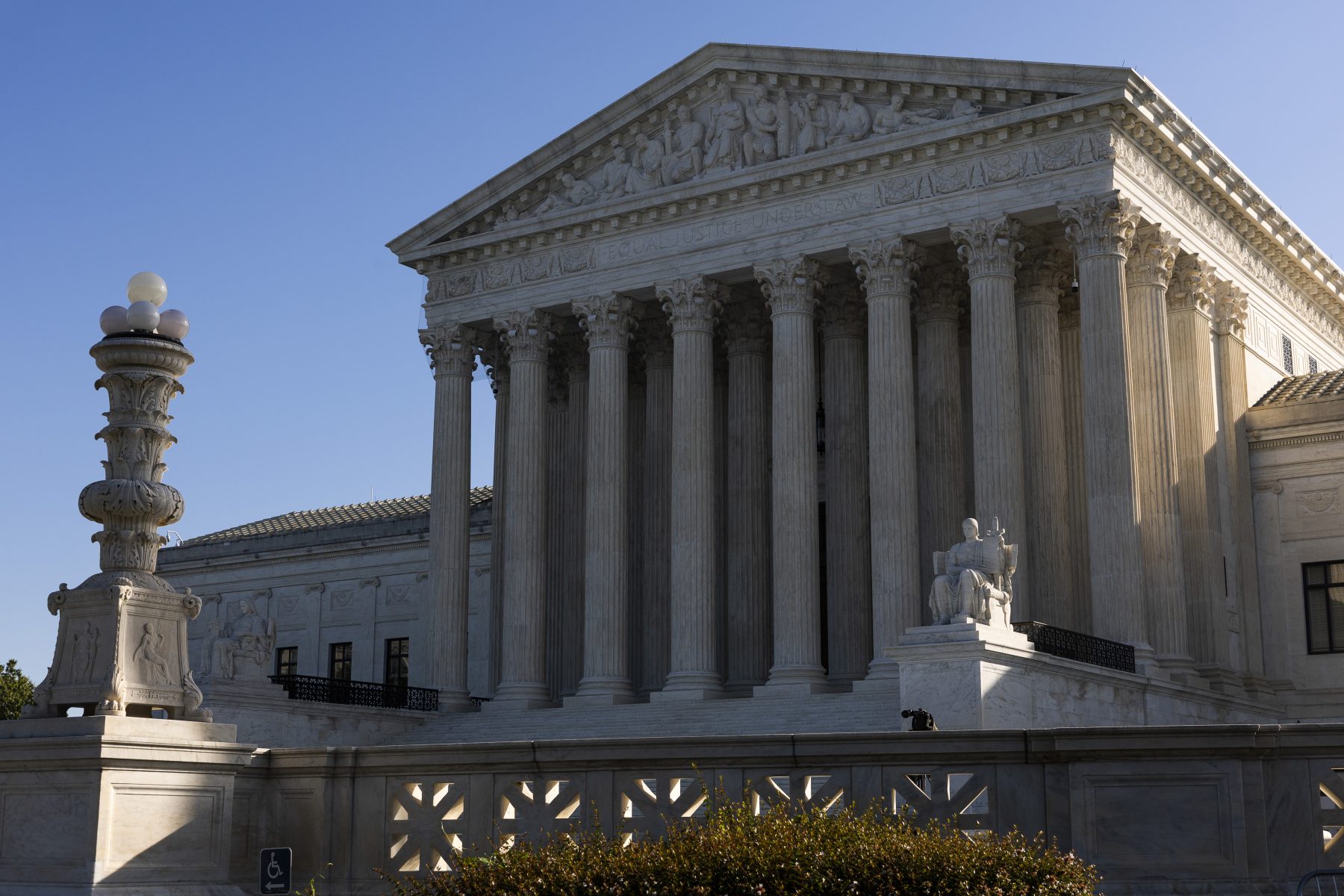
The U.S. Supreme Court on Monday (Oct. 19) refused to overturn a landmark ruling that extended copyright termination globally, rejecting an appeal by major labels that warnted it would cause “chaos” for the music business.
The justices affirmed a novel decision, won in January by Cyril Vetter over his 1963 rock classic “Double Shot (Of My Baby’s Love),” that said artists can use termination to regain not only American copyrights, but also overseas rights to the same songs. That ruling undid decades of industry precedent.
The earlier ruling was hailed as a “game-changer” for musicians, but seen as dangerously incorrect by publishers, labels and investors that own catalogs. In June, Universal Music Group, Sony Music, Warner Music Group and BMG urged the Supreme Court to overturn it.
In an order Monday, the high court used a rare maneuver to refuse that request. Four of the nine justices did not participate, and the remaining justices said the case could not be resolved in the coming term, meaning the ruling should be upheld. Justices Sonia Sotomayor, Neil Gorsuch, Amy Coney Barrett and Ketanji Brown Jackson did not participate in the case, though it was unclear why.
Such an order leaves in place Vetter’s landmark win, but it does not make it the law of the land. Other appeals courts, including those covering New York and Los Angeles, are not bound to rule the same way. If they decide the issue differently, it would create a so-called circuit split that could make it more likely for the Supreme Court to review the issue again in the future.
Termination is a federal provision that gives creators a chance to recapture their copyrights decades after they sold them away. But it has only ever applied to U.S. rights and had no effect in foreign countries. Under that approach, publishers continue to control overseas rights even after termination, an arrangement that gives them perpetual revenue in a globalized streaming era, veto power over cross-border projects and key leverage in deal re-negotiations.
In January, the U.S. Court of Appeals for the Fifth Circuit rejected that longstanding precedent. Siding with Vetter, the appeals court said Congress had written the termination statute with the goal of correcting “unequal bargaining power,” and thus clearly did not intend for authors to win back “only half of the apple” when they invoke the law.
Though the major labels were not initially involved in the case, they used an unusual business deal to seek Supreme Court review, buying out the small publisher who owned Vetter’s music solely for the purposes of filing such a case. And in their petition to the court in June, they urged the justices to overturn a “headscratching” and “startling” ruling that would be “every bit as disruptive as it sounds.”
“In a single stroke, the decision below unsettled 50 years of industry practice,” the labels wrote at the time. “[It] immediately calls into question the scope and meaning of countless negotiated agreements backed by billions of dollars.”
But Vetter’s attorneys argued back that the case was not ripe for high court review, even if the world’s biggest music companies didn’t like it. They urged the justices to simply avoid the case and allow the issue to be decided by other lower courts before a final showdown.
“Petitioners try to depict this case as some sort of copyright emergency that cannot await further [litigation],” Vetter’s attorneys wrote at the time. “But publishers are doing just fine and will continue to thrive even if some of them have slightly less bargaining power with which to deprive authors of a fair return when their works become wildly successful.”
Your email address will not be published. Required fields are marked *