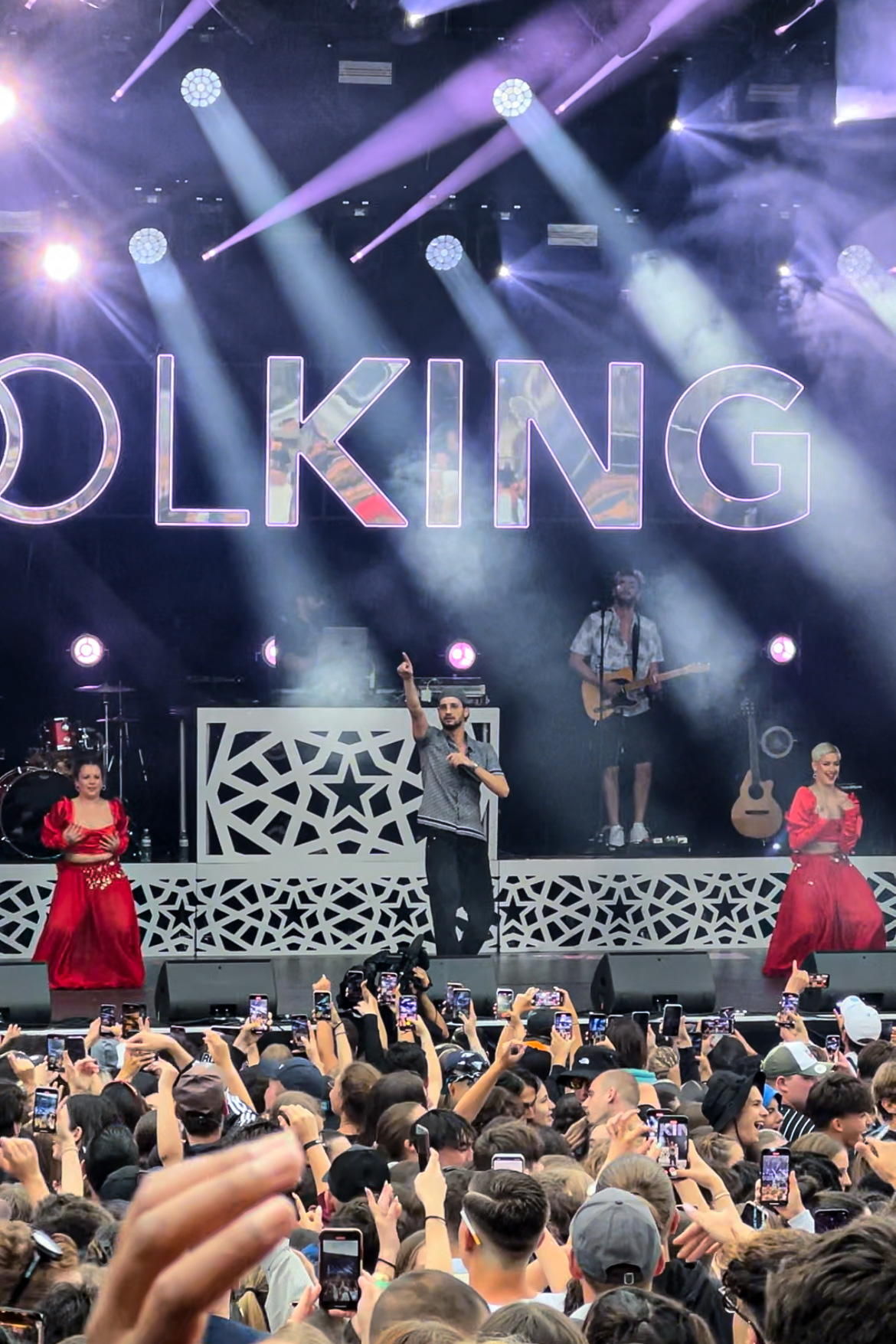
Spotify’s 50-artist African panel read five countries of origin on 2 October 2026, two days after its two most recent readings, 30 September and 1 October, both read four. The fifth is an artist this desk has already watched cross the panel’s cutoff line once this cycle: Algeria’s Soolking, back in on one track charting only on France’s daily chart, 64,622 streams, 0.39 per cent of the day’s total, comfortably clear of today’s 50th-place cutoff of 57,906.
Countries represented in the 50-artist African panel, 28 August to 2 October 2026
Four on 30 September and 1 October. A fifth, Algeria, returns on 2 October.
Soolking is not a new name in this measurement. On 26 September he fell out of the panel entirely, 7,171 streams short of that day’s cutoff of 66,689, a margin this desk measured and published at the time. On 27 September he was back, at 68,659 streams, pushing the panel to six countries alongside a single Guinean artist. By 30 September and 1 October he was out again. Today he is back in at 64,622, above a cutoff that has since fallen to 57,906. Across the seven dated snapshots this desk has taken of the panel, Algeria has flipped between present and absent four times, every flip the same artist, not necessarily the only flips there have been: this desk’s panel is a daily snapshot, not a continuous feed, so flips between measured dates would not show up here. All of it traces to one cause: Algeria has no Spotify daily chart of its own for Soolking to hold a stable position on. This desk’s own population-coverage dataset lists Algeria, population 47,435,312, as “no_chart”: Spotify publishes a ranked daily chart for exactly four African countries, Nigeria, Egypt, Morocco and South Africa, and Algeria is not one of them, the same status held by Angola and most of the continent. An Algerian artist can only ever enter a panel built from charted countries by charting on somebody else’s, which is what Soolking’s one song on France’s chart does for him.
Pull that single row out of today’s panel and the reading reverts exactly to the four-country, 49-artist shape of 30 September and 1 October: the country count falls 20 per cent on the removal of one artist, while the stream total it sits inside falls 0.39 per cent. A 20 per cent swing in the headline count against a 0.39 per cent swing in the money underneath it is a fragile metric, and “countries represented” is doing exactly that here.
Robustness of the 2 October 2026 country-count reading: one artist, leave-one-out
Daily chart streams across the 5-country, 50-artist panel, 2 October 2026
None of this means Algerian music is not reaching France, or that Soolking’s streams are not real: they are the same streams this desk counts and prices everywhere else. What it means is narrower and more useful: “how many countries does the panel span” is not a measure of how many African countries have functioning export markets. For the four charted countries it is a real measure of home-market presence. For every other African country it can only ever register one way, an artist’s single track clearing a cutoff on somebody else’s chart, and that cutoff moves by the day. Algeria’s count in this panel has gone 1, 1, 0, 1, 0, 0, 1 across the seven dates measured, and every one of those digits is the same artist, not seven different acts breaking through.
For an artist or label in a market Spotify does not chart, the practical read is this: your country will never show up in rankings like this one through local listening, no matter how large it actually is. The only route in is a track that charts somewhere Spotify does measure, the margin for staying in is whatever the 50th-ranked artist happens to score that day, and a single track can swing a national count on its own, in either direction, overnight.
We use essential cookies to run the site. With your permission we would also use analytics cookies to understand which stories are read, so we can commission more of what works. You can change your mind at any time. Cookie Policy · Privacy Policy