
Warner Music Group CEO Robert Kyncl has defended the company’s licensing deal with artificial intelligence (AI) music platform Suno, even as Universal Music Group and Sony Music Group continue their copyright litigation through the Recording Industry Association of America.
Until last week, Warner Music Group was alone among major music companies in having a licensing agreement with Suno. Nine months ago, Kyncl agreed to drop Warner’s lawsuit against Mikey Shulman’s company, Suno, and enter a go-forward licensing deal with the generative AI platform.
Deal terms and industry split#
As part of that agreement, Suno made several commitments:
- Suno committed to limiting the number of downloads its users can pull from the platform, a move it announced last week.
- Suno promised to launch an entirely new model licensed by industry partners.
- Warner Music Group also received equity in Suno as part of the pact.
On Wednesday, August 12, BMG announced a global licensing agreement with Suno and confirmed it would participate in building the platform’s new licensed models.
Universal Music Group and Sony Music Group, through the RIAA, remain in active litigation against Suno, accusing the platform of mass copyright infringement.
Kyncl’s case for licensing#
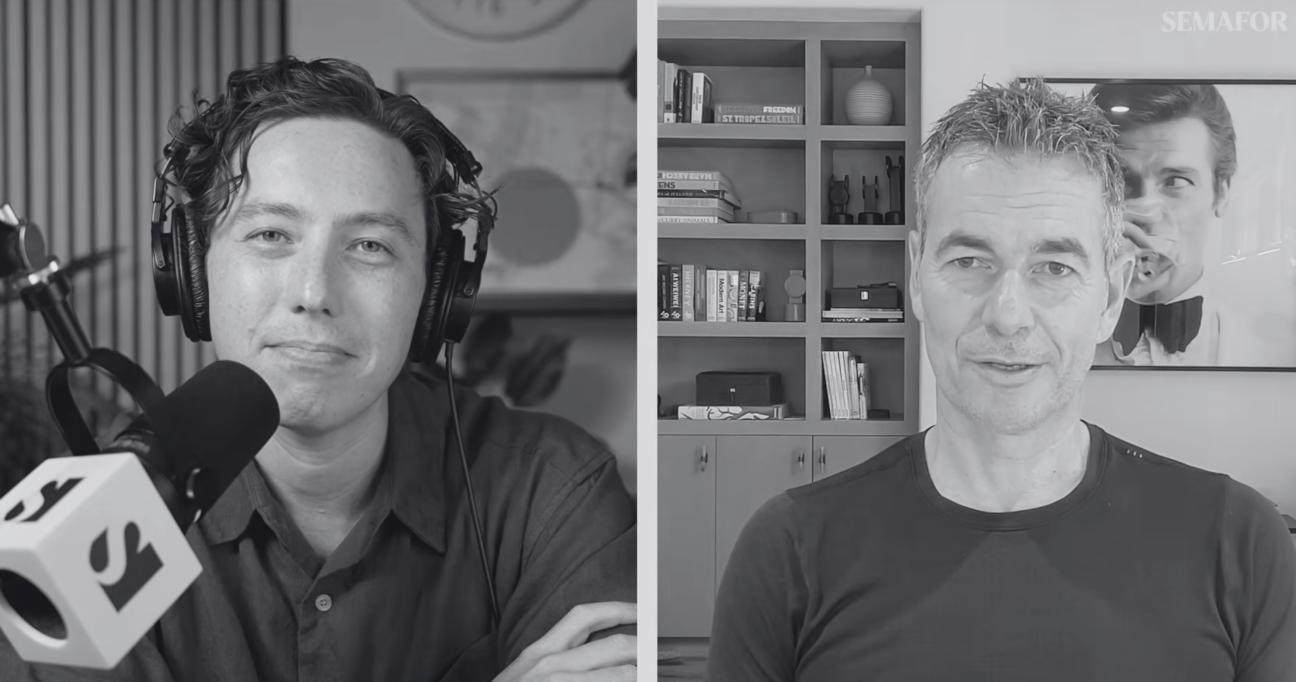
Kyncl made his argument in a podcast interview released Friday, August 14. Asked why rivals continue to fight Suno in court rather than strike a deal, he said: “For me, it comes down to the audience.”
“When somebody builds a [music] AI service and has traction with the audience, as Mikey Shulman did at Suno, and if [that person is] willing to transition to a licensed model, basically ‘go legit’, in my opinion, you embrace it,” Kyncl said.
He added: “[If a new service has] significant traction with users, a very difficult thing to do, then we have a chance [to build] a licensed regime with a market leader who’s growing really fast. We can make this whole new market, versus [trying] to kill it.”
Universal and Sony have not endorsed that view. Suno lost a legal fight against GEMA in Germany earlier this month.
Kyncl cautioned that if competitors succeed in shutting down unlicensed AI platforms, “the users… don’t really care about the lawsuits and the shenanigans happening on the business level.”
He added: “Users say, ‘I just want to do this.’ If they can’t do it [on Suno, they’ll] move on to something else. And if that something else is an unlicensed, open-source model somewhere in a place that we can’t touch, that’s bad news for artists and songwriters.”
The remark may refer to China, where AI services have begun to encroach into music through integrations such as DeepSeek on Tencent Music’s platforms.
YouTube comparison and AI music risks#
Kyncl compared the music industry’s battles with Suno to its early disputes with YouTube. He was Chief Business Officer at YouTube from 2010 to 2022 before joining Warner Music Group. Earlier, he spent seven years at Netflix, where he led its expansion into streaming film and TV content.
“I [was] on the receiving end of [music biz animosity] when I was at YouTube in the early days,” Kyncl said. “YouTube had a lot of different lawsuits over copyright infringement at that time; I worked on removing those and instead building commercial relationships with [the music industry]… and we ended up making billions of dollars, for everybody.”
He added: “I view AI as UGC [user-generated content] on steroids. The difference is that with UGC, the actual [music] content was attached to something else, and with AI, it’s getting modified. Therefore, it’s more uncomfortable, rightly so, which is why the guardrails have to be really strict.”
Kyncl said low-level charting music produced by AI platforms like Suno had not given him many sleepless nights so far, though he acknowledged that, with AI’s rapid evolution, everything can change quickly.
He argued that in an “increasingly digital world where robots deliver your food and drive your cars,” people will seek out more human experiences, and music “is the perfect vessel for that.”
“Music is [particularly] great because an artist touring is like a blue check mark on identity,” he said. “Look at Taylor Swift. People are like following the wedding [to Travis] Kelce… and that happens with artists of all sizes.”
Kyncl said: “I think the more risky area [from AI music] could be… a whole bunch of average music that just sucks up a lot of time, passive listening… and eats into the content pool from which artists and songwriters get paid.”
He said the company’s negotiations with digital service providers (DSPs) are focused there, “because this is like the real meat and potatoes of how money is made and how [AI music] could impact it.”