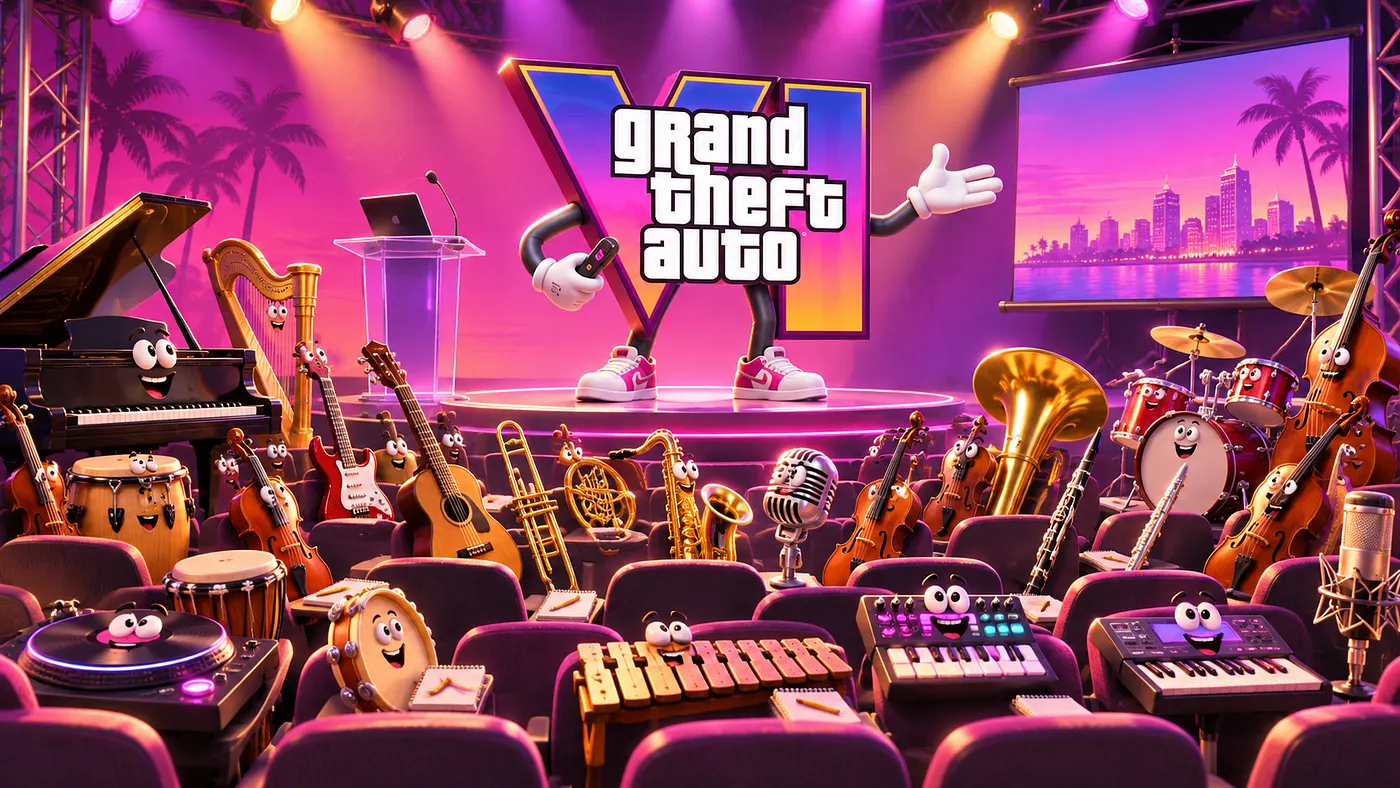
Rockstar Games is releasing Grand Theft Auto VI (GTA), and its record of keeping earlier releases commercially active offers a lesson for the music business.
Launch figures and the years in between#
Independent estimates put advance purchases and launch-day revenue in the billions of dollars. Parent company Take-Two Interactive has not yet confirmed a final launch sales total.
The more notable part of the story, according to the analysis, is what Rockstar did in the 13 years between Grand Theft Auto V and Grand Theft Auto VI.
How Grand Theft Auto V stayed active#
Grand Theft Auto V arrived in September 2013. By November 2026, it had sold nearly 235 million copies worldwide, according to Take-Two.
Rockstar continued developing GTA Online, adding missions, activities, vehicles, events, new environments and ways for players to interact. It also introduced optional purchases and the GTA+ membership program, creating further revenue without developing a new game each year.
The company has kept giving existing customers new content for more than a decade after the original release, rather than only maintaining availability or issuing occasional anniversary editions.
What Take-Two reported#
During Take-Two’s November 2026 earnings presentation, CEO Strauss Zelnick said Grand Theft Auto V continued to expand its audience. The franchise also grew in recurring spending and GTA+ membership, and the company intended to keep supporting GTA Online with additional content and events.
In Take-Two’s fiscal second quarter of 2027, recurring consumer spending represented 81% of the company’s net bookings. That figure covers the entire Take-Two portfolio, including other games.
How music releases are typically marketed#
An album typically takes months or years to make, involving composition, recording, musicians, producers, engineers, mixing, mastering, artwork, video production, distribution and publicity.
Promotion usually lasts a few weeks after release, after which attention shifts to the next project. Success is generally measured through streams, figures and interviews.
Music marketing tends to focus on two points: the current release and the next one. Rockstar, by contrast, keeps offering existing customers ways to engage more deeply with a product and, at times, spend more.
The intermediate sale#
The article describes this approach as the intermediate sale, a transaction that takes place during the continuing life of a creative product rather than at its initial release. Examples include:
- An upgraded edition
- Additional content
- A related experience
- A subscription
- A collectible
- Any other reason for an existing customer to participate
A customer who has already bought and enjoyed a product has shown interest in the creator’s work, so the creator does not need to rebuild credibility or persuade that person from the start. The remaining question is what can be offered next and whether it is compelling enough to buy.