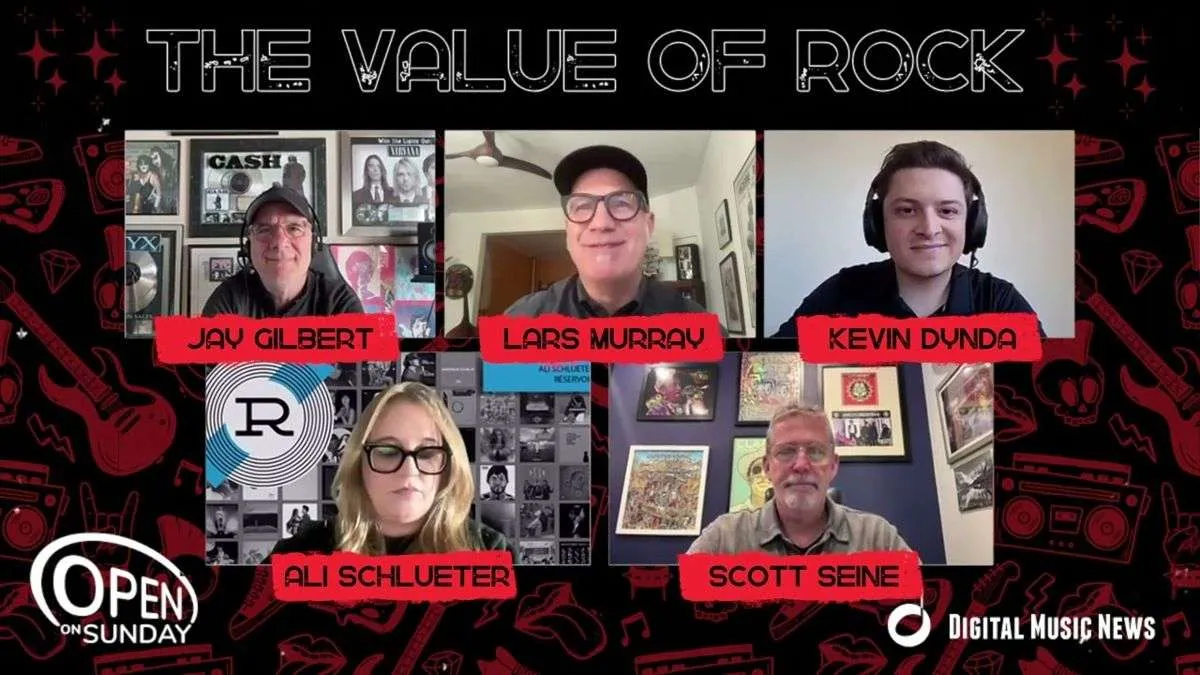
A webinar on the value of rock catalogs argued that the genre remains commercially relevant, despite a long-running view that rock is dead. Over roughly an hour and a half, the panel covered how catalogs are priced, marketed, cleaned up and protected once a deal closes.
Murray opened the session by noting that the “rock is dead” phrase has been a well-worn trope for decades. Cultural trends now favor pop, EDM (electronic dance music) and hip-hop, but the panelists were not ready to give up on the sound defined by the electric guitar.
Rock’s streaming presence#
Ali Schlueter, Head of Frontline Marketing and Catalog Development for North America at Reservoir/Chrysalis, answered the question without hesitation: “[Rock] is not dead. It is thriving.” She pointed to how well rock streams on DSPs (digital service providers) and to the many forms the genre has taken, from alternative and emo to singer-songwriters such as Zach Bryan and Phoebe Bridgers, whom she counts under the rock umbrella.

How discovery works now#
Scott Seine, President of Surfdog/DKM, said streaming has equalized discovery. A song that surfaces in a social feed reaches a younger listener as a song first, separate from decades of brand history.
Fleetwood Mac’s “Dreams” offers an early example from TikTok’s early years. The track found a new audience after a man on a skateboard filmed himself singing it while drinking Ocean Spray cranberry juice.
Seine said footage that might once have aired on television in the 1970s now sits in what he called a place where “this YouTube rabbit hole allows for such amazing discovery.” He also said older rock catalogs carry “this incredible authenticity that comes with these older rock catalogs” for younger fans. Discovery often moves backward through a genre’s lineage, he added, recalling that he learned who Robert Johnson was while listening to Eric Clapton.
Valuing a catalog#
Stability carries a price when it comes to valuation. Dynda said well-tended assets leave less to fix in metadata cleanup, which shifts value creation toward marketing, experiences and listening. In his words, valuing a catalog comes down to the fact that “you’re really evaluating risk profile more than anything.”
Murray, who coined the term “queener” on his podcast for a billion-dollar catalog increment, noted that Queen, Pink Floyd and Bruce Springsteen have each moved from hundreds of millions into territory that few would have predicted a decade ago.
Reviving and reclaiming catalogs#
Dynda cited Open On Sunday’s stake in the B.B. King catalog, held on both the publishing and label sides with partner Fresh Sonics. The team found a 50-year-old, eight-song album called Lucille Talks Back that had never been on streaming. They rebuilt it as a reimagined 50th anniversary release with guests including Doyle Bramhall II and Eric Gales.
Gilbert said the biopic lift gets the headlines, while much of the music business runs on less glamorous work such as syncs, interpolations, anniversaries and behind-the-scenes storytelling. He described a large IP (intellectual property) company that held 12 acquired catalogs it had not touched because it lacked the manpower.
A reclamation project of Gilbert’s own involved 11 Rick Springfield albums reverting to the artist. Each album had to be checked for:
- streaming availability
- duplicates
- missing tracks
- territory gaps
Seine described a similar effort working through Iron Mountain archives, where an engineer’s scribbled notes were the only map. “You just gotta start somewhere and chip away,” he said. The work paid off with a Clapton re-issue that surfaced three unreleased songs.
Sync, immersive audio and publishing#
Seine said syncs often get approved long before they air, and music supervisors do not necessarily tell rights holders once a yes has been given. His team now tracks placements so that artists get paid and fans can find where to stream the music they heard on their favorite shows.
Reservoir has invested in the London-based immersive company Lightroom. Schlueter described David Bowie and Radiohead shows as a way for fans to experience artists who cannot tour or are not currently touring, adding that “getting off your phone into a room with similar fans is just such a great shared experience.”
Gilbert and Seine both championed immersive audio such as Dolby Atmos. Seine recalled a Bob Marley live album recorded at Capitol that was mixed so well he could hear cups clinking behind him. He argues the format needs education so listeners understand that it is not exclusively for audiophiles.
Gilbert took the contrarian position on the high multiples that Merck Mercuriadis and Hipgnosis were criticized for, arguing that those deals raised the standing of songwriters, who typically sit at the bottom of the royalty chain. Seine, whose client Dave Stewart sold to Hipgnosis early on, said the attention on songwriters is what Stewart liked about the deal. Dynda added that Open On Sunday sees financing as another way for writers to access their own assets.
Schlueter cited Reservoir’s Miles Davis 100th birthday campaign, which included brand partnerships and DSP activations run by a dedicated publishing marketing team. Asked which asset is better positioned for the future, Gilbert chose publishing and told artists who receive offers to keep it in reserve. “That’s a last resort option. Hold on to that publishing.”
Murray observed that the panel came to talk about rock and ended up covering nearly everything through that prism, concluding that rock is a genre with a strong catalog presence. “It may or may not be all that different from everything else,” Murray said. Rock no longer dominates the charts as it did from the 1960s through the early 2000s, but its value lies elsewhere.